Making Bakelite - Periodic Table of Videos
TL;DR
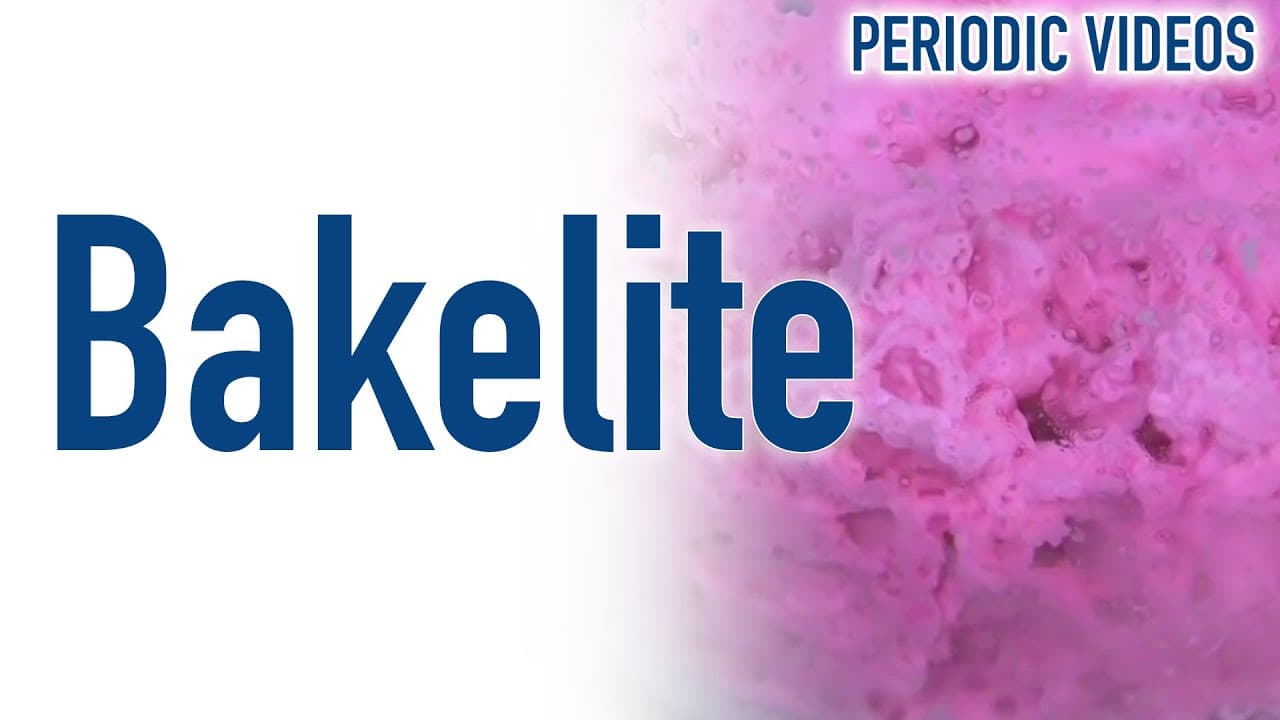
Bakelite, one of the first plastics, synthesized easily from phenol and formaldehyde with wood flour, has unique properties and historical significance.
Transcript
that ready already here in the lab we're going to make a plastic called bakelite bakelite was one of the first plastics that became widespread and it was made about 100 years ago for the first time by a guy called baekeland baekeland was built in the quite complicated way with A's and E's but the material he invented quite soon became much more sim... Read More
Key Insights
- 📻 Bakelite, an early plastic, was invented by Baekeland, revolutionizing the manufacturing of objects like telephones and radios.
- 🌲 The synthesis of Bakelite involves phenol, formaldehyde, and wood flour, with hydrochloric acid catalyzing the reaction for moldable resin.
- 🍝 Bakelite's unique properties made it popular in the past for its durability and insulation, although it is not widely used today.
- 🍻 The chemical structure of Bakelite consists of a network of phenol molecules linked by formaldehyde, resembling a complex polymer chain.
- 😌 Bakelite's historical significance lies in its impact on early plastic manufacturing and its role in creating a variety of objects in the past.
- ❓ Despite advancements in plastics, collectors value Bakelite objects for their nostalgic appeal and unique characteristics.
- 🥺 The chemical reaction between phenol and formaldehyde, under the influence of hydrochloric acid, leads to the formation of a tough resin material.
Install to Summarize YouTube Videos and Get Transcripts
Explore YouTube Video Summarizer or Get YouTube Transcript Extractor
Questions & Answers
Q: How was Bakelite, a key historic plastic, synthesized?
Bakelite, invented by Baekeland, is made from phenol and formaldehyde with added wood flour for strength, reacting with hydrochloric acid to form a tough resin material.
Q: What unique properties did Bakelite possess that made it popular in the past?
Bakelite's brittleness but moldability when heated allowed for the creation of various objects like telephones, radios, and knobs due to its durability and insulation properties.
Q: Why is Bakelite not as commonly used today?
Despite its historical significance, Bakelite has been largely replaced by more advanced plastics. However, collectors cherish Bakelite objects for their nostalgic value and unique characteristics.
Q: How did the chemical reaction between phenol and formaldehyde lead to the formation of Bakelite?
The reaction between phenol and formaldehyde, catalyzed by hydrochloric acid, forms a network of phenol molecules with CH2 groups, creating the polymer known as Bakelite.
Summary & Key Takeaways
-
Bakelite, a pioneering plastic, was invented by Baekeland a century ago, popularly used in telephones and radios.
-
The synthesis of Bakelite involves a reaction between phenol, formaldehyde, and wood flour for added strength.
-
The chemical process includes combining phenol and formaldehyde with hydrochloric acid to create a tough resin material.
Read in Other Languages (beta)
Share This Summary 📚
Summarize YouTube Videos and Get Video Transcripts with 1-Click
Try YouTube Summary with ChatGPT & Claude or YouTube Transcript Generator
Explore More Summaries from Periodic Videos 📚


Summarize YouTube Videos and Get Video Transcripts with 1-Click
Try YouTube Summary with ChatGPT & Claude or YouTube Transcript Generator