How Is China Tackling Pollution and Climate Change?
TL;DR
China is addressing pollution and climate change by implementing stringent environmental policies and investing heavily in clean energy sources like hydropower, wind, and solar. These efforts have led to a significant reduction in coal consumption and improvements in air quality, resulting in increased life expectancy. However, challenges remain, including concerns about the accuracy of environmental data and China's coal consumption potentially rising again.
Transcript
When is seeing not believing? A couple years ago, my friend sent me this photo from Ürümqi, which is the capital of Xinjiang province in northwest China. On this particular day, she couldn't believe her eyes. Checking the quality of the air outside using this app on her iPad, the numbers were telling her the air quality was good, one on a scale of ... Read More
Key Insights
- 🌍 China's government failed to accurately measure and report on PM2.5 levels, leading citizens to question the official air quality statistics and sparking an environmental awakening.
- 💨 China has made significant efforts to tackle its pollution problems, with a particular focus on its energy system. They have shut down coal mines and power plants and made enormous investments in clean and renewable energy like hydropower, wind, and solar.
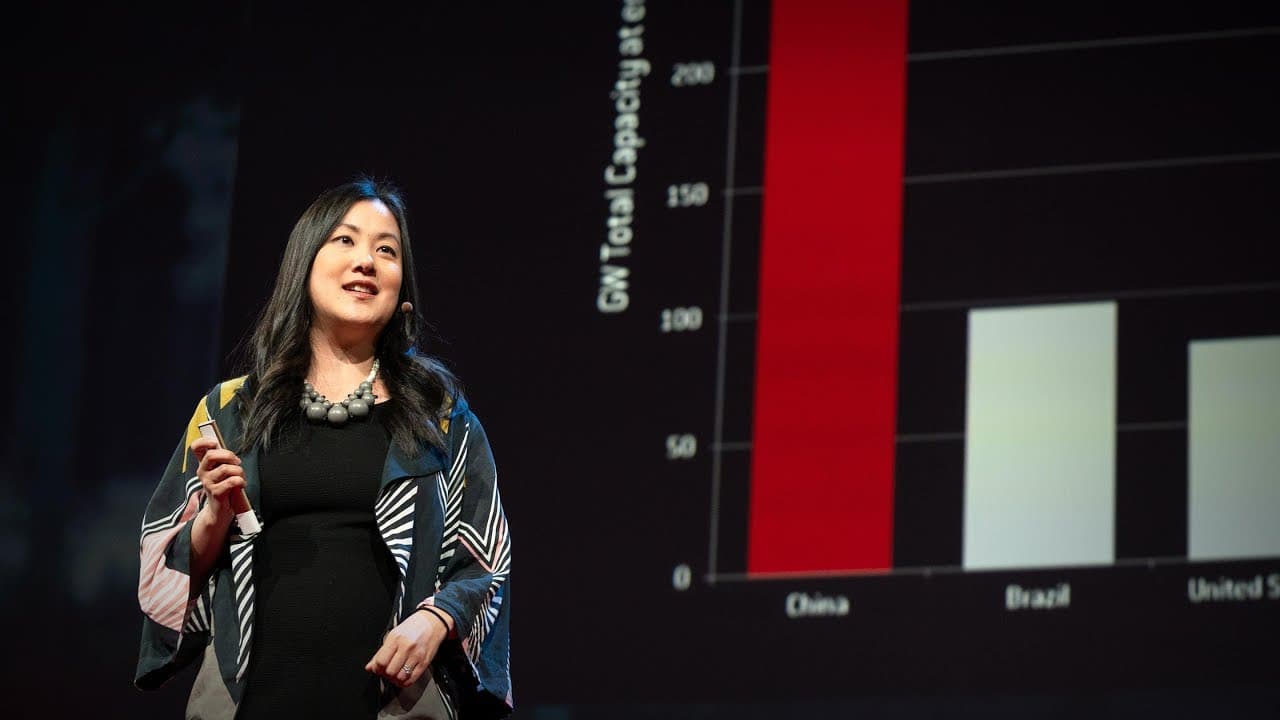
- 🏞️ China leads the world in hydropower, with enough capacity for every citizen to power two homes for a year. They also have the largest power station in the world at the Three Gorges Dam.
- 💨 China is the global leader in wind power, and they have exceeded their targets for installing solar power, installing 35 gigawatts in just seven months alone.
- 🔋 China's efforts on clean energy have had positive effects on air quality, reducing pollution in major cities by up to 30% and leading to an increase in life expectancy.
- 🌍 China's coal consumption may still be on the rise, which could contribute to a global increase in carbon emissions. The accuracy of data on China's coal consumption is often murky due to revisions made by the government.
- ⚠️ China's rapid development and experimentation with policies such as bike sharing may lead to solutions that outpace demand or create unintended consequences.
- 🌏 China's environmental actions have global implications, as air pollution from China can affect populations in other countries. China's investments in infrastructure abroad have included coal-fired power plants, exporting some of its pollution to other nations.
Install to Summarize YouTube Videos and Get Transcripts
Explore YouTube Video Summarizer or Get YouTube Transcript Extractor
Questions & Answers
Q: What spurred China's government to address its pollution problems?
The disconnect between official air quality statistics and what citizens were seeing and breathing prompted an environmental awakening in China. This led to an outcry over air pollution and forced the government to take action.
Q: What steps has China taken to tackle its pollution problems?
China has shut down small coal mines, set limits on coal consumption, and canceled a significant number of coal-fired power plants. Additionally, the country has made substantial investments in clean and renewable energy sources such as hydropower, wind, and solar.
Q: How has China's effort on clean energy impacted air pollution and climate change?
China's reduction in coal consumption has led to improvements in air quality, with major cities experiencing as much as a 30% decrease in air pollution. As for climate change, China's carbon emissions may have already peaked in 2013, and they have surpassed their 2020 carbon reduction pledge ahead of schedule.
Q: Why does China's environmental progress matter globally?
China's environmental actions have global implications. Through its One Belt, One Road Initiative, China is exporting not only aid and technology but also pollution. This means that air pollution originating in China can affect populations beyond its borders. As greenhouse gas emissions do not have a passport, international cooperation is needed.
Summary & Key Takeaways
-
China's government has responded to public outcry over air pollution by tackling its pollution problems and implementing environmental policies.
-
China has made significant investments in clean and renewable energy, including hydropower, wind, and solar, making it a global leader in these technologies.
-
The reduction in coal consumption and improvements in air quality have resulted in longer life expectancy and reductions in air pollution-related deaths in China. However, there are still challenges and uncertainties surrounding China's environmental efforts.
Read in Other Languages (beta)
Share This Summary 📚
Summarize YouTube Videos and Get Video Transcripts with 1-Click
Try YouTube Summary with ChatGPT & Claude or YouTube Transcript Generator
Explore More Summaries from TED 📚





Summarize YouTube Videos and Get Video Transcripts with 1-Click
Try YouTube Summary with ChatGPT & Claude or YouTube Transcript Generator