The Tipping Points of Climate Change — and Where We Stand | Johan Rockström | TED
TL;DR
Earth's climate is changing faster than predicted, requiring immediate action.
Transcript
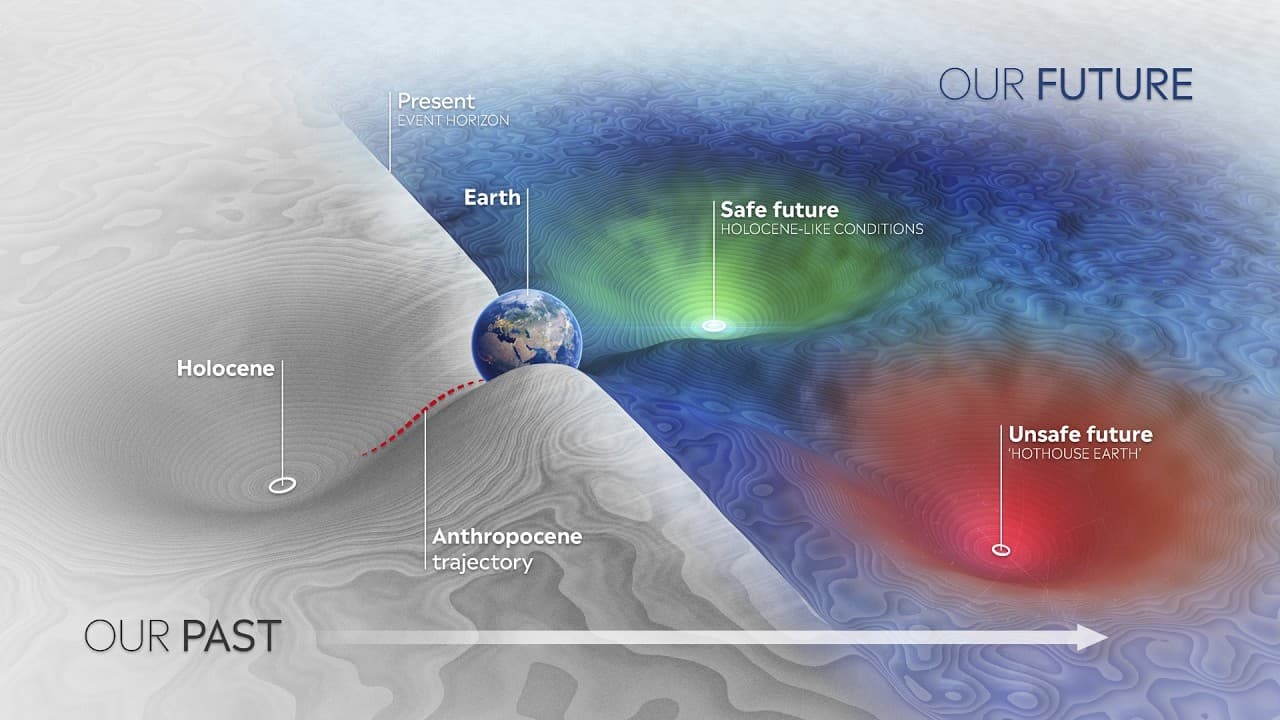
We Earth system scientists and climate scientists are getting seriously nervous. The planet is changing faster than we have expected. We are, despite years of raising the alarm, now seeing that the planet is actually in a situation where we underestimated risks. Abrupt changes are occurring in a way that is way beyond the realistic expectations in ... Read More
Key Insights
- Scientists are increasingly alarmed by the rapid changes in Earth's climate, which are happening faster than anticipated, highlighting the need for urgent action.
- The global mean surface temperature has risen by 1.2 degrees Celsius, with projections indicating a potential increase to 2 degrees within 20 years, posing severe risks.
- Various Earth systems, such as fresh water consumption and species extinction, are undergoing acceleration, threatening planetary stability and resilience.
- Economic impacts of climate change are significant, with potential losses of up to 18% of global GDP by 2050 if current trends continue.
- The buffering capacity of Earth's systems is declining, with natural carbon sinks like forests and oceans showing reduced ability to absorb carbon dioxide.
- The risk of crossing climate tipping points is increasing, with five major systems potentially tipping at 1.5 degrees Celsius, leading to irreversible changes.
- The current trajectory suggests a likely overshoot of the 1.5-degree target, necessitating immediate emission reductions to avoid catastrophic outcomes.
- Despite the dire situation, there are viable solutions for mitigating climate change, including transitioning to renewable energy and sustainable practices.
Install to Summarize YouTube Videos and Get Transcripts
Explore YouTube Video Summarizer or Get YouTube Transcript Extractor
Questions & Answers
Q: What is causing scientists to be nervous about the current state of the planet?
Scientists are nervous because the planet is changing faster than expected, with abrupt changes occurring beyond realistic expectations. The global temperature rise and acceleration of climate-related impacts, such as extreme weather events and economic costs, highlight the underestimated risks and the urgent need for action.
Q: What are the projected economic impacts of climate change if current trends continue?
If current trends continue, climate change could lead to an 18% loss in global GDP by 2050, equivalent to 38 trillion US dollars annually. This projection underscores the significant economic costs of inaction, as climate-related impacts like droughts, floods, and heatwaves increasingly affect societies worldwide.
Q: How is the buffering capacity of Earth's systems changing?
The buffering capacity of Earth's systems, which helps dampen shocks and absorb greenhouse gases, is declining. Natural carbon sinks like forests and oceans are losing their ability to absorb carbon dioxide. For example, parts of the Amazon rainforest have already become carbon sources, exacerbating climate change.
Q: What are tipping points, and why are they concerning?
Tipping points are critical thresholds in Earth systems that, when crossed, lead to irreversible changes. They are concerning because crossing them could result in self-amplifying warming and loss of life support systems. Five major tipping points, including the Greenland ice sheet and Amazon rainforest, are at risk at 1.5 degrees Celsius.
Q: What is the significance of the 1.5-degree Celsius target?
The 1.5-degree Celsius target is significant because it represents a threshold beyond which the risk of crossing tipping points increases, leading to catastrophic climate impacts. Staying within this target requires immediate emission reductions and maintaining Earth's natural systems to prevent irreversible changes.
Q: What solutions are available to mitigate climate change?
Solutions to mitigate climate change include transitioning away from fossil fuels, adopting circular business models, and promoting sustainable food systems. Additionally, restoring natural ecosystems, such as forests and wetlands, and investing in renewable energy, which is now cheaper than fossil fuels, are crucial for a stable future.
Q: Why is there still hope for addressing the climate crisis?
There is hope because solutions are available, and a majority of citizens worldwide care about climate and nature. Implementing these solutions can lead to a healthier and more stable future, with economic benefits and job creation. The key is achieving exponential change through speed and scale in implementing these solutions.
Q: What role do planetary boundaries play in addressing climate change?
Planetary boundaries define the safe operating space for humanity by regulating Earth's stability and resilience. Addressing climate change requires not only reducing emissions but also maintaining these boundaries, such as biodiversity and freshwater use, to ensure Earth's systems can continue to support life and absorb carbon dioxide.
Summary & Key Takeaways
-
Johan Rockström provides a scientific assessment of the planet's state, emphasizing the urgent need for action as climate change accelerates beyond expectations. He highlights the risks of crossing tipping points and the economic impacts of inaction.
-
The global temperature rise and its consequences, such as extreme weather and economic losses, are discussed. Rockström stresses the importance of reducing emissions and preserving Earth's natural systems to prevent catastrophic outcomes.
-
Despite the challenges, there is optimism in the availability of solutions, including renewable energy and sustainable practices, which can lead to a healthier, stable future if implemented swiftly and effectively.
Read in Other Languages (beta)
Share This Summary 📚
Summarize YouTube Videos and Get Video Transcripts with 1-Click
Try YouTube Summary with ChatGPT & Claude or YouTube Transcript Generator
Explore More Summaries from TED 📚
Summarize YouTube Videos and Get Video Transcripts with 1-Click
Try YouTube Summary with ChatGPT & Claude or YouTube Transcript Generator