Biology Forests Our Life Line Part 2 (Plants in forests) Class 7 VII
TL;DR
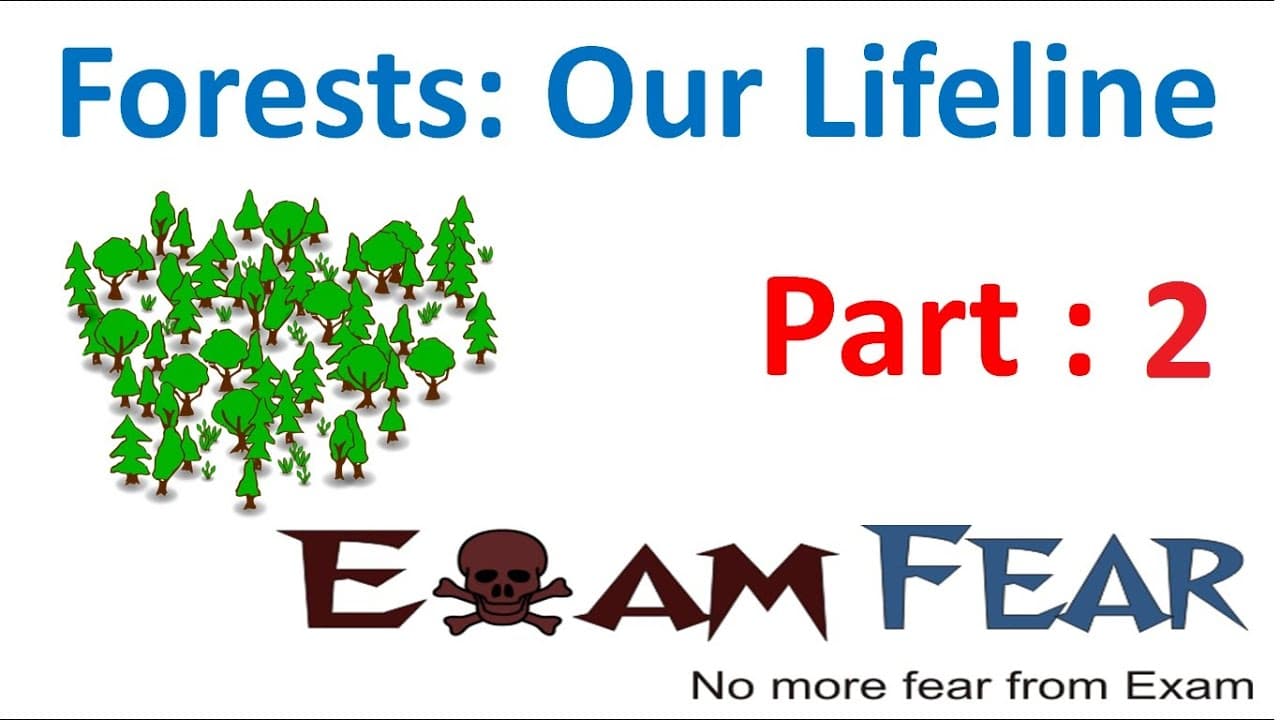
Forests are home to a wide variety of plant species, each with different shapes and sizes. The forest canopy forms a dense layer that blocks intense sunlight, while the understory plants adapt to survive with limited light.
Transcript
hello friends this video on forests our lifeline part 2 is brought to you by exam fear dot com no more fear from exam now let's talk about the plant variety in a forest now it is not just a couple of varieties of plants which are seen in a forest huge varieties of plants are found in forest starting from bamboos neem palace teak fig so all these pl... Read More
Key Insights
- 🤑 Forests are rich in plant diversity, with various species like bamboo, teak, and fig, each having unique shapes and appearances.
- 💁 The forest canopy, formed by the crowns of tall trees, blocks intense sunlight and creates a shaded environment.
- 🌱 Understories consist of smaller plants, including shrubs and herbs, that adapt to survive with limited sunlight.
- 🌱 Different types of forests, such as rainforests and deciduous forests, have varying plant compositions due to their unique climatic conditions.
- 🖐️ Canopy layers and understories play important roles in regulating sunlight and rainfall in forest ecosystems.
- 💨 Forest canopies provide habitats for many species of animals and act as a buffer against wind and temperature fluctuations.
- 🌱 Understory plants are capable of carrying out photosynthesis and completing their life cycles with limited sunlight.
Install to Summarize YouTube Videos and Get Transcripts
Explore YouTube Video Summarizer or Get YouTube Transcript Extractor
Questions & Answers
Q: What are some examples of plants found in forests?
Forests are home to various plant species, including bamboo, neem, teak, and fig. These plants have different shapes and appearances, with some being tall and spread out, while others are smaller and compact.
Q: How does the forest canopy affect sunlight and rainfall in the forest?
The dense canopy formed by the crowns of the tall trees blocks intense sunlight from reaching the forest floor. During rainfall, the canopy allows the rainwater to drip down through the branches and leaves, rather than directly falling to the ground.
Q: What is the significance of the forest canopy?
The forest canopy serves as a roof-like structure in the forest, reducing the intensity of sunlight and creating a shaded environment. It also helps in retaining rainwater by preventing direct rainfall to the ground.
Q: What are understories in a forest?
Understories are the layers of smaller plants, including shrubs and herbs, that grow beneath the forest canopy. These plants receive limited sunlight due to the dense canopy above, but they have adapted to carry out photosynthesis and complete their life cycle in shade.
Summary & Key Takeaways
-
Forests contain a diverse range of plant species, including trees like bamboo, neem, teak, and fig, as well as smaller plants like ferns and mosses.
-
Each plant species has a unique shape and appearance, ranging from tall and spread out to conical and compact.
-
The canopy, formed by the crowns of the tall trees, creates a roof-like structure in the forest, blocking intense sunlight and creating a shaded environment for the understory plants.
Read in Other Languages (beta)
Share This Summary 📚
Summarize YouTube Videos and Get Video Transcripts with 1-Click
Try YouTube Summary with ChatGPT & Claude or YouTube Transcript Generator
Explore More Summaries from LearnoHub - Class 11, 12 📚




Summarize YouTube Videos and Get Video Transcripts with 1-Click
Try YouTube Summary with ChatGPT & Claude or YouTube Transcript Generator