New Arrivals Welcomed Aboard the Space Station on This Week @NASA – September 27, 2019
TL;DR
International Space Station welcomes three new occupants, Japan sends supplies to the space station, Australia joins America's Moon to Mars exploration, Lockheed Martin awarded contract for Orion spacecraft production, TESS and Swift missions observe a rare tidal disruption phenomenon, and registration opens for NASA's International Space Apps Challenge.
Transcript
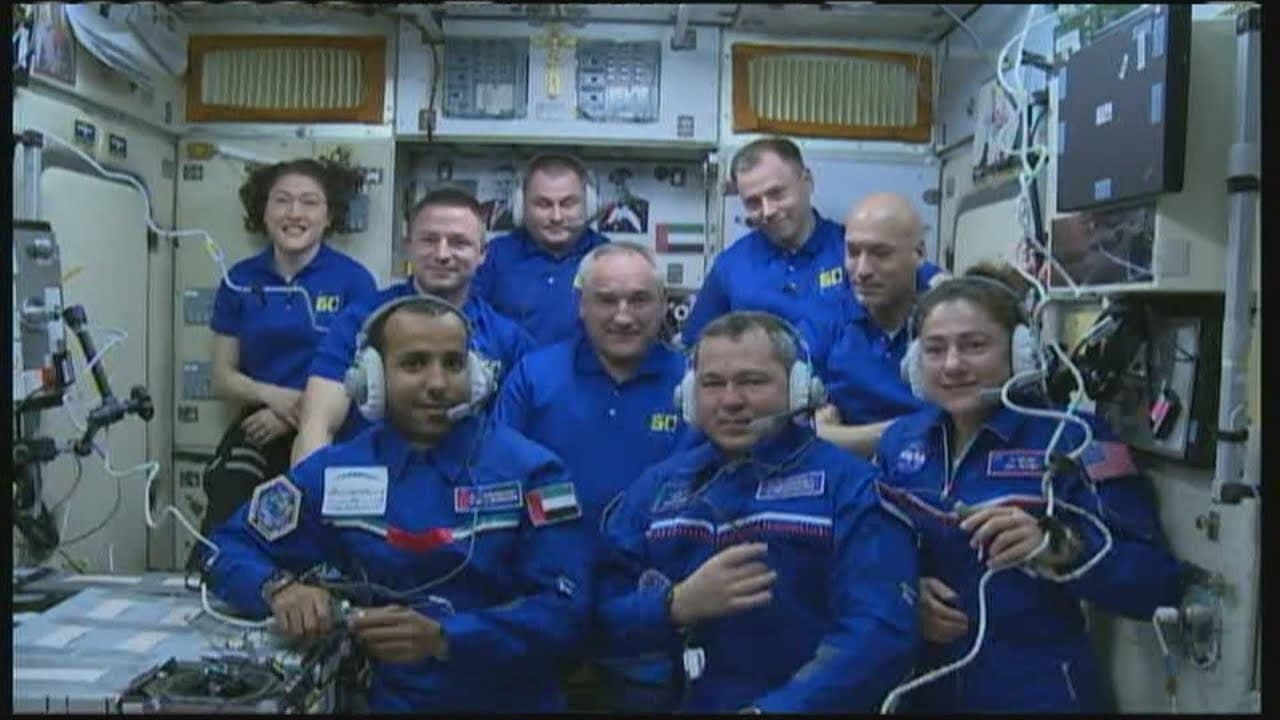
New arrivals in low-Earth orbit – welcome aboard the space station! More research, supplies, and other cargo heads to the station … And a new partner for our Moon to Mars effort … a few of the stories to tell you about – This Week at NASA! The three newest occupants of the International Space Station arrived at the orbital outpost on September 25, ... Read More
Key Insights
- 👶 The International Space Station continues to receive new occupants and serve as a platform for various investigations and technology demonstrations.
- 🔋 Japan plays a crucial role in supplying the space station with necessary resources, including batteries for power channels.
- 🌎 Australia's partnership in America's Moon to Mars exploration approach signifies the growing international cooperation in space exploration.
- 🏛️ The production and operations contract for the Orion spacecraft has been awarded to Lockheed Martin, enabling future missions to the Moon and building a sustainable presence.
- 🖤 TESS and Swift missions provide valuable insights into rare astronomical phenomena, such as tidal disruptions caused by black holes.
Install to Summarize YouTube Videos and Get Transcripts
Explore YouTube Video Summarizer or Get YouTube Transcript Extractor
Questions & Answers
Q: Who were the three new occupants that arrived at the International Space Station?
The three new occupants who arrived at the International Space Station are Jessica Meir, Oleg Skripochka, and Hazzaa Ali Almansoori. They launched from the Baikonur Cosmodrome in Kazakhstan and were welcomed by the crew already on board.
Q: What did the cargo spacecraft from Japan deliver to the space station?
The cargo spacecraft from Japan delivered more than four tons of supplies, spare parts, and experiment hardware to the space station. It included new lithium-ion batteries to replace the aging nickel-hydrogen batteries for two of the station's power channels.
Q: What did Australia announce regarding the Moon to Mars exploration?
Australia announced its intention to join America's Moon to Mars exploration approach, including the Artemis lunar program. They foresee potential contributions in areas such as robotics, automation, and remote asset management, similar to what is used in Australian mining operations.
Q: What did TESS and Swift missions observe?
TESS and Swift missions observed a rare tidal disruption phenomenon. This occurs when a star gets too close to a black hole and is broken apart by its extreme gravity and intense tides, resulting in the star turning into a stream of gas and debris.
Summary & Key Takeaways
-
Three new occupants arrived at the International Space Station after launching from Kazakhstan, joining the crew already on board to support various investigations and technology demonstrations.
-
An unpiloted cargo spacecraft from Japan delivered supplies, spare parts, and experiment hardware to the space station, including new lithium-ion batteries to replace aging ones.
-
Australia announced its intention to join America's Moon to Mars exploration approach, with potential contributions in robotics, automation, and remote asset management.
-
Lockheed Martin has been awarded the contract for the production and operations of Orion spacecraft, supporting as many as 12 Artemis missions, including the mission to carry the first woman and next man to the Moon by 2024.
-
TESS and Swift missions observed a rare tidal disruption phenomenon caused by a star straying too close to a supermassive black hole, turning the star into a stream of gas and debris.
-
Registration is open for NASA's International Space Apps Challenge, a global hackathon using NASA data to solve real problems on Earth and in space.
Read in Other Languages (beta)
Share This Summary 📚
Summarize YouTube Videos and Get Video Transcripts with 1-Click
Try YouTube Summary with ChatGPT & Claude or YouTube Transcript Generator
Explore More Summaries from NASA 📚
Summarize YouTube Videos and Get Video Transcripts with 1-Click
Try YouTube Summary with ChatGPT & Claude or YouTube Transcript Generator