Chemistry Change Around Us Part 2 (Reversible & Irreversible Change) Class 6 VI
TL;DR
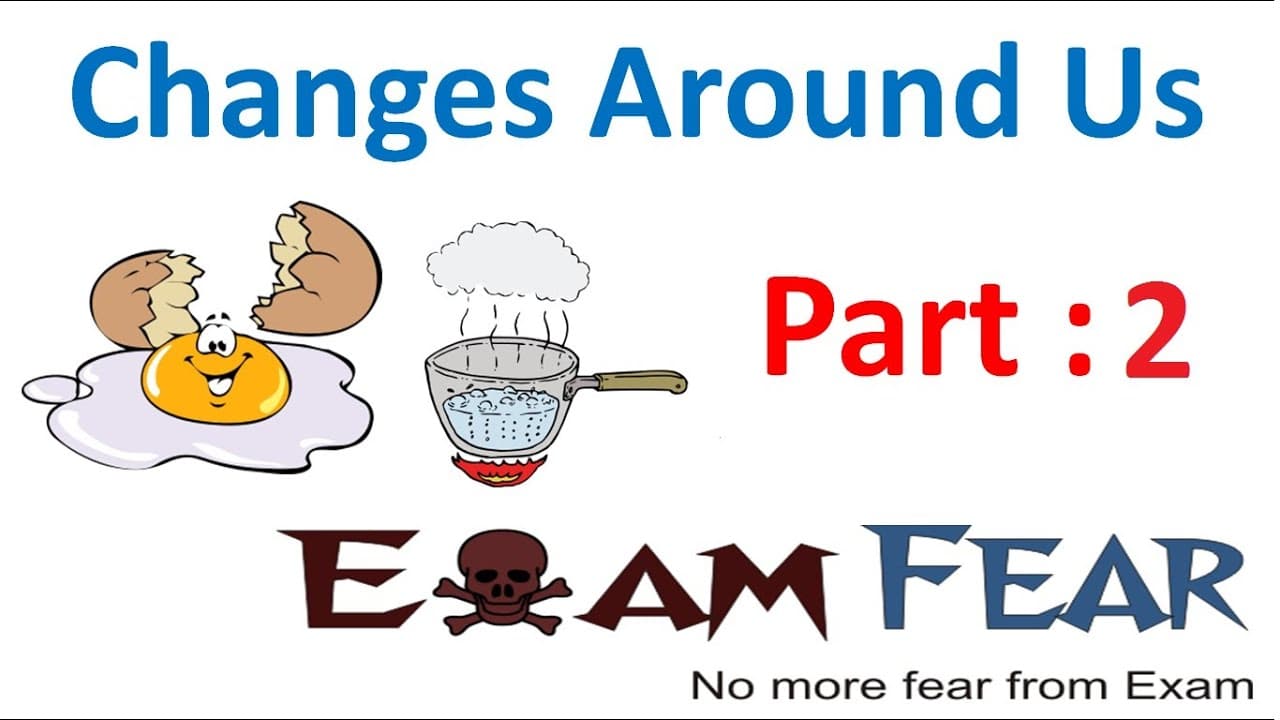
This video explains the different types of changes, such as changes in shape, form, size, and state, and discusses reversible and irreversible changes.
Transcript
hello friends this video on changes around us part 2 is brought to you by example.com no more fear from exam so now the question is there are many different types of changes for example some changes might cause a change in shape for example when you tear a paper into four pieces so what happens the shape changes because the shape of each piece is v... Read More
Key Insights
- 💁 Changes can occur in shape, form, size, and state, resulting in differences in appearance or physical properties.
- 🥺 Chemical reactions can lead to changes in color, indicating the formation of new substances.
- 💱 Reversible changes allow the original substance to be regained, while irreversible changes permanently transform the initial substance.
- 🏮 Examples of reversible changes include folding a piece of paper into a paper plane, while burning a piece of paper into ashes is an irreversible change.
Install to Summarize YouTube Videos and Get Transcripts
Explore YouTube Video Summarizer or Get YouTube Transcript Extractor
Questions & Answers
Q: What are some examples of changes in shape?
Changes in shape can occur when tearing a paper into pieces, folding a piece of paper into a paper plane, or molding a sheet of paper into a paper board.
Q: How does freezing water illustrate a change in form?
Freezing water in a deep fridge results in the formation of ice cubes. The water, which was originally liquid, transforms into a solid form.
Q: How does the reaction between magnesium and copper sulfate demonstrate a change in color?
When a bar of magnesium is placed in a copper sulfate solution, a chemical reaction occurs, causing the blue color of the solution to change to white. The bar of magnesium also changes color from white to blue.
Q: What is the main difference between reversible and irreversible changes?
Reversible changes can be reversed, meaning the final state can transform back to the initial state. Irreversible changes, on the other hand, permanently transform the initial substance into a different final state.
Summary & Key Takeaways
-
Changes can occur in shape, form, size, and state, such as when tearing a paper into pieces or freezing water into ice cubes.
-
Chemical reactions can cause changes in color, as seen when magnesium reacts with copper sulfate, turning the blue solution colorless and the bar blue.
-
There are two categories of changes: reversible changes, where the original substance can be regained, and irreversible changes, where the original substance cannot be recovered.
Read in Other Languages (beta)
Share This Summary 📚
Summarize YouTube Videos and Get Video Transcripts with 1-Click
Try YouTube Summary with ChatGPT & Claude or YouTube Transcript Generator
Explore More Summaries from LearnoHub - Class 11, 12 📚

Summarize YouTube Videos and Get Video Transcripts with 1-Click
Try YouTube Summary with ChatGPT & Claude or YouTube Transcript Generator