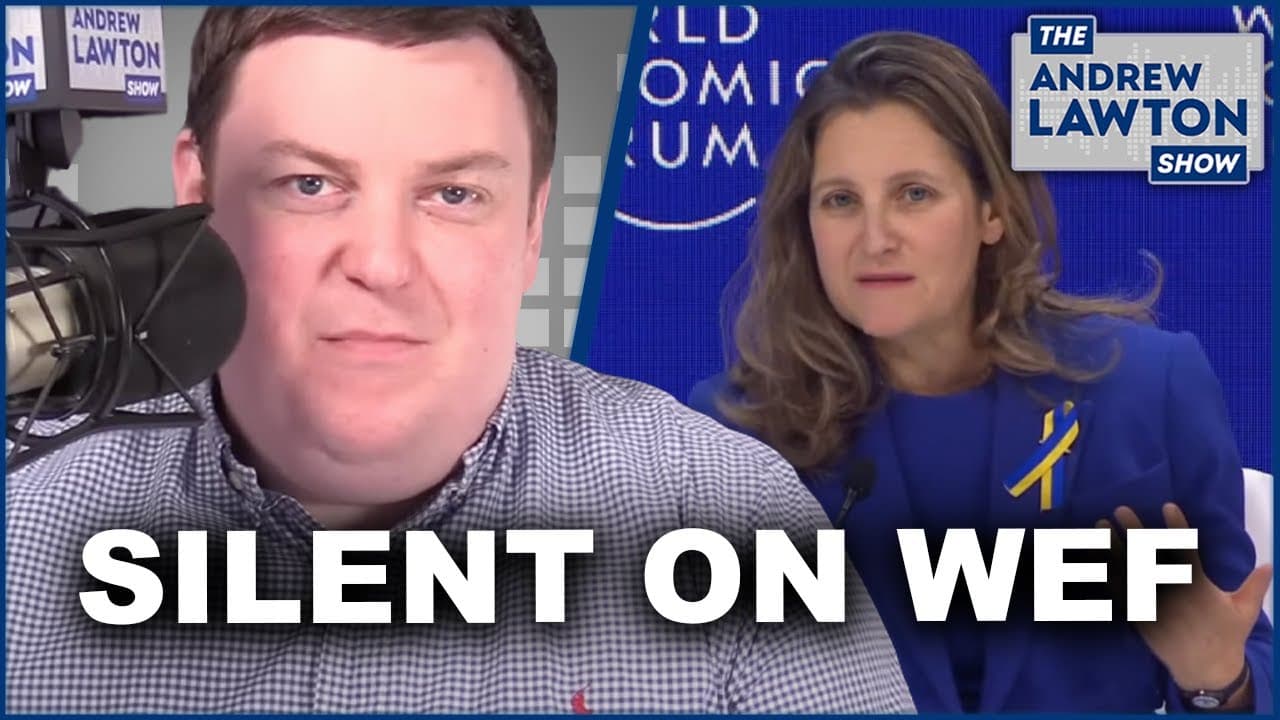
Chrystia Freeland tight-lipped on what she did in Davos
TL;DR
The show critiques Canada's government policies, including transparency issues and electric vehicle mandates.
Transcript
welcome to Canada's most irreverent talk show this is the Andrew logen show brought to you by True North hello and welcome to you all this is Canada's most everan talk show Midway through the week all already that's the benefit of a shorter week on this Wednesday July 3rd we are right in the middle of Canada Day and Independence Day so if you're uh... Read More
Key Insights
- 🤨 Chrystia Freeland's involvement with the World Economic Forum raises significant concerns about potential conflicts of interest and demands for transparency in government activities.
- 🚙 The electric vehicle mandate is projected to adversely affect Canada’s auto industry, with many consumers resistant to shifting away from gas-powered vehicles.
- 🗯️ The dialogue surrounding the injunction at the University of Toronto illustrates ongoing tensions between free speech rights and property rights in academic settings.
- 🚂 Observers suggest that government's insistence on electric vehicle mandates stems from ideological motives, rather than consumer demand or economic viability.
- 🍂 There is skepticism about the long-term sustainability of the auto sector under stringent EV requirements, with significant financial burdens potentially falling on taxpayers.
- 💗 The show emphasizes a growing need to critically analyze expert opinions in Canadian politics, especially as public trust in these voices wanes.
- 🚙 The financial costs associated with transitioning to electric vehicles could reach astronomical levels, questioning the feasibility of such policies.
Install to Summarize YouTube Videos and Get Transcripts
Explore YouTube Video Summarizer or Get YouTube Transcript Extractor
Questions & Answers
Q: What transparency issues are raised regarding Chrystia Freeland's relationship with the World Economic Forum?
The show reveals concerns over Chrystia Freeland, Canada's Deputy Prime Minister, serving on the Board of Trustees for the World Economic Forum, raising questions about potential conflicts of interest. Critics argue that it is inappropriate for a government official to be tied to an organization that pursues influential policies without adequate disclosure of meetings and discussions with global leaders, undermining accountability.
Q: How does the electric vehicle mandate impact Canada's auto industry?
The electric vehicle mandate is expected to pose significant challenges for Canada’s auto sector by making vehicles less desirable and profitable. With mandatory compliance starting soon, many consumers still prefer gas-powered vehicles, and there's widespread skepticism about the economic viability of electric cars, which would require extensive subsidies to remain competitive in the market.
Q: What triggered the injunction against the anti-Israel encampment at the University of Toronto?
The University of Toronto sought an injunction against an encampment protesting Israeli policies, as they deemed it a form of trespass on private property. Legal uncertainties regarding rights to assembly and the enforcement of the university’s policies prompted the legal action, pushing authorities to balance free speech rights with property interests.
Q: How do government officials justify their insistence on maintaining the EV mandate despite pushback?
Officials argue the EV mandate is part of a broader commitment to environmental standards and reducing carbon emissions in line with global trends towards sustainability. They frequently frame opposition as resistance to necessary change and stress the importance of transitioning away from fossil fuels to combat climate change, despite significant economic and consumer barriers.
Q: What were the financial implications of the electric vehicle mandate discussed in the show?
Economists argue that sustaining the auto sector under the electric vehicle mandate could cost taxpayers significantly, with estimates ranging from hundreds of billions to over a trillion dollars in subsidies necessary to encourage sales and production. Concerns about profitability and consumer demand are central to this financial debate.
Q: How does the show perceive the current state of expert opinion and influence in Canadian politics?
The show critiques the reliance on "expert opinions," suggesting that the so-called expert class often escapes scrutiny despite having contributed to flawed policies and public mistrust. It argues that the political landscape needs to shift towards more open criticism of experts and a reassessment of their roles in shaping policy, particularly as it relates to addressing growing public dissatisfaction.
Summary & Key Takeaways
-
The show discusses the close relationship between Canada’s government officials and the World Economic Forum, emphasizing the need for transparency in government dealings and questioning the potential conflicts of interest for figures like Chrystia Freeland.
-
There's an exploration of the implications of Canada's electric vehicle mandate which could jeopardize the auto industry, noting consumer reluctance and the unsustainable economics of EV production amid rising costs and dependence on foreign minerals.
-
Legal perspectives on a recent injunction to dismantle an anti-Israel encampment at the University of Toronto are examined, highlighting tension between free speech and property rights, along with a constitutional analysis of university policies.
Read in Other Languages (beta)
Share This Summary 📚
Summarize YouTube Videos and Get Video Transcripts with 1-Click
Try YouTube Summary with ChatGPT & Claude or YouTube Transcript Generator
Explore More Summaries from True North 📚
Summarize YouTube Videos and Get Video Transcripts with 1-Click
Try YouTube Summary with ChatGPT & Claude or YouTube Transcript Generator