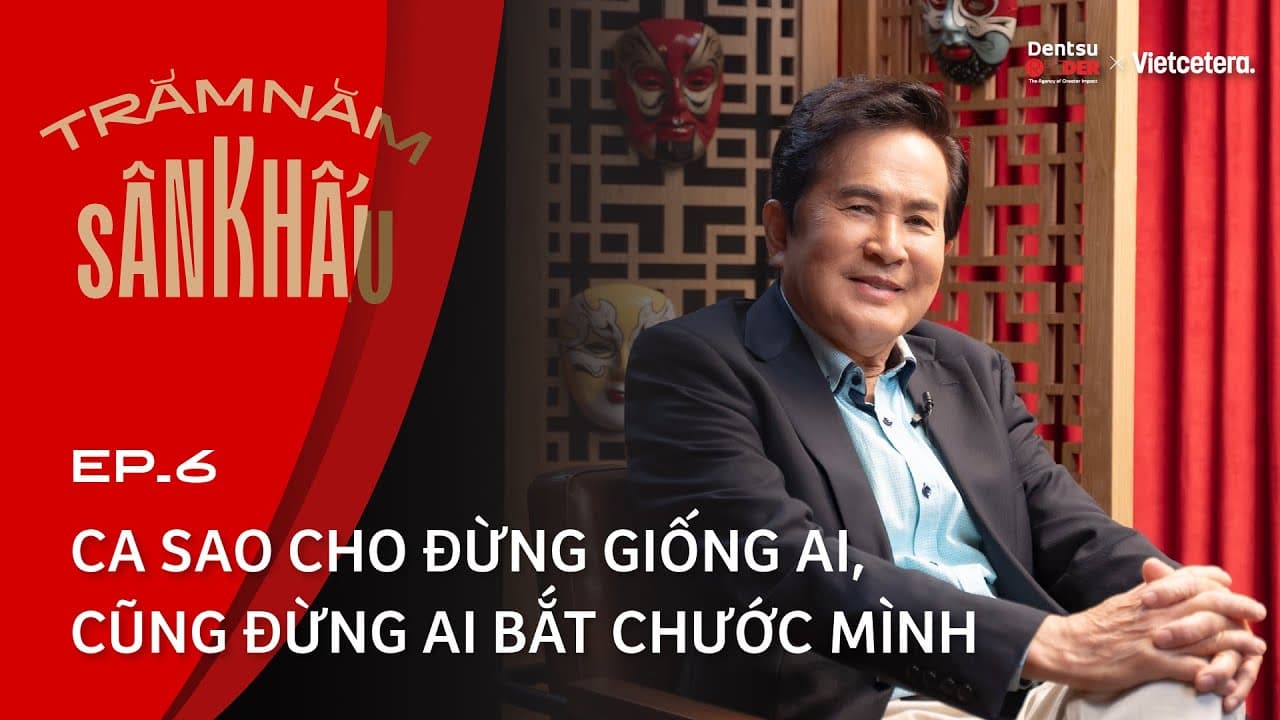
Ca sao cho đừng giống ai, cũng đừng ai bắt chước mình - Nghệ sĩ Hoài Thanh | Trăm Năm Sân Khấu
TL;DR
Artist Hoài Thanh reflects on his unique career journey.
Transcript
In the past, I had a habit of carefully studying the script before performing, so that my performance style would not be the same as anyone else's, and not to let anyone else have the same performance style as me. Why did I go to Australia? That's because I wanted to go there to reunite with my child. That's true because it's the same wherever... Read More
Key Insights
- Hoài Thanh emphasizes the importance of unique performance styles, avoiding imitation to maintain artistic integrity.
- He moved to Australia to reunite with his family, a decision that meant giving up his career in Vietnam.
- Despite hardships, Hoài Thanh remains passionate about reformed art, believing it will never truly die.
- His career path was unconventional, starting in a major troupe and moving through smaller ones before achieving success.
- The Thanh Tâm award, a prestigious recognition, was highly regarded but never achieved by Hoài Thanh.
- Hoài Thanh's journey included many setbacks, like troupe disbandments, but he persevered, eventually gaining fame.
- His move to Australia marked a significant life change, leading to reduced performance opportunities.
- Hoài Thanh's story highlights the challenges and joys of a career in reformed theater, underlining dedication and resilience.
Install to Summarize YouTube Videos and Get Transcripts
Explore YouTube Video Summarizer or Get YouTube Transcript Extractor
Questions & Answers
Q: What motivated Hoài Thanh to develop a unique performance style?
Hoài Thanh was driven by a desire to maintain artistic integrity and individuality in his performances. He believed that by developing a unique style, he could avoid imitation and stand out in the reformed art scene. This approach not only distinguished him from other artists but also ensured that his performances were memorable and impactful.
Q: Why did Hoài Thanh move to Australia?
Hoài Thanh moved to Australia primarily to reunite with his family. He wanted to be with his children and ensure the family remained together. This decision, however, came with the sacrifice of his career in Vietnam, as moving meant giving up his regular performance opportunities and the vibrant artistic community he was part of.
Q: What challenges did Hoài Thanh face in his career?
Hoài Thanh faced numerous challenges, including frequent troupe disbandments and the need to adapt to different artistic environments. His journey was marked by uncertainty and financial difficulties, especially when troupes dissolved unexpectedly. Despite these setbacks, he persevered, driven by his passion for reformed art and a desire to succeed.
Q: How did Hoài Thanh's career path differ from others?
Hoài Thanh's career path was unique as he started in a major troupe but later moved through smaller ones before achieving success. This unconventional route was characterized by resilience and adaptability, as he navigated various challenges and opportunities, ultimately leading to his recognition as a respected artist in the reformed art community.
Q: What is the significance of the Thanh Tâm award in Hoài Thanh's story?
The Thanh Tâm award is a prestigious recognition in the reformed art community, symbolizing excellence in performance and character. Although Hoài Thanh admired the award and its recipients, he never achieved it. The award represented a high standard of artistic achievement, serving as an aspirational goal for many artists, including Hoài Thanh.
Q: How did the move to Australia affect Hoài Thanh's career?
Moving to Australia significantly impacted Hoài Thanh's career by reducing his performance opportunities. The relocation meant leaving behind the vibrant reformed art scene in Vietnam, which limited his ability to perform regularly. Despite this, he continued to nurture his passion for the art form, maintaining his dedication to reformed theater.
Q: What insights does Hoài Thanh's story provide about a career in reformed theater?
Hoài Thanh's story offers insights into the dedication, resilience, and passion required for a career in reformed theater. It highlights the challenges artists face, such as financial instability and the need for adaptability. His journey underscores the importance of maintaining artistic integrity and finding joy in the art, despite the difficulties encountered.
Q: Why does Hoài Thanh believe reformed art will never die?
Hoài Thanh believes reformed art will never die because it is rooted in a deep cultural tradition and continues to inspire passion among artists and audiences. He argues that while its golden age may have passed, reformed art retains its vitality and relevance, persisting through the dedication of those who cherish and practice it.
Summary & Key Takeaways
-
Artist Hoài Thanh shares his journey from an amateur performer to a renowned reformed artist. He emphasizes the importance of having a unique performance style and the challenges faced, such as troupe disbandments and moving to Australia to reunite with family.
-
Despite hardships, Hoài Thanh remains passionate about reformed art, believing it will never die. His career path was unconventional, starting in a major troupe and moving through smaller ones before achieving success. He highlights the significance of the Thanh Tâm award, which he admired but never won.
-
Hoài Thanh's move to Australia marked a significant life change, leading to reduced performance opportunities. His story highlights the challenges and joys of a career in reformed theater, underlining dedication and resilience, with a focus on maintaining artistic integrity and passion.
Read in Other Languages (beta)
Share This Summary 📚
Summarize YouTube Videos and Get Video Transcripts with 1-Click
Try YouTube Summary with ChatGPT & Claude or YouTube Transcript Generator
Explore More Summaries from Vietcetera 📚





Summarize YouTube Videos and Get Video Transcripts with 1-Click
Try YouTube Summary with ChatGPT & Claude or YouTube Transcript Generator