How Loud Can Sounds Be Before They Kill You?
TL;DR
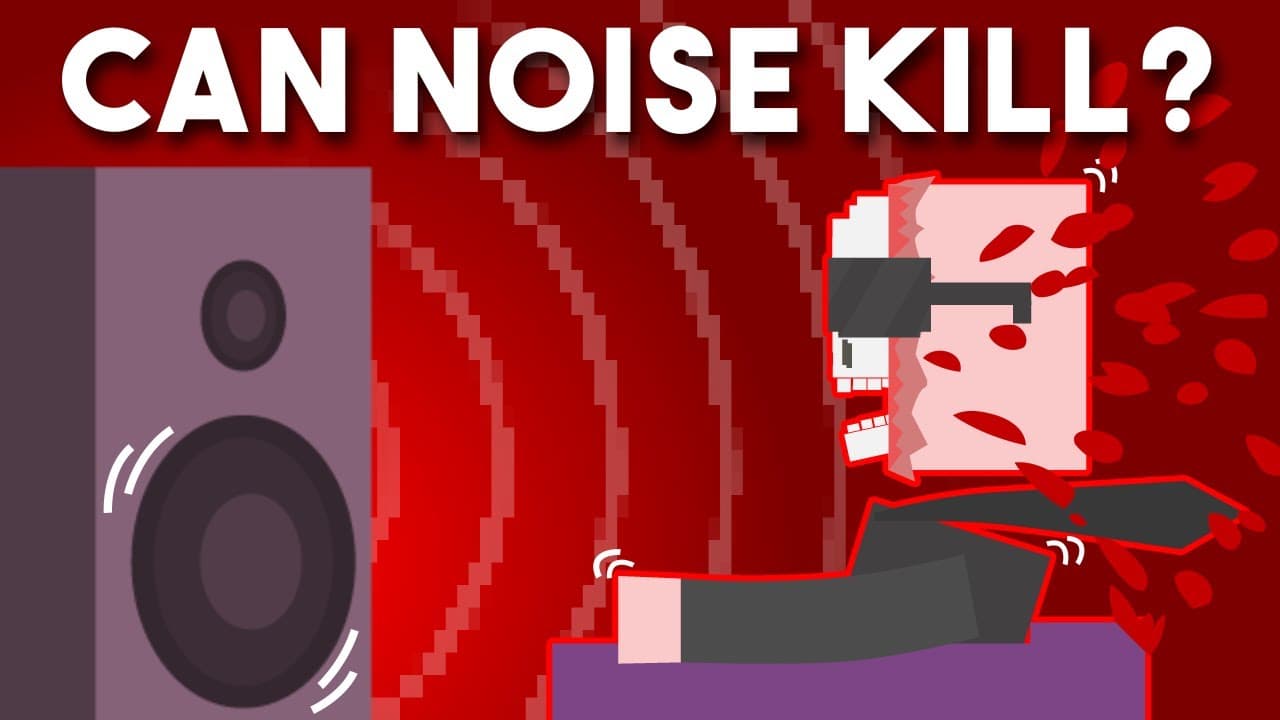
Sounds above 210 decibels can cause death by rupturing lungs, while levels over 100 dB lead to hearing loss. Immediate hearing damage occurs at 120 dB, like standing next to sirens, with eardrums bursting around 175 dB. The risk grows with sound exposure, making it essential to protect your hearing.
Transcript
This one question that was sent to me a month ago has been stuck on my mind ever since. It's something I really never thought of until this person asked, "Hey, Bloc, how much loud can kill you?" I'm putting grammatical errors aside here, people. I get what they're trying to ask. We're going to explore this question soundly for this epis... Read More
Key Insights
- 👂 Sound waves travel through the ear by vibrating the eardrum and moving tiny bones in the middle ear to amplify the sound.
- 👂 Hair cells in the cochlea are susceptible to damage from loud sounds, leading to hearing loss over time with repeated exposure.
- 👂 The intensity of sounds is measured in decibels, with levels above 100 dB posing a risk to hearing health.
- ☺️ Sounds above 210 dB can cause death by rupturing eardrums and lungs.
- 😟 Infrasound can affect the central nervous, cardiovascular, and respiratory systems, leading to various health issues.
- 🔊 Loud sounds can lead to loss of concentration, alertness, depression, and the vibration of internal organs.
- ☺️ Certain sounds above 100 dB can cause hearing loss, with levels above 140 dB resulting in immediate pain.
Install to Summarize YouTube Videos and Get Transcripts
Explore YouTube Video Summarizer or Get YouTube Transcript Extractor
Questions & Answers
Q: How do sound waves travel through the ear to reach the brain?
Sound waves enter the ear canal, vibrate the eardrum, move bones in the middle ear, travel to the cochlea, and are translated into electrical impulses that reach the brain.
Q: What components in the ear are most susceptible to damage from loud sounds?
Hair cells in the cochlea are most vulnerable to damage from loud sounds, as they can bend and even die when exposed to intense noise, resulting in hearing loss.
Q: How do researchers measure the intensity of sounds that can cause harm?
Intensity is measured in decibels on a logarithmic scale, where a small increase in decibels represents a significant increase in sound intensity, with levels above 100 dB posing a risk to hearing.
Q: Can sounds above 210 dB cause immediate death?
Sounds above 210 dB can cause lung rupture and death, but such extreme levels are rare in everyday environments, with even the world's loudest sound falling short of this threshold.
Summary & Key Takeaways
-
Sound waves travel through the ear canal, vibrating and moving tiny bones that amplify the sound before reaching the cochlea.
-
Louder sounds can damage hair cells in the cochlea, causing hearing loss either quickly or over time with repeated exposure.
-
Intensity of sounds is measured in decibels, with levels above 100 dB capable of causing hearing loss and even death at extreme levels.
Read in Other Languages (beta)
Share This Summary 📚
Summarize YouTube Videos and Get Video Transcripts with 1-Click
Try YouTube Summary with ChatGPT & Claude or YouTube Transcript Generator
Explore More Summaries from Life Noggin 📚






Summarize YouTube Videos and Get Video Transcripts with 1-Click
Try YouTube Summary with ChatGPT & Claude or YouTube Transcript Generator