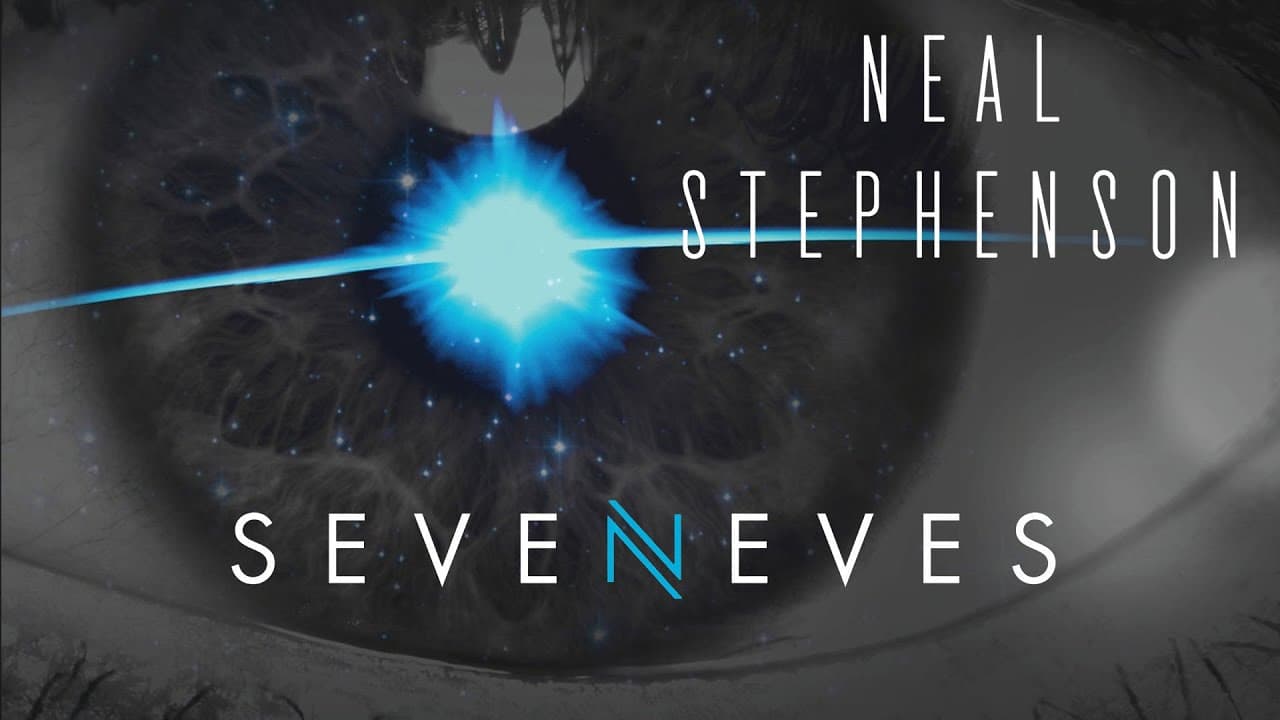
Science & Story: Neal Stephenson - "Seveneves"
TL;DR
Neil Stevenson discusses the relationship between imagination, science, and storytelling, emphasizing the importance of portraying scientists as complex human beings in his novels.
Transcript
please welcome Neil Stevenson whose latest book out this week is seven years I've got so many questions you know hi let me ask you about you know scientists are known the greatest scientist I would use cosmologists as maybe the most current examples but they're by no means the only examples have great imaginations wild insane imaginations dare to t... Read More
Key Insights
- 🧑🔬 Scientists, particularly cosmologists, possess wild imaginations and daringly pursue ideas that others may not consider.
- ❓ Stevenson's storytelling often starts with scientific concepts, creating narratives that captivate his readers.
- 🧑🔬 He aims to depict scientists as real people, emphasizing their flaws and virtues, to engage readers in science-oriented narratives.
- 🙌 Earth offers remarkable opportunities to witness extraordinary phenomena, like gamma-ray bursts and thunderstorms' cascades of electrons and positrons.
Install to Summarize YouTube Videos and Get Transcripts
Explore YouTube Video Summarizer or Get YouTube Transcript Extractor
Questions & Answers
Q: Are the scientific ideas or the stories themselves the inspiration for your novels?
The stories I tell often begin with interesting scientific ideas, which then evolve into narratives that explore those concepts further.
Q: Why did you choose to focus on the rivalry between Newton and Leibniz in "The Baroque Cycle"?
When I learned about Newton's fascination with alchemy and how both he and Leibniz coexisted during the same time period, I saw the potential for an intriguing story that encompassed their clash of intellects.
Q: What was the significance of Leibniz's notation in "Snow Crash"?
While the notation dispute is a footnote, it plays out later in the story through code-breaking, highlighting the tension between Leibniz and Newton.
Q: Do you yearn to witness extreme forces and phenomena beyond Earth?
Earth already provides us with incredible events, like the Chilean bisca meteorite. For example, the light emitted during its passing was so intense that it sunburned onlookers, equivalent to an arc welder's light.
Summary & Key Takeaways
-
Neil Stevenson's novels often start with scientific ideas that serve as the basis for interesting stories, such as the trilogy "The Baroque Cycle" inspired by Isaac Newton's fascination with alchemy and his rivalry with Leibniz.
-
He explores scientific concepts, like the Newtonian mechanics that would occur after breaking the moon into seven pieces, to create vivid and detailed narratives.
-
Stevenson believes that Earth provides a remarkable seat to witness incredible phenomena, like the Chilean bisca meteorite, and aims to capture these elements in his storytelling.
Read in Other Languages (beta)
Share This Summary 📚
Summarize YouTube Videos and Get Video Transcripts with 1-Click
Try YouTube Summary with ChatGPT & Claude or YouTube Transcript Generator
Explore More Summaries from World Science Festival 📚

Summarize YouTube Videos and Get Video Transcripts with 1-Click
Try YouTube Summary with ChatGPT & Claude or YouTube Transcript Generator