How to Optimize Content Marketing with Tests
TL;DR
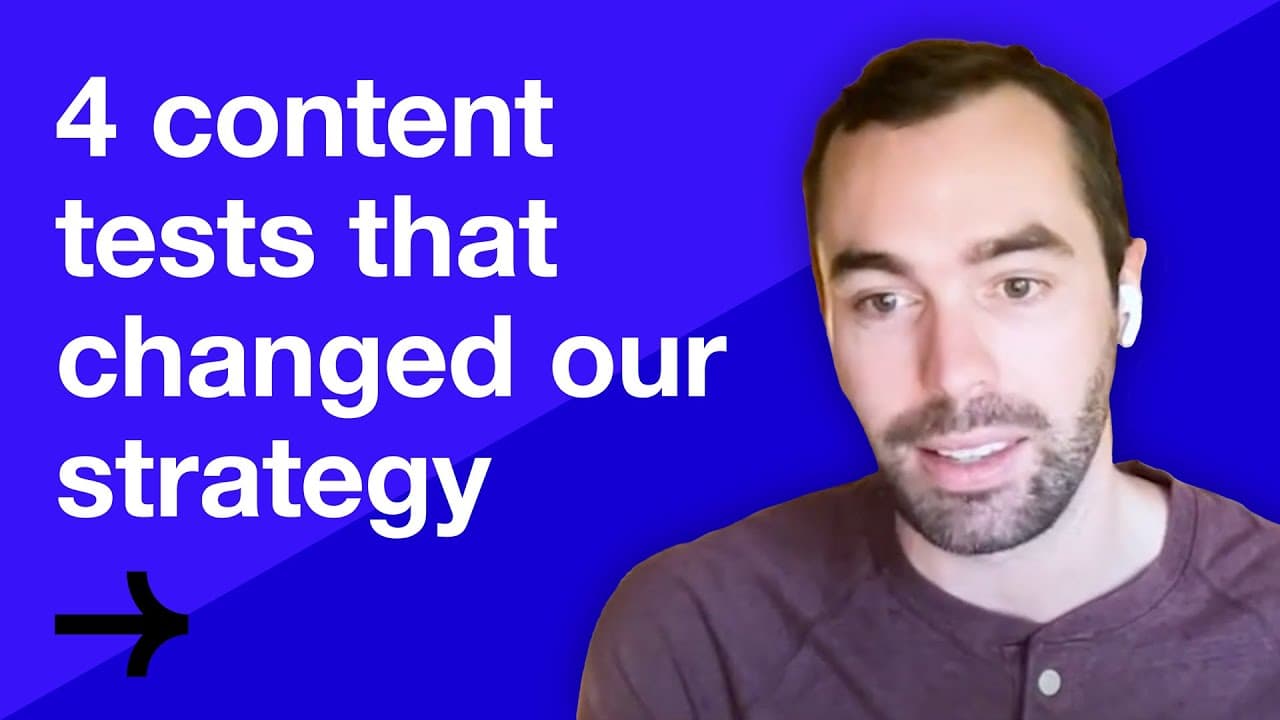
Optimizing content marketing involves reducing time to value, using smaller hero images for faster page loads, and implementing sticky navigation to boost conversions. Regularly updating content, particularly in competitive niches, is crucial for maintaining search rankings. Tests show that font size can impact conversion rates, and demographic considerations may influence optimal design choices.
Transcript
hey everyone welcome to another episode of content and conversations today Ross and I are going to talk through some insights from four content marketing tests that we recently ran the first one um I'm going to tee you up to talk through it Ross is basically something that we often recommend to clients and and leads is like to get the time to value... Read More
Key Insights
- Reducing time to value in content is crucial for user engagement and satisfaction.
- Smaller hero images can improve page load speed, enhancing user experience and SEO.
- Sticky navigation can significantly increase goal conversions by keeping call-to-action elements visible.
- Regular content updates are essential, especially in competitive niches, to maintain search rankings.
- Font size impacts conversion rates; larger fonts may not always improve user engagement.
- Demographic factors, such as age, can influence optimal design choices like font size.
- Content designed as blog posts with frequent updates ranks better for 'best software' searches.
- Search results often favor blog-type content over feature pages for software-related queries.
Install to Summarize YouTube Videos and Get Transcripts
Explore YouTube Video Summarizer or Get YouTube Transcript Extractor
Questions & Answers
Q: How does reducing time to value affect content marketing?
Reducing time to value in content marketing enhances user engagement and satisfaction by quickly delivering the desired information. This approach helps retain visitors, reduces bounce rates, and can lead to improved search engine rankings. By efficiently meeting user needs, content becomes more effective in achieving marketing goals.
Q: Why are smaller hero images beneficial for web pages?
Smaller hero images improve page load speed, which enhances user experience and positively impacts SEO. Faster loading times reduce user frustration and can lead to lower bounce rates, higher engagement, and better search engine rankings. This practice supports content marketing goals by ensuring content is accessible and appealing to users.
Q: What is the impact of sticky navigation on conversions?
Sticky navigation significantly increases goal conversions by keeping call-to-action elements visible throughout the user’s journey on a webpage. This constant reminder encourages users to take desired actions, such as visiting service pages or filling out contact forms, thereby improving overall conversion rates and supporting business objectives.
Q: How often should content be updated for competitive keywords?
For competitive keywords, content should be updated approximately every six months to maintain search rankings. Frequent updates ensure content remains relevant and competitive, addressing changes in user intent and search algorithms. This practice is particularly important for high-demand topics, such as 'best software,' where timely information is critical.
Q: How does font size affect conversion rates?
Font size can affect conversion rates by influencing readability and user engagement. Larger fonts may not always improve user experience, as they can detract from conversion actions by shifting focus away from call-to-action elements. It's essential to balance readability with design elements that encourage user actions, considering demographic factors like audience age.
Q: Why is blog-type content preferred for 'best software' searches?
Blog-type content is preferred for 'best software' searches because search engines often favor informational and frequently updated content in these queries. Such content provides comprehensive insights and comparisons, aligning with user intent to find the best options. Regular updates keep the content relevant, improving its chances of ranking well.
Q: What role do demographic factors play in content design?
Demographic factors, such as audience age, play a crucial role in content design by influencing readability and engagement preferences. For instance, older audiences may prefer larger fonts for better readability, affecting conversion rates. Understanding the target demographic helps tailor content design to meet specific user needs, enhancing overall effectiveness.
Q: How does content updating frequency relate to search rankings?
Content updating frequency is directly related to search rankings, especially in competitive niches. Regular updates ensure content remains relevant and aligned with current user intent and search algorithms. This practice helps maintain or improve search visibility, as search engines prioritize fresh and accurate content in their rankings.
Summary & Key Takeaways
-
Optimizing content marketing involves reducing time to value and using smaller hero images for faster page loads. Implementing sticky navigation can boost conversions by keeping call-to-action elements visible. Regularly updating content, particularly in competitive niches, is crucial for maintaining search rankings.
-
Tests show that font size can impact conversion rates, with larger fonts not always improving user engagement. Demographic considerations, such as targeting an older audience, may influence optimal design choices like font size, affecting conversion rates and user experience.
-
Content designed as blog posts with frequent updates ranks better for 'best software' searches. Search results often favor blog-type content over feature pages for software-related queries, emphasizing the importance of maintaining a blog-style content strategy for such terms.
Read in Other Languages (beta)
Share This Summary 📚
Summarize YouTube Videos and Get Video Transcripts with 1-Click
Try YouTube Summary with ChatGPT & Claude or YouTube Transcript Generator
Explore More Summaries from Content and Conversation 📚





Summarize YouTube Videos and Get Video Transcripts with 1-Click
Try YouTube Summary with ChatGPT & Claude or YouTube Transcript Generator