Uğur Şahin and Özlem Türeci: Meet the scientist couple driving an mRNA vaccine revolution | TED
TL;DR
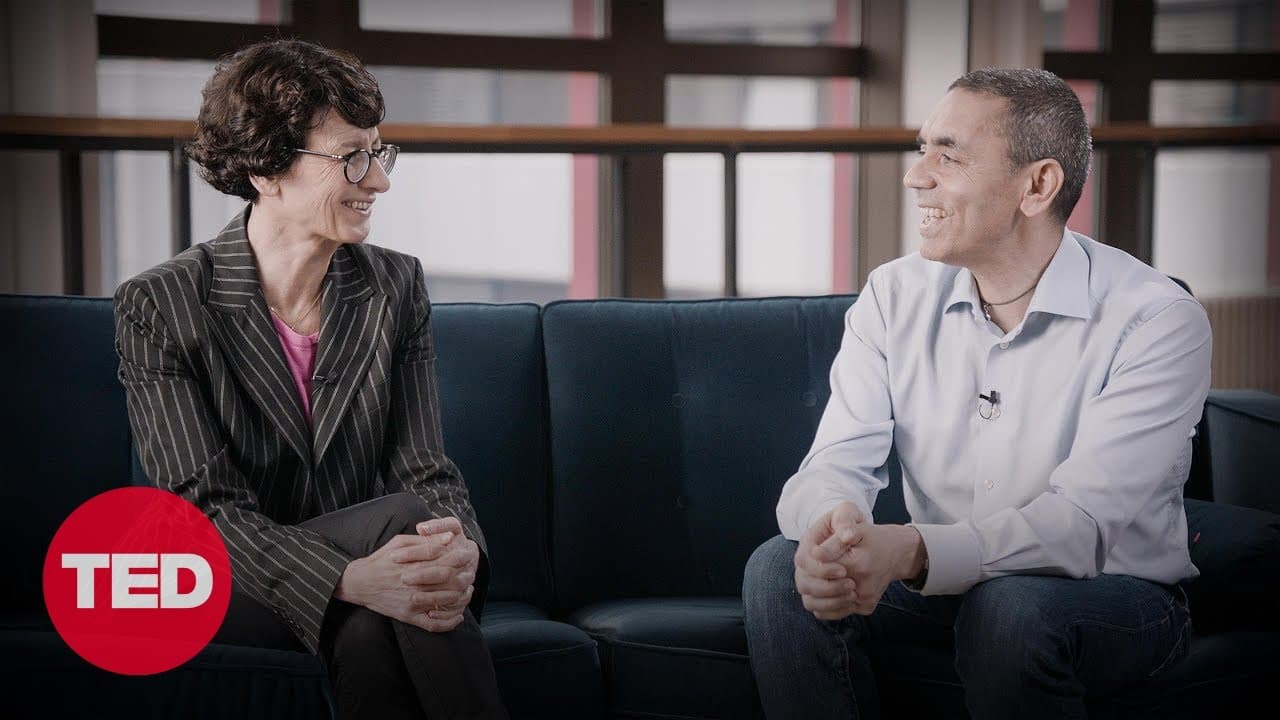
In this interview with Chris Anderson, Dr. Şahin and Dr. Türeci discuss their journey in developing the mRNA vaccine and its potential impact on future treatments.
Transcript
Chris Anderson: Dr. Şahin and Dr. Türeci, welcome. Such a treat to speak with you. Özlem Türeci: Thank you very much, Chris. It's a pleasure to be here. CA: So tell me, as you think back over the last 18 months, what words pop to mind for you? ÖT: Well, one word which comes to mind is breathless. It was indeed a breathless 16, 17 months for us. Whe... Read More
Key Insights
- 🌍 The COVID-19 pandemic was a breathless experience for the scientists, who recognized the urgency of developing a vaccine.
- 💡 The founders of BioNTech met while working in the world of patient care and shared a vision of bridging the gap between science and medicine to address high medical need.
- 💉 mRNA, the molecule used in the COVID-19 vaccine, is a versatile tool that can be used to deliver instructions to cells and produce proteins for therapeutic purposes, including personalized cancer treatments. ⏩ The success of developing a COVID-19 vaccine in record time highlights the potential for accelerated vaccine development in the future, but manufacturing capacity needs to be increased to meet global demand.
- 💊 mRNA technology has the potential to revolutionize the biopharmaceutical landscape by allowing for precise and specific treatments that target specific cells and diseases.
- 💰 The success and financial wealth gained by BioNTech have not been a distraction but rather provide opportunities to invest in innovation and address unmet medical needs on a larger scale.
- 🌍 The immigrant background of the founders has not been a barrier but has rather contributed to the success of their company, demonstrating the value of diversity and globalization in scientific research.
- 🌱 The impact of mRNA technology goes beyond the COVID-19 vaccine, with ongoing clinical developments for cancer immunotherapies and the potential to treat a wide range of diseases by communicating with cells at a molecular level.
Install to Summarize YouTube Videos and Get Transcripts
Explore YouTube Video Summarizer or Get YouTube Transcript Extractor
Questions & Answers
Q: How would you characterize the last 18 months and the urgency with which you worked to develop a vaccine?
During the last 18 months, we were in a breathless race against time. When we started in January last year, we knew we were already in a pandemic, but we didn't know how fast it would evolve or if we would have enough time to develop a vaccine. This understanding led us to have a mindset of not wasting even a single day and working relentlessly to keep going and be fast in developing a vaccine.
Q: How did your journey in science and medicine begin, and what led you to found BioNTech?
We met while working in the world of patient care, specifically in treating oncohematology patients. We realized that while there were limited treatment options for cancer patients, there were many potential technologies in the lab that could address this. Our shared vision was to bridge the gap between science, technology, and patient care by bringing fast solutions to the bedside. This led us to found BioNTech with the goal of using the power of the human immune system to tackle cancer.
Q: Can you explain the significance of mRNA and how it became a focus of your work?
Messenger RNA (mRNA) is a versatile molecule that carries genetic information and instructs cells to produce specific proteins. It can be used to transfer information to human cells and enable the production of therapeutic proteins, such as vaccines or antibodies. We were fascinated by mRNA because it can be produced quickly and used to develop personalized medicines, specifically tailored to a patient's unique tumor. This technology became the foundation of our work, both in developing cancer immunotherapies and the COVID-19 vaccine.
Q: How did you approach developing the COVID-19 vaccine using mRNA technology, and when did you realize its efficacy?
When we first heard about the outbreak in Wuhan, we knew we had the mRNA technology that could potentially be used to develop a vaccine. Despite the lack of knowledge about the virus, we quickly identified the spike protein as a target for immune attack. Within a few days of analyzing the virus's genetic information, we had candidate vaccines. It wasn't until the results of the human trials in November that we knew the vaccine was highly efficacious, providing more than 90% protection against COVID-19 infection, severe infection, and fatalities.
Q: Based on the success of the mRNA COVID-19 vaccine, what are the prospects for using mRNA to treat cancer and other diseases?
The success of the mRNA COVID-19 vaccine has demonstrated the power and safety of this approach. It has opened doors for new technologies and treatments, particularly in cancer immunotherapy. We currently have more than 10 mRNA cancer therapies in clinical development, targeting different types of cancer. The precise and specific nature of mRNA allows us to engineer therapies that can communicate with immune cells and address diseases at a cellular level. This technology has the potential to revolutionize the field of biopharmaceuticals.
Q: With the success of BioNTech, you both have become extremely wealthy. How have you managed to stay focused on your mission despite this newfound wealth?
As a company focused on innovation, having sufficient funding is not a problem but a necessity. We see our newfound wealth as an opportunity to transform our company and accelerate our mission to provide novel treatments for high unmet medical needs. We believe in investing in innovation and bringing our innovations faster to patients. Money does not distract us from our core mission but allows us to pursue it on a larger and broader scale.
Q: As immigrants from Turkey, you have had an impact on the debate about immigration in Germany and elsewhere. Can you reflect on this and the importance of diversity in your work?
Our scientific approach has always been to recognize and value what individuals can contribute regardless of their background or nationality. Our company is made up of employees from over 60 countries, and we recognize the power of international collaboration in achieving extraordinary results. We believe that globalization and diversity are essential elements for impactful research and science. It is not about where a person comes from but rather what they can contribute to the common goal of advancing healthcare and improving lives.
Summary & Key Takeaways
-Dr. Şahin and Dr. Türeci discuss their experience developing the COVID-19 vaccine, mentioning their sense of urgency and the need for speed.
-They explain their background in immunotherapy for cancer and their interest in using mRNA technology for personalized medicine.
-The researchers discuss the potential of mRNA technology for treating other diseases and the importance of investment in manufacturing capacity for future vaccine development.
Read in Other Languages (beta)
Share This Summary 📚
Summarize YouTube Videos and Get Video Transcripts with 1-Click
Try YouTube Summary with ChatGPT & Claude or YouTube Transcript Generator
Explore More Summaries from TED 📚
Summarize YouTube Videos and Get Video Transcripts with 1-Click
Try YouTube Summary with ChatGPT & Claude or YouTube Transcript Generator