Making Hydrogen (and a big mess) - Periodic Table of Videos
TL;DR
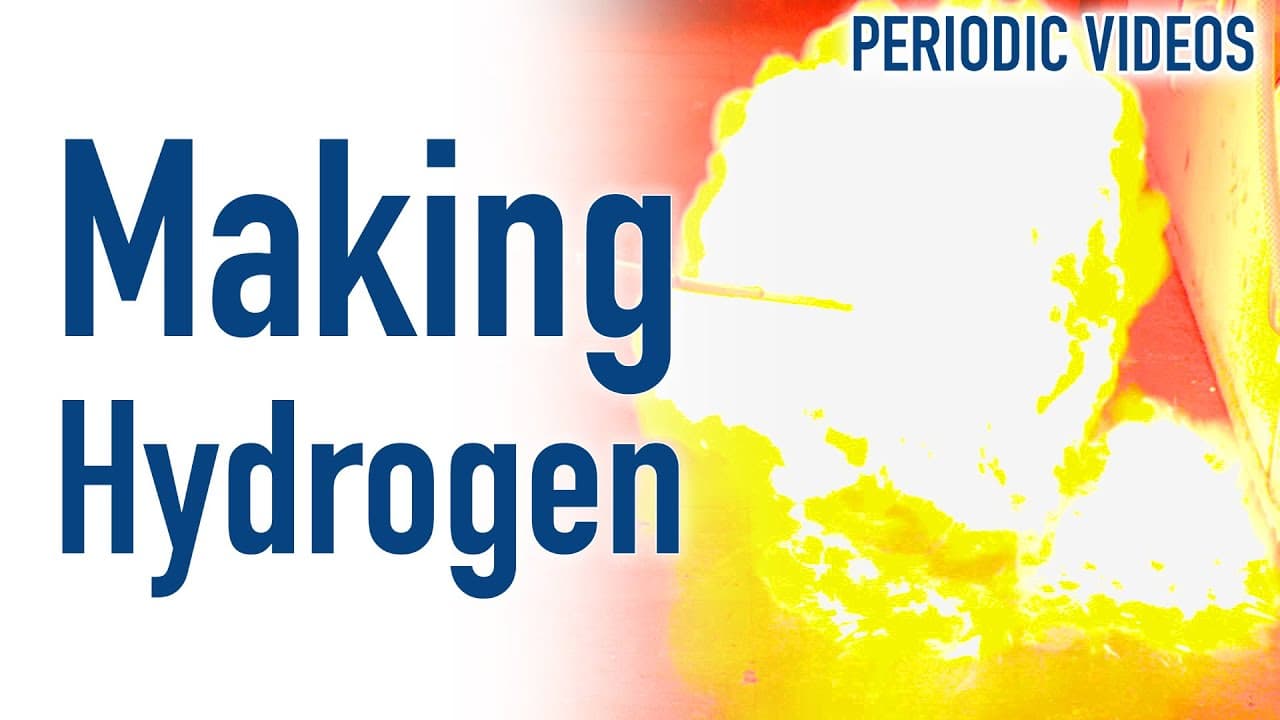
Neil recreates a childhood experiment with aluminum tops reacting with sodium hydroxide to create a hydrogen balloon.
Transcript
for ages neil wanted to recreate one of his very first experiments and it involves aluminium tops from milk bottles so i have been collecting for months milk bottle tops and just today i managed to get them to kneel in the lab the chemistry behind this is that aluminium can react not only with acids but with alkalis it's a so-called amphoteric mate... Read More
Key Insights
- ❓ Aluminum demonstrates amphoteric behavior by reacting with both acids and alkalis.
- 🎮 Dilution of sodium hydroxide controls the intensity of the reaction with aluminum.
- 🫢 The unexpected behavior of the hydrogen balloon reveals the presence of a gas mixture.
- ❓ Neil successfully recreates a childhood experiment, showcasing his passion for chemistry.
- 🍵 The experiment highlights the importance of safety measures in handling reactive substances.
- 💬 The combination of air and hydrogen in the balloon affects its buoyancy and combustion properties.
- 🫢 The color of the flame when burning the hydrogen balloon provides clues about the gas mixture composition.
Install to Summarize YouTube Videos and Get Transcripts
Explore YouTube Video Summarizer or Get YouTube Transcript Extractor
Questions & Answers
Q: What is the significance of using aluminum tops from milk bottles in the experiment?
The use of aluminum tops is crucial as aluminum is an amphoteric material that reacts with both acids and alkalis, showcasing its versatile reactivity.
Q: Why did Neil add water to the sodium hydroxide solution before reacting it with the aluminum tops?
Neil added water to dilute the concentrated sodium hydroxide solution, ensuring the reaction's intensity is controlled and preventing any potential hazards.
Q: Why did the hydrogen balloon behave unexpectedly by falling to the floor instead of rising when released?
The hydrogen balloon likely contained a mixture of hydrogen and air due to the rapid gas release, making it denser than pure hydrogen and causing it to fall.
Q: How did the color of the flame from burning the hydrogen balloon provide insight into the gas mixture present?
The whiter-orange flame color indicated a mixture of hydrogen and air in the balloon, as pure hydrogen typically burns with a red hue.
Summary & Key Takeaways
-
Neil recreates an old experiment using aluminum tops and sodium hydroxide to generate a hydrogen balloon, highlighting the amphoteric nature of aluminum.
-
The reaction produces a hydrogen balloon that surprises Neil with its behavior, leading to a satisfying explosion when ignited.
-
The experiment showcases the reactivity of aluminum with alkalis and the generation of hydrogen gas.
Read in Other Languages (beta)
Share This Summary 📚
Summarize YouTube Videos and Get Video Transcripts with 1-Click
Try YouTube Summary with ChatGPT & Claude or YouTube Transcript Generator
Explore More Summaries from Periodic Videos 📚
Summarize YouTube Videos and Get Video Transcripts with 1-Click
Try YouTube Summary with ChatGPT & Claude or YouTube Transcript Generator