Moral Tribes: Emotion, Reason, and the Gap Between Us and Them | Joshua Green | Talks at Google
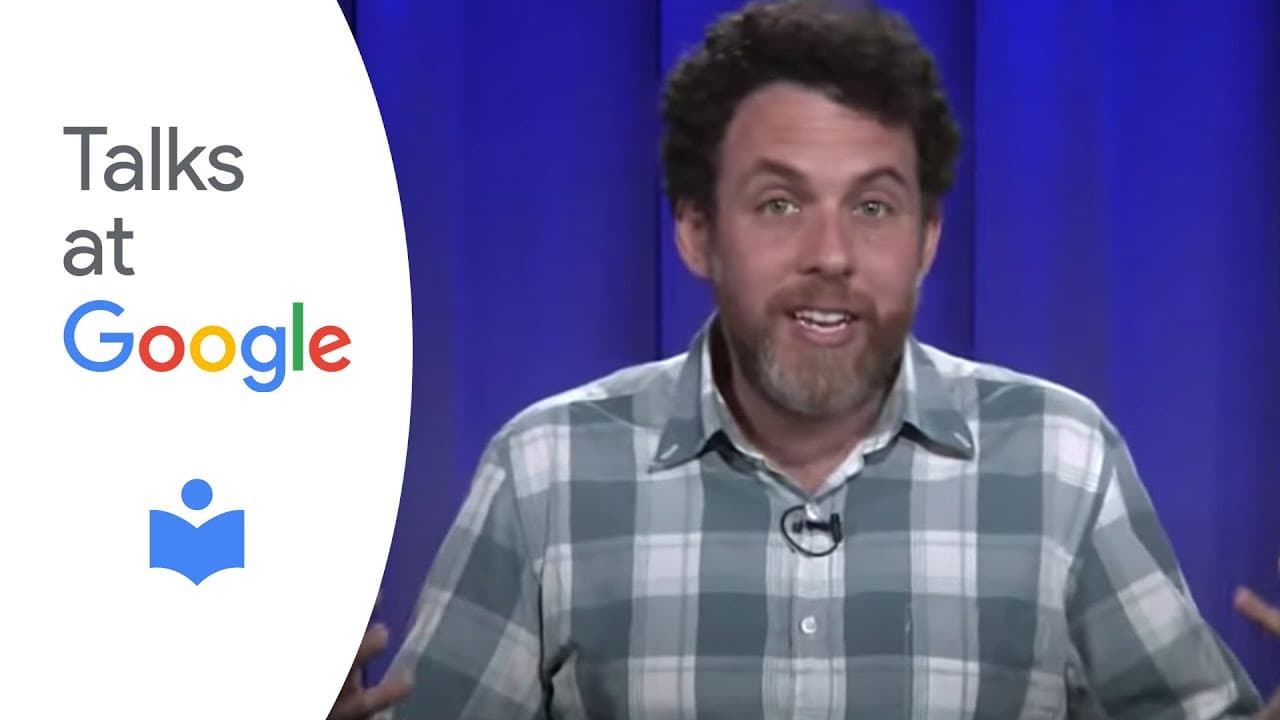
TL;DR
Our gut reactions serve us well in everyday moral situations, but they fall short when it comes to complex global issues that require a more comprehensive and universal approach.
Transcript
KENT WALKER: So good afternoon, everybody. Welcome to Authors At. We have Professor Josh Greene from Harvard with us today, the author of "Moral Tribes." I am hugely excited to have Professor Greene with us. He has been somebody whose work I've been following for years. He has been doing a lot of thinking about the genetic and biological and moral ... Read More
Key Insights
- 🧑🏭 Our gut reactions are shaped by evolutionary and cultural factors, and they are well-suited for everyday moral situations within our own tribes.
- 🌐 Complex global moral problems require a more comprehensive and universal approach that takes into account the well-being of all individuals, regardless of their tribe or nation.
- 🤳 Education and self-awareness are crucial in bridging the gap between our moral intuitions and the need for a more inclusive moral system.
- 👋 Utilitarianism provides a framework for promoting the greater good and the well-being of all individuals, but it requires careful consideration of consequences and potential trade-offs.
Install to Summarize YouTube Videos and Get Transcripts
Explore YouTube Video Summarizer or Get YouTube Transcript Extractor
Questions & Answers
Q: Why do our gut reactions often fail us when it comes to complex moral dilemmas?
Our gut reactions are shaped by our evolutionary and cultural biases, and they are not well-suited to address the complexities of global moral problems. They are better suited for everyday social interactions within our own tribes.
Q: How can we bridge the gap between our moral intuitions and the need for a universal moral system?
Education and self-awareness are critical in developing a more comprehensive understanding of morality. By recognizing the limitations of our intuitions and understanding the reasons behind them, we can make more informed moral judgments.
Q: How can we navigate the tension between individualism and collectivism in moral decision making?
The challenge lies in finding a common ground between different moral values and beliefs. A universal moral system should aim to promote cooperation and altruism while respecting individual autonomy and diversity.
Q: Does slow thinking lead to moral paralysis?
Slow thinking can sometimes lead to indecision and analysis paralysis, especially in complex moral situations. However, with a thorough understanding of the limitations of our moral intuitions, we can make more informed decisions and find common ground in ethical dilemmas.
Summary & Key Takeaways
-
Professor Josh Greene discusses the limitations of our moral intuitions and the need for a universal approach to morality.
-
He explains the difference between the basic moral problem of "me versus us" and the higher order problem of "us versus them" that arises in a global context.
-
Greene highlights the role of fast and slow thinking in moral decision making, and how our intuitions can be influenced by social and cultural factors.
Read in Other Languages (beta)
Share This Summary 📚
Summarize YouTube Videos and Get Video Transcripts with 1-Click
Try YouTube Summary with ChatGPT & Claude or YouTube Transcript Generator
Explore More Summaries from Talks at Google 📚

Summarize YouTube Videos and Get Video Transcripts with 1-Click
Try YouTube Summary with ChatGPT & Claude or YouTube Transcript Generator