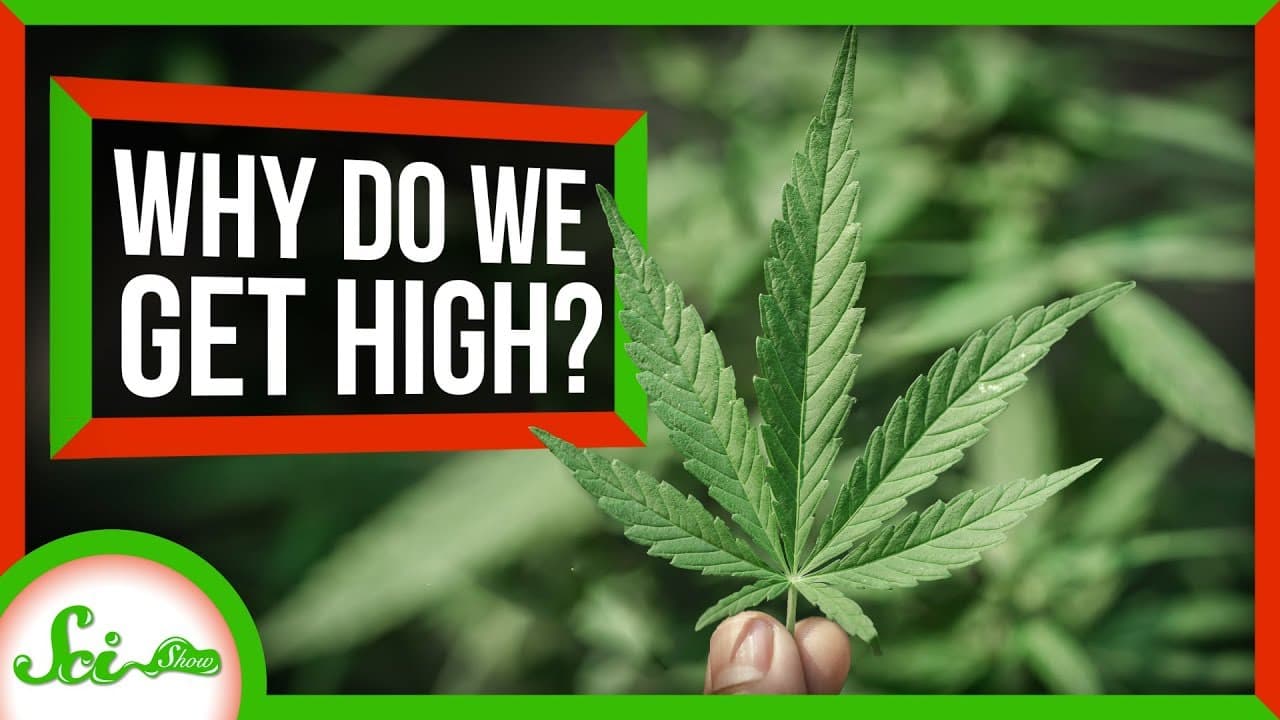
Why Do Humans Like to Get High?
TL;DR
Humans are attracted to mind-altering substances because they activate the reward centers in our brains, although the reasons for this attraction are still not fully understood.
Transcript
This episode of SciShow is sponsored by Brilliant. Go to Brilliant.com/SciShow to learn more. {♫Intro♫} There are all kinds of anecdotal cases of animals getting stoned or tipsy—like, the ones we talked about in our list show of high animals. But as we noted for the dolphins getting high on pufferfish or the elephants having a nightcap of marula fr... Read More
Key Insights
- 🤯 Mind-altering substances activate the reward centers in our brains, providing a pleasurable experience.
- 🥳 Animals, such as mice, rats, and non-human primates, can be used as models to study addiction and the brain chemistry involved.
- 🤯 The attraction to mind-altering substances in animals might be influenced by evolutionary traps or habitat destruction.
Install to Summarize YouTube Videos and Get Transcripts
Explore YouTube Video Summarizer or Get YouTube Transcript Extractor
Questions & Answers
Q: Why are humans so attracted to mind-altering substances?
The activation of reward centers in the brain by these substances is likely one reason for their attraction. Additionally, they may provide social and psychological benefits or have medicinal value against parasites.
Q: Do animals enjoy being high on mind-altering substances?
While some animals, like vervet monkeys, show an attraction to intoxicating substances, it is unclear if they truly enjoy the experience.
Q: Are there evolutionary reasons for our attraction to mind-altering substances?
Some scientists suggest that the activation of reward systems by these substances could have provided survival advantages in the past, particularly by eliminating parasites.
Q: Why do humans become addicted to mind-altering substances?
The neurological basis of addiction involves the over-use of substances that trigger the reward system, leading to chemical dependence.
Summary & Key Takeaways
-
Scientists have found that drugs are good at hijacking mammalian brains, as seen in lab animals like mice and rats who self-administer various drugs.
-
Non-human primates, such as vervet monkeys and chimpanzees, have shown an attraction to intoxicating substances, possibly due to evolutionary traps or habitat destruction.
-
It is unclear why humans are so attracted to mind-altering substances, but potential explanations include the activation of reward systems or the social and psychological benefits they provide.
Read in Other Languages (beta)
Share This Summary 📚
Summarize YouTube Videos and Get Video Transcripts with 1-Click
Try YouTube Summary with ChatGPT & Claude or YouTube Transcript Generator
Explore More Summaries from SciShow 📚

Summarize YouTube Videos and Get Video Transcripts with 1-Click
Try YouTube Summary with ChatGPT & Claude or YouTube Transcript Generator