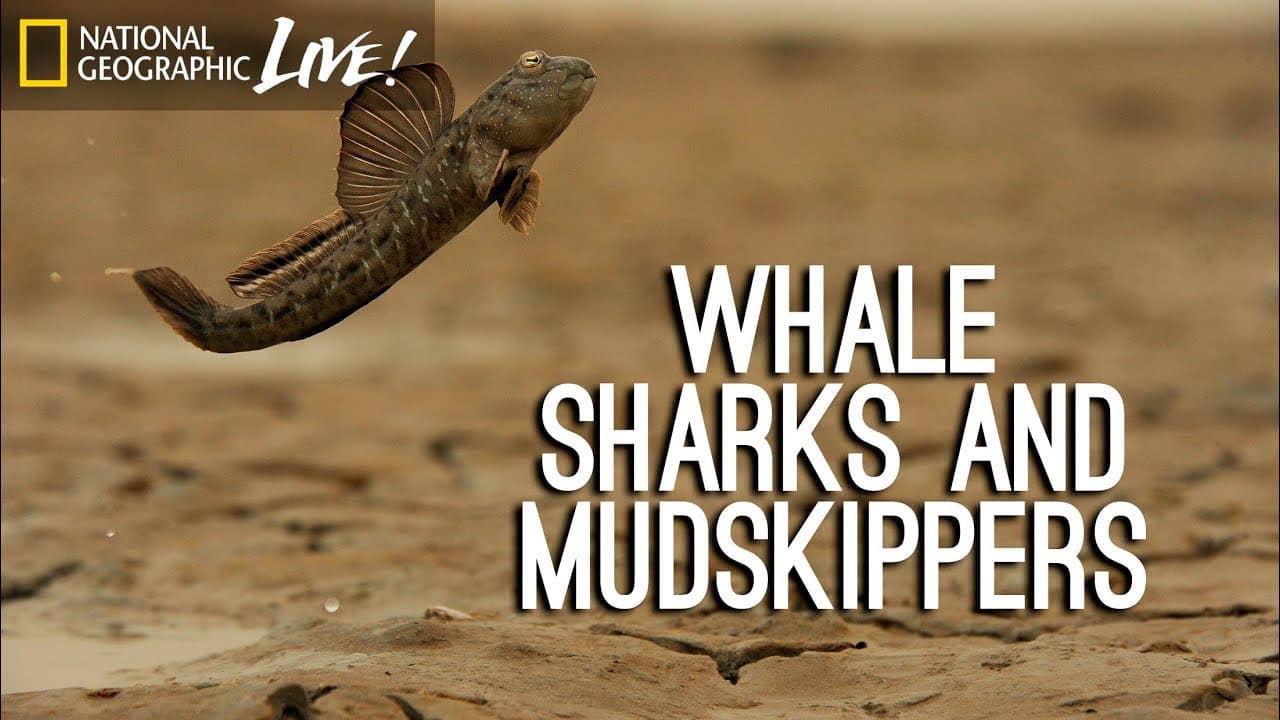
Photographing Our Seas: Whale Sharks and Mudskippers | Nat Geo Live
TL;DR
Discover the hidden marine wonders of the Arabian Peninsula, from whale sharks to mudskippers, and uncover the shocking reality of the shark trade.
Transcript
( intro music ) Most people, when you say Arabia, they think camels, terrorism, pirates? Oil and gas. They don't think coral reefs. Or sharks. So, I proposed a story to National Geographic magazine to kind of change that. You know, 'cause Arabia is home to some of the most incredible marine ecosystems on our planet. You know, fortunately ... Read More
Key Insights
- 👻 The Arabian Peninsula hosts diverse marine ecosystems, challenging common stereotypes about the region.
- 🤱 Whale sharks in the Gulf of Aden exhibit unique feeding behaviors, attracting attention from photographers and local fishermen.
- 🖐️ Dubai's role as a major shark fin exporter highlights the global impact of unsustainable fishing practices and calls for increased conservation efforts.
- 🛟 Local communities in the Arabian Peninsula have intricate relationships with marine life, showcasing the importance of understanding and preserving these connections.
- 💖 Conservation efforts stemming from National Geographic's exploration of Arabian marine life have sparked crucial discussions on sustainable resource management in the region.
- 🖐️ The Arabian Desert conceals a surprising reality of the shark fin trade, unveiling the complex web of international commerce and its implications for marine ecosystems.
- 🙂 Documenting the interactions between humans and marine species sheds light on the delicate balance of coexistence and the impact of human activities on marine environments.
Install to Summarize YouTube Videos and Get Transcripts
Explore YouTube Video Summarizer or Get YouTube Transcript Extractor
Questions & Answers
Q: What were some of the unique behaviors of whale sharks observed in the Gulf of Aden?
In the Gulf of Aden, whale sharks were seen aggregating to feed, with individual sharks identified by their spot patterns and displaying remarkable stationary feeding behaviors.
Q: How did local Somali Afari fishermen attract whale sharks at night, leading to a groundbreaking discovery?
By using lights on their boats to attract plankton, the fishermen unintentionally lured whale sharks for a free meal, showcasing a previously undocumented phenomenon.
Q: What role does Dubai play in the global shark fin trade, and what surprising discoveries were made during the investigation?
Dubai emerged as a significant hub for the shark fin trade, exporting fins to Asia at lucrative prices while perpetuating unsustainable shark fisheries, revealing a concerning reality hidden in the Arabian Desert.
Q: How did the National Geographic article on Arabian marine life impact conservation efforts and discussions in the Middle East?
The article prompted important conversations in the Middle East about the management of shark fisheries and conservation practices, emphasizing the need for sustainable approaches to protect marine species.
Summary & Key Takeaways
-
National Geographic explores the Arabian Peninsula's marine ecosystems during the Arab Spring, showcasing whale sharks feeding in the Gulf of Aden.
-
Photographer documents unique interactions with whale sharks and local Somali Afari fishermen, shedding light on their relationship with the ocean.
-
Shocking discovery of Dubai's role as a major shark fin exporter, sparking conversations on shark conservation.
Read in Other Languages (beta)
Share This Summary 📚
Summarize YouTube Videos and Get Video Transcripts with 1-Click
Try YouTube Summary with ChatGPT & Claude or YouTube Transcript Generator
Explore More Summaries from National Geographic 📚



Summarize YouTube Videos and Get Video Transcripts with 1-Click
Try YouTube Summary with ChatGPT & Claude or YouTube Transcript Generator