International Asteroid Day
TL;DR
NASA is actively searching for and tracking asteroids to protect Earth and develop response plans in case of a potential impact.
Transcript
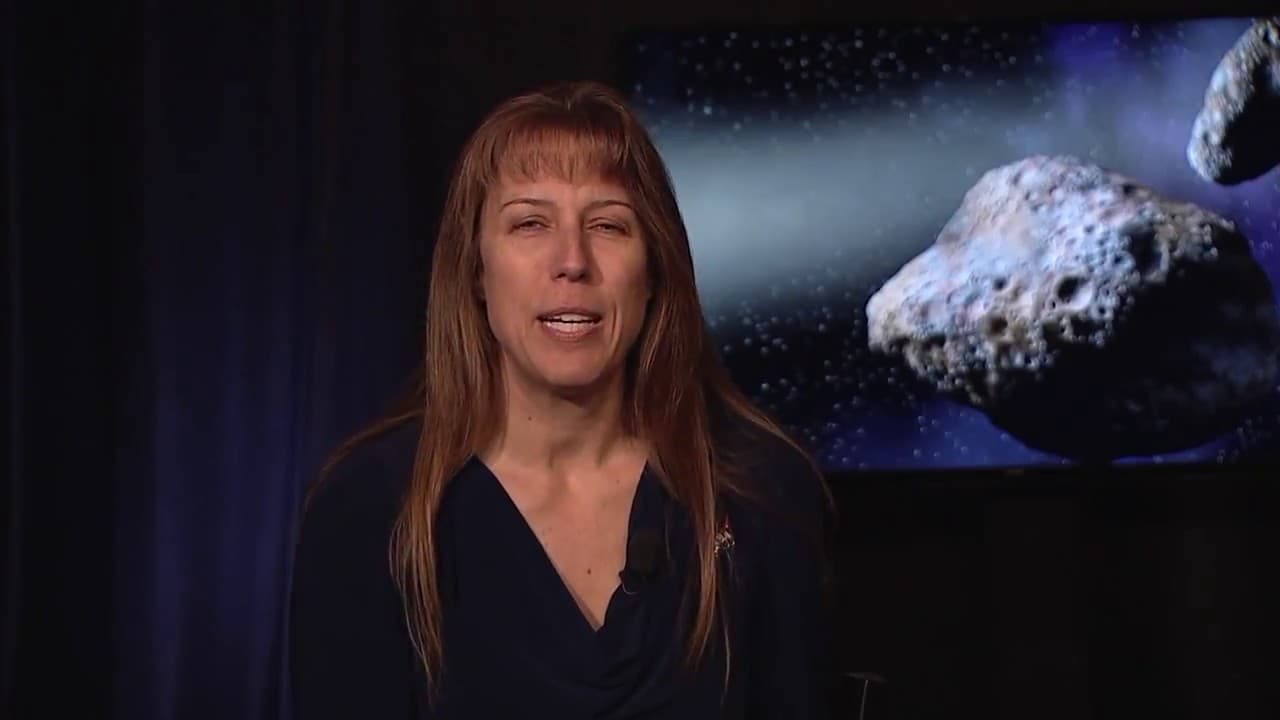
TAKE A LOOK. THIS IS AN ASTEROID CLOSE TO EARTH. 2014JO25 CAME WITHIN 1.2 MILLION MILES OF EARTH. IT WAS A KILOMETER OR TWO-THIRDS OF A MILE WIDE, THE LARGEST TO COME SO CLOSE TO OUR PLANET IN THE PAST 13 YEARS. HELLO. WE'RE AT NASA'S JET PROPOPULATION LABORATORY. WE TAKE THE HUNT FOR ASTEROIDS AND COMETS VERY SERIOUSLY. IT'S BEEN FUNDED FOR OVE... Read More
Key Insights
- ☄️ NASA's NEO Observation Program is responsible for finding, tracking, and characterizing potentially hazardous asteroids and comets.
- 💁 The agency collaborates with the International Asteroid Warning Network to share information and coordinate efforts globally.
- 💁 Radar observations provide detailed information about an asteroid's size, shape, rotation, and surface features.
- 🙂 Infrared observations are particularly valuable for detecting dark-colored asteroids that may be difficult to see with visible light.
- 👾 NASA is developing an infrared space telescope called NEOCam dedicated to the search for near-Earth asteroids and comets.
- 🕵️ The goal is to detect and track as many potentially hazardous objects as possible to protect Earth from future impacts.
- 🇨🇫 Public awareness and involvement are crucial in the monitoring and response to asteroid threats.
Install to Summarize YouTube Videos and Get Transcripts
Explore YouTube Video Summarizer or Get YouTube Transcript Extractor
Questions & Answers
Q: How does NASA search for asteroids?
NASA uses survey telescopes to scan the sky and look for objects that are moving. Computer algorithms automatically compare these objects to a database of known objects and add new ones to a list for further confirmation.
Q: Is NASA working with other countries to protect Earth from asteroid impacts?
Yes, NASA is part of the International Asteroid Warning Network, a group involving space agencies, institutes, and observatories that coordinate efforts to find, track, and characterize potentially hazardous objects.
Q: Can we do anything to prevent an asteroid from hitting Earth?
NASA is developing techniques to deflect asteroids that may pose a threat. Depending on the size and time available, options include sending a spacecraft to collide with the asteroid or using an asteroid's gravitational pull to gradually change its trajectory.
Q: What would happen if an asteroid was on a collision course with Earth?
The response would depend on the size of the asteroid and the amount of time before impact. If there was enough time, NASA would assess its size and mass to determine possible techniques for deflection. If there was not much time, preparations would be made to minimize the impact's consequences.
Summary & Key Takeaways
-
NASA's Jet Propulsion Laboratory is responsible for finding, tracking, and characterizing near-Earth objects (NEOs) that could pose a danger to Earth.
-
The agency uses telescopes to scan the sky and identify objects that are moving, verifying them against a database of known objects.
-
If an asteroid is determined to be on a potential impact trajectory, NASA works with other government agencies to develop plans and strategies to respond to the threat.
Read in Other Languages (beta)
Share This Summary 📚
Summarize YouTube Videos and Get Video Transcripts with 1-Click
Try YouTube Summary with ChatGPT & Claude or YouTube Transcript Generator
Explore More Summaries from NASA 📚

Summarize YouTube Videos and Get Video Transcripts with 1-Click
Try YouTube Summary with ChatGPT & Claude or YouTube Transcript Generator