Competing At All Costs: Dysfunctional Competition and Gender
TL;DR
This podcast discusses the research on dysfunctional competition and how it affects gender gaps in organizations.
Transcript
welcome to the women in public policy program seminar series podcast at the Harvard Kennedy School hi we go ahead and get started I'm ya know Riley ball time the research director here at the women in public policy program where we are committed to closing gender gaps and Economic Opportunity political participation health and education and the hon... Read More
Key Insights
- 🧔♀️ Women are more responsive to the competitive environment and adjust their behavior accordingly.
- 🧔♀️ Men have a higher propensity for competitive behavior, while women show a preference for non-competitive behavior.
- ⚧️ The gender gap in organizational leadership positions may be influenced by both gender-based norms and individual preferences.
- 🖐️ Behavioral norms and incentive schemes play a role in shaping competitive behavior.
Install to Summarize YouTube Videos and Get Transcripts
Explore YouTube Video Summarizer or Get YouTube Transcript Extractor
Questions & Answers
Q: What motivated the research on gender differences in competitive behavior?
The research aimed to understand the gender gap in organizational leadership positions and explore whether gender differences in competitive behavior contribute to it.
Q: How does the study define destructive competition?
Destructive competition refers to behavior aimed at hurting competitors, which can potentially result in net losses for the person engaging in it.
Q: What are the main findings of the research regarding gender differences in competitive behavior?
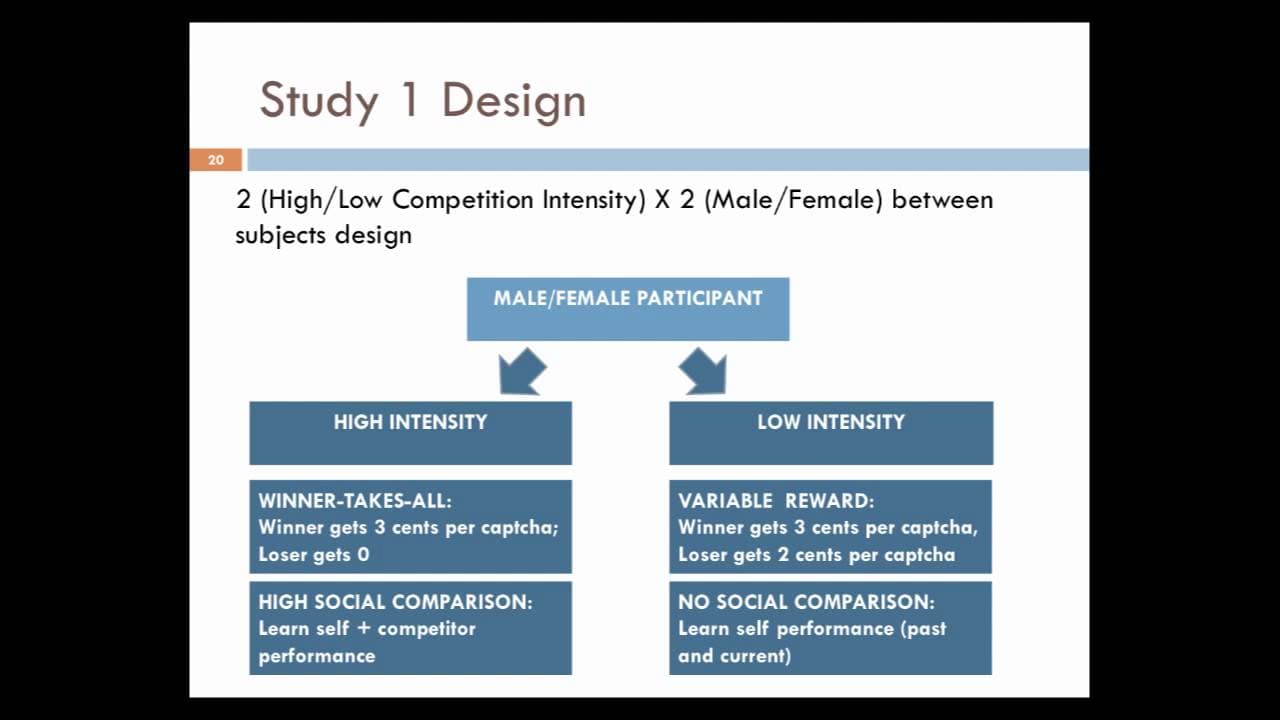
The study found that men have a higher propensity for competitive behavior, while women are more likely to prefer non-competitive behavior. Women are also more responsive to the competitive environment and adjust their behavior accordingly.
Q: How do behavioral norms play a role in gender differences in competition?
The research suggests that women are more attuned to behavioral norms and are influenced by them to a greater extent than men. Men, on the other hand, are more influenced by the type of incentive scheme in place.
Summary & Key Takeaways
-
The research focuses on gender differences in destructive competitive behavior and its impact on gender gaps in organizations.
-
It challenges the idea that the gender gap is solely due to discrimination and suggests that women's behavior and preferences play a role.
-
The study finds that men have a higher propensity for competitive behavior, while women are more inclined towards non-competitive behavior.
-
It also suggests that women are more responsive to the competitive environment and adjust their behavior accordingly.
Read in Other Languages (beta)
Share This Summary 📚
Summarize YouTube Videos and Get Video Transcripts with 1-Click
Try YouTube Summary with ChatGPT & Claude or YouTube Transcript Generator
Explore More Summaries from Harvard University 📚






Summarize YouTube Videos and Get Video Transcripts with 1-Click
Try YouTube Summary with ChatGPT & Claude or YouTube Transcript Generator