Why Does COVID-19 Have So Many Symptoms?
TL;DR
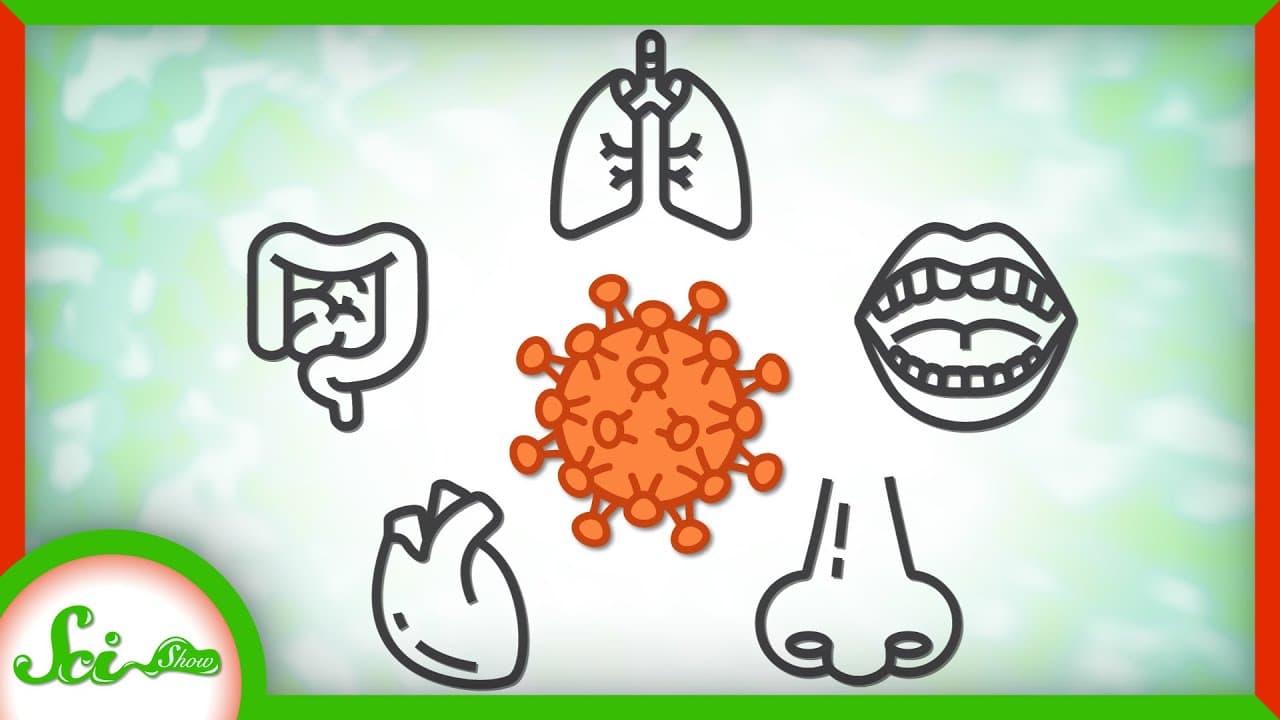
COVID-19 has a wide range of symptoms due to the virus's interaction with the ACE2 receptor, which is present in various cell types throughout the body.
Transcript
Thanks to Brilliant for supporting this episode of SciShow. Go to Brilliant.org/SciShow to check out their course on artificial neural nets. [ ♪ INTRO ] This episode was filmed on June 19th, 2020. You can find more info on the COVID-19 pandemic in our playlist, linked in the description. At first, we were told to watch out for coughing, fever, and ... Read More
Key Insights
- 🧡 COVID-19 exhibits a wide range of symptoms due to the virus's interaction with the ACE2 receptor.
- 🖐️ ACE2 plays a crucial role in regulating blood pressure, tissue repair, and gut microbiota.
- 🫁 The virus primarily enters through the nasal passages, spreads to the lungs, and can affect various other organs and systems.
- 👻 ACE2's presence in different cell types allows the virus to cause diverse symptoms beyond respiratory issues.
- 🤗 Understanding the connection between ACE2 and COVID-19 opens up potential avenues for therapies.
- 😑 Older individuals may be more susceptible to COVID-19 due to increased ACE2 expression in nasal cells.
- 🥰 Severe cases of COVID-19 can lead to cardiac injuries, potentially related to ACE2 expression in heart cells.
Install to Summarize YouTube Videos and Get Transcripts
Explore YouTube Video Summarizer or Get YouTube Transcript Extractor
Questions & Answers
Q: How does the ACE2 receptor contribute to COVID-19 symptoms?
The ACE2 receptor is the molecule the virus uses to infect cells, and its presence in various cell types explains the diverse symptoms observed in COVID-19 patients.
Q: What is the significance of the loss of taste and smell in COVID-19?
ACE2 is expressed in cells responsible for transferring odors, so the infection could block those signals, leading to the loss of taste and smell.
Q: How does the virus affect the lungs?
When the virus binds to ACE2 in the lungs, it disrupts the breakdown of angiotensin II, leading to inflammation, cell death, and blood clots that affect oxygen supply to the body.
Q: What other organs or systems are affected by the ACE2 receptor?
The circulatory system, heart, and gut can also be impacted by the virus due to the presence of ACE2 receptors, leading to severe inflammation, heart injuries, and gastrointestinal issues.
Summary & Key Takeaways
-
COVID-19 can cause symptoms beyond respiratory issues, including GI problems, skin rashes, and loss of taste and smell.
-
The ACE2 receptor, found in various cell types, is the molecule the virus uses to infect our cells and explains the broader effects of COVID-19.
-
ACE2 is involved in regulating blood pressure, tissue repair, gut microbiota, and can be found in the nasal passages, lungs, circulatory system, heart, and gut.
Read in Other Languages (beta)
Share This Summary 📚
Summarize YouTube Videos and Get Video Transcripts with 1-Click
Try YouTube Summary with ChatGPT & Claude or YouTube Transcript Generator
Explore More Summaries from SciShow 📚


Summarize YouTube Videos and Get Video Transcripts with 1-Click
Try YouTube Summary with ChatGPT & Claude or YouTube Transcript Generator