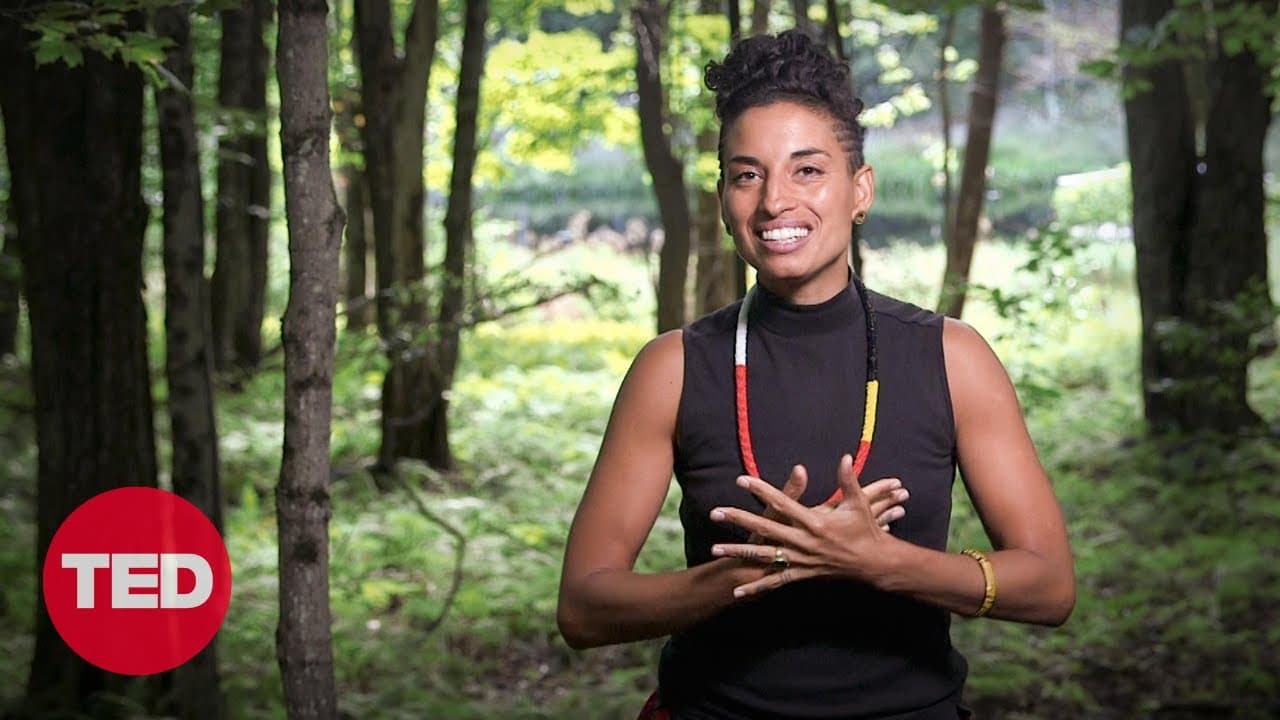
Naima Penniman: "Being Human" | TED Countdown
TL;DR
This contemplative piece delves into the emotions and thoughts of various natural elements, sparking curiosity and reflection.
Transcript
I wonder if the sun debates dawn some mornings not wanting to rise out of bed from under that down-feather horizon if the sky grows tired of being everywhere at once adapting to the mood swings of the weather if clouds drift off trying to hold themselves together make deals with gravity to loiter a little longer I wonder if rain is scared of fallin... Read More
Key Insights
- 🌅 The content explores various wonders and questions about nature, such as the sun, sky, clouds, rain, snowflakes, stars, shadows, sunrise, sunset, storms, volcanoes, compost, breath, wind, smoke, rainbows, lightning, rivers, streams, snow, soil, butterflies, rocks, mountains, waves, land, sand, trees, branches, leaves, and the moon.
- 🌏 The content suggests that nature may have feelings and experiences, such as the sun and sky debating, clouds trying to hold themselves together, rain being scared of falling, snowflakes wanting to be unique, stars wishing upon themselves, shadows longing for the sun, and sunrise and sunset respecting each other.
- 💭 The content also explores philosophical themes, including questioning the purpose and existence of nature, such as if storms have regrets, if volcanoes get stressed, if compost believes in life after death, if breath thinks of suicide, and if the wind desires stillness.
- 🌈 The content touches on the concept of self-perception and insecurity in nature, such as if rocks are self-conscious of their weight, if mountains are insecure of their strength, if the soil thinks she's too dark, and if butterflies want to cover up their marks.
- 🌊 The content reflects on the struggles and perseverance in nature, such as waves getting discouraged but continuing to crawl up the sand, land feeling stepped upon, sand feeling insignificant, and trees wavering at crossroads.
- 🌜 The content expresses a desire to understand and connect with the natural world, such as wanting to find the hiding moon, watching the ocean spin, and listening to nature's peaceful existence.
- 🌳 The content highlights the beauty and resilience of nature, such as leaves understanding their replaceability but still dancing when the wind blows.
- 🎵 The content incorporates poetic language and imagery, creating a musical and rhythmic flow in the exploration of these wonders and questions about nature.
Install to Summarize YouTube Videos and Get Transcripts
Explore YouTube Video Summarizer or Get YouTube Transcript Extractor
Questions & Answers
Q: Does the sun ever debate with dawn about rising in the morning?
The video wonders if the sun debates dawn some mornings, not wanting to rise out of bed from under the down-feather horizon. It suggests a playful speculation about the sun's reluctance to start the day.
Q: Does the sky ever grow tired of being everywhere at once?
The video ponders if the sky becomes tired of constantly adapting to the mood swings of the weather. It raises the question of whether the sky ever feels overwhelmed by its omnipresence.
Q: Do clouds try to hold themselves together and make deals with gravity to stay longer?
The video wonders if clouds drift off and try to hold themselves together, making deals with gravity to loiter a little longer. It suggests a whimsical notion of clouds trying to defy their natural dissipation.
Q: Is rain scared of falling and does it have trouble letting go?
The video wonders if rain feels scared to fall and if it has difficulty letting go. It explores the possibility of rain experiencing fear or hesitation in the act of descending from the sky.
Q: Do snowflakes ever grow tired of trying to be perfect?
The video asks whether snowflakes get sick of being perfect all the time, each one striving to be one-of-a-kind. It imagines the possibility that snowflakes might desire a break from their constant pursuit of perfection.
Q: Do stars wish upon themselves before they die?
The video wonders if stars have the inclination to wish upon their own existence before they die. It poses a poetic question about whether stars seek some form of self-reflection or self-fulfillment.
Q: Do sunrise and sunset respect each other despite never meeting?
The video ponders whether sunrise and sunset hold mutual respect for each other, even though they have never met. It raises the idea of a hypothetical connection and admiration between these two celestial events.
Q: Do storms ever have regrets?
The video raises the question of whether storms experience regrets. It suggests the possibility that storms might feel remorse for their destructive actions or the consequences they bring.
Q: Do volcanoes ever feel stressed?
The video wonders if volcanoes experience stress. It brings up the idea that these powerful natural phenomena might face internal pressure or emotional strain.
Q: Does compost believe in life after death?
The video raises the question of whether compost believes in life after death. It poses a thought-provoking idea about whether decomposed organic matter retains any sense of faith or belief in a continued existence.
Q: Does breath ever contemplate suicide?
The video wonders if breath ever thinks about suicide. It brings up a somber subject, suggesting a speculative reflection on the nature of breath and its potential for contemplation of self-destructive thoughts.
Q: Does the wind sometimes want to sit still and watch the world pass by?
The video contemplates whether the wind occasionally desires to sit still and watch the world pass by. It suggests a momentary longing for stillness and observation in contrast to the wind's inherent movement.
Q: Was smoke born knowing how to rise?
The video raises the question of whether smoke possesses innate knowledge of how to rise. It introduces the idea of smoke having an inherent understanding of its upward movement.
Q: Do rainbows get shy backstage, unsure if their colors match right?
The video wonders if rainbows get shy backstage, uncertain if their colors match correctly. It plays with the concept of rainbows harboring self-consciousness before their colorful appearance in the sky.
Q: Does lightning need an alarm clock to know when to crack?
The video asks whether lightning requires an alarm clock to know precisely when to crack. It poses a playful speculation on the timing and awareness of this natural electrical phenomenon.
Q: Do rivers ever contemplate turning back?
The video ponders whether rivers ever stop and think about turning back. It brings about the idea of rivers questioning their direction or pondering the possibility of flowing in the opposite direction.
Q: Do streams sometimes end up in the wrong sea and feel their lives have gone off-track?
The video wonders if streams occasionally find themselves flowing into the wrong sea, resulting in a sense that their lives have gone off-track. It explores the notion of a stream's destiny being thrown into disarray.
Q: Does snow ever wish to be black?
The video raises the question of whether snow ever wishes to be black. It suggests a contemplation of snow desiring a different appearance or perhaps longing for a contrasting color.
Q: Does the soil think she's too dark?
The video asks if the soil perceives itself as being too dark. It touches upon a potential insecurity or doubt that the soil might have about its own color or complexion.
Q: Do butterflies want to cover up their marks?
The video wonders if butterflies desire to cover up their marks. It ponders whether these beautiful creatures have a yearning to conceal any imperfections or scars they may bear.
Q: Are rocks self-conscious of their weight?
The video raises the question of whether rocks are self-conscious about their weight. It brings forth the idea that rocks might possess a concern or awareness regarding their heaviness.
Q: Are mountains insecure of their strength?
The video poses the question of whether mountains experience insecurity about their strength. It explores the possibility of these majestic geological formations harboring self-doubt or concerns about their own power.
Q: Where does the moon go when she is in hiding?
The video wonders where the moon disappears to when she is in hiding. It evokes a sense of mystery and curiosity about the moon's whereabouts during its periods of concealment.
Q: Can we find the moon there and listen to the ocean spin from a distance?
The video suggests the desire to find the moon in its hiding place and listen to the ocean spin from a distance. It imagines a tranquil and meditative experience of observing the moon's absence while being captivated by the rhythmic movement of the ocean.
Q: Does the music evoke a shift from effort to existence?
The video implies that the music evokes a shift from effort to existence. It suggests that the audio component of the video acts as a catalyst for a transition from a state of exertion or struggle to simply being and embracing existence.
Summary & Key Takeaways
-
The content reflects on various aspects of nature and wonders about their thoughts and feelings.
-
It questions if the sun, sky, clouds, rain, snowflakes, stars, shadows, and other elements of nature have emotions and desires.
-
It expresses curiosity about the relationships and dynamics between different natural phenomena, such as sunrise and sunset, storms and regrets, and rivers and wrong seas.
Read in Other Languages (beta)
Share This Summary 📚
Summarize YouTube Videos and Get Video Transcripts with 1-Click
Try YouTube Summary with ChatGPT & Claude or YouTube Transcript Generator
Explore More Summaries from TED 📚

Summarize YouTube Videos and Get Video Transcripts with 1-Click
Try YouTube Summary with ChatGPT & Claude or YouTube Transcript Generator