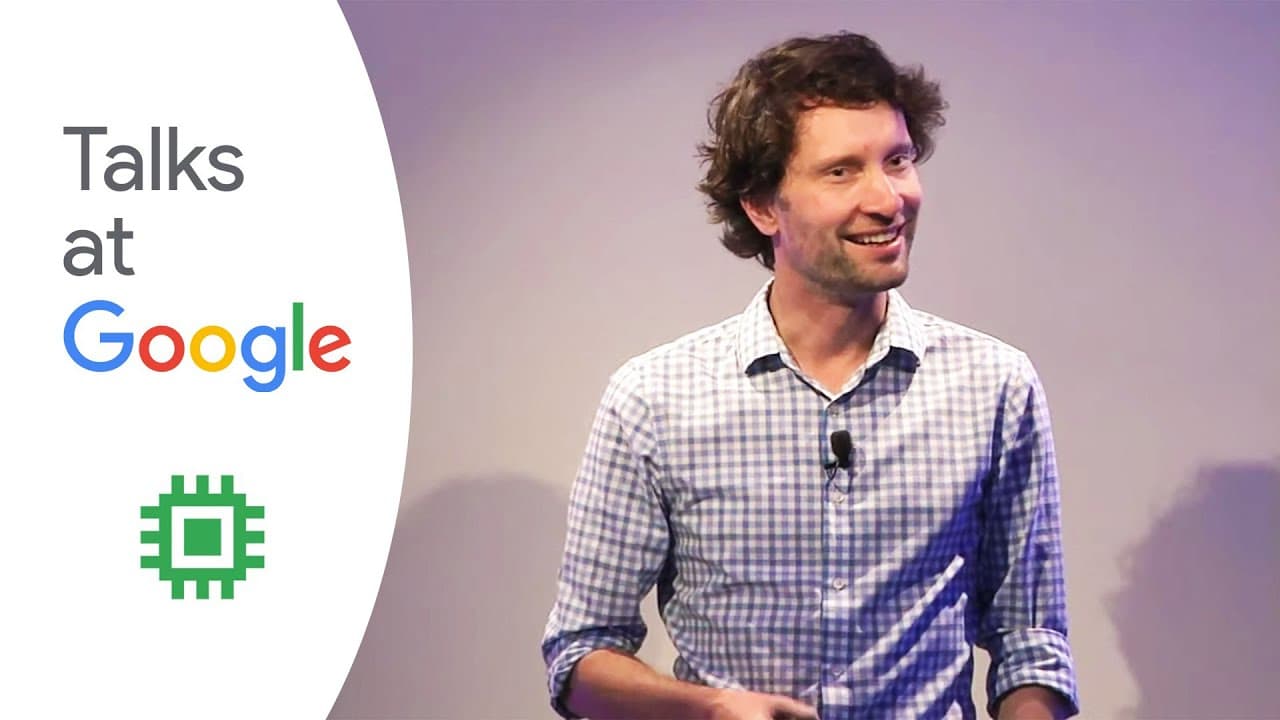
The End of Privacy | Michal Kosinski | Talks at Google
TL;DR
In a world where digital footprints are continuously increasing, personal information can be gleaned and used to predict intimate traits, including political views, personality traits, and even sexual orientation.
Transcript
[MUSIC PLAYING] MICHAEL KOSINSKI: Thank you for inviting me here. Thank you guys for coming. Fun fact. Well, I never intended to be an academic. I actually got expelled three times from my undergraduate psychology degree. And my professors, when my professor was writing me a reference letter for my PhD course, he was, like, laughing at me and I was... Read More
Key Insights
- 💁 The amount of digital footprints we leave behind is continuously increasing, making our personal information more accessible and vulnerable.
- 🧑💻 Algorithms can make accurate predictions about intimate traits based on digital footprints, including Facebook likes, browsing logs, and language used in online communication.
- 😚 Losing privacy is a complex issue with both benefits, such as targeted marketing and personalized services, and risks, including discrimination and invasion of personal space.
Install to Summarize YouTube Videos and Get Transcripts
Explore YouTube Video Summarizer or Get YouTube Transcript Extractor
Questions & Answers
Q: How can digital footprints be used to predict intimate traits?
By analyzing Facebook likes, browsing logs, GPS history, and language used in emails and social media posts, algorithms can make predictions about personality traits, political views, and even sexual orientation.
Q: What are some benefits and risks of losing privacy?
While losing privacy can lead to more targeted marketing and personalized services, it also poses risks of discrimination, invasion of personal space, and infringement on individual rights. It's important to strike a balance between privacy and innovation.
Q: Can individuals protect their privacy by limiting their online activities?
While refraining from using certain platforms or limiting online activities can reduce the amount of personal information available, complete privacy is virtually impossible in today's digital age. Additionally, limiting online activities may have social and economic implications.
Q: Are there any practical steps individuals can take to protect their privacy?
It's challenging to protect privacy completely, but individuals can take some steps to minimize risks. Using privacy settings, being cautious about sharing personal information, and regularly reviewing privacy policies are some practical steps to consider.
Summary & Key Takeaways
-
Digital footprints, including Facebook likes, browsing logs, and GPS history, can be used to predict intimate traits and preferences.
-
Simple machine learning models can accurately predict personality traits and political views based on digital footprints.
-
Algorithms can analyze and interpret language used in digital footprints to make predictions about psychological traits.
-
Predicting intimate traits based on faces is less accurate but still carries significant privacy risks.
Read in Other Languages (beta)
Share This Summary 📚
Summarize YouTube Videos and Get Video Transcripts with 1-Click
Try YouTube Summary with ChatGPT & Claude or YouTube Transcript Generator
Explore More Summaries from Talks at Google 📚
Summarize YouTube Videos and Get Video Transcripts with 1-Click
Try YouTube Summary with ChatGPT & Claude or YouTube Transcript Generator