How to Boost Startup Growth with Content Marketing
TL;DR
To effectively scale SEO for startups, prioritize content, technical SEO, and link building based on your business model. B2B companies often rely on content for growth, while B2C can leverage technical SEO due to user-generated content. Tailor your strategy by understanding your product's unique needs and market position.
Transcript
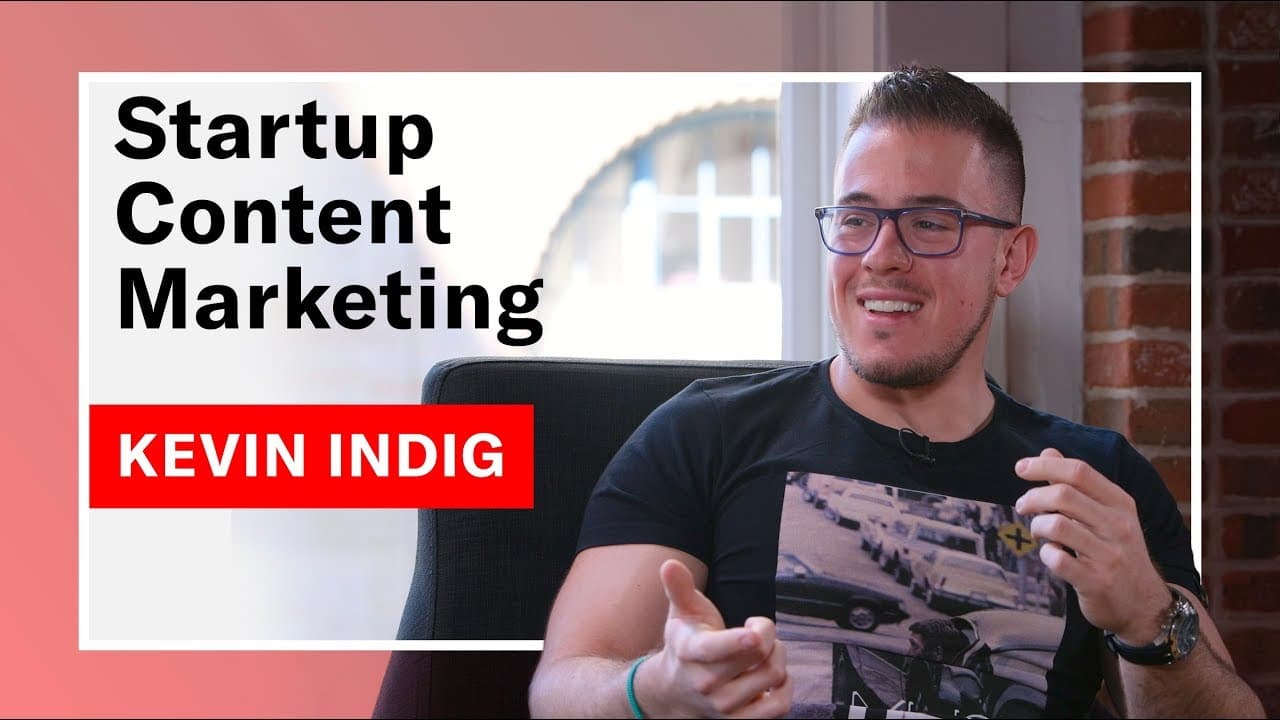
everybody welcome to another awesome episode of content and conversation today I'm excited to welcome Kevin Indig of lasya as well as German accelerator Inc he's SEO adulation and also helps a lot of great German startups and today we're going to talk about startup content marketing welcome Kevin [Applause] so Kevin yeah I'm excited to welcome you ... Read More
Key Insights
- SEO strategies differ between B2B and B2C companies, with B2B relying more on content marketing.
- Startups should focus on their core product value when creating content to attract early adopters.
- Micro-sites can be effective for startups to cover specific topics comprehensively and boost SEO.
- Problem-focused keyword research helps identify user needs and tailor content to address them.
- Versus and alternative keywords are crucial for capturing users comparing products.
- Customer journeys often differ from company assumptions; understanding actual paths can optimize content strategy.
- Simple feedback mechanisms like 'Did you like this content?' can help gauge content effectiveness.
- Microsites can enhance topical relevance and support brand authority in specific domains.
Install to Summarize YouTube Videos and Get Transcripts
Explore YouTube Video Summarizer or Get YouTube Transcript Extractor
Questions & Answers
Q: How should startups prioritize SEO efforts?
Startups should prioritize SEO efforts by focusing on their core product value and addressing the needs of early adopters. This involves creating content that aligns with the company's unique value proposition and market position. For B2B companies, content marketing is often more critical, while B2C companies may benefit more from technical SEO due to user-generated content.
Q: What are the benefits of using micro-sites for startups?
Micro-sites offer startups the opportunity to cover specific topics comprehensively, enhancing topical relevance and supporting brand authority. They can drive SEO by providing a one-stop shop for users seeking information on a particular subject, which can improve search engine rankings and user engagement. Micro-sites are particularly effective when they align closely with the startup's core product and market strategy.
Q: Why is problem-focused keyword research important?
Problem-focused keyword research is important because it helps identify the specific needs and challenges that users face, allowing startups to create content that directly addresses these issues. This approach can lead to the discovery of relevant keywords and queries that might not be immediately obvious, providing a more effective way to reach potential customers and enhance engagement.
Q: How can startups effectively capture users comparing products?
Startups can effectively capture users comparing products by targeting versus and alternative keywords. These keywords are used by potential customers who are evaluating different options, and being present in search results for these queries can help capture users on the verge of making a decision. Creating dedicated landing pages for these keywords can improve visibility and conversion rates.
Q: What role do customer journeys play in content strategy?
Customer journeys play a crucial role in content strategy by revealing how users actually interact with a company's content and products. Understanding the real paths users take can help startups identify gaps in their content strategy and optimize their efforts to better meet user needs. This involves mapping the customer journey and aligning content to support users at each stage.
Q: How can startups measure content effectiveness?
Startups can measure content effectiveness by implementing simple feedback mechanisms, such as a 'Did you like this content?' widget at the end of articles. This provides direct user feedback and can help gauge how well the content meets user expectations. Additionally, tracking metrics like engagement rates, scroll depth, and conversion rates can provide insights into content performance.
Q: When should startups consider using micro-sites?
Startups should consider using micro-sites when they have reached a middle stage of growth and have the resources to invest in comprehensive content coverage for specific topics. Micro-sites are particularly useful when the content is closely related to the company's core product and can enhance the company's authority and visibility in that domain. They should be used strategically to support SEO and branding efforts.
Q: What are the challenges of integrating micro-sites with main domains?
Integrating micro-sites with main domains can present challenges such as maintaining consistent branding and ensuring seamless navigation for users. It's important to decide whether the micro-site should exist as a subdirectory, subdomain, or separate domain, based on its relevance to the core business. Properly linking and integrating micro-sites can help maximize their SEO benefits while supporting the overall user experience.
Summary & Key Takeaways
-
Startups should tailor their SEO strategies based on whether they are B2B or B2C, with B2B focusing more on content marketing. Understanding the core product value and addressing early adopters' needs is crucial for growth.
-
Micro-sites are valuable for startups to establish authority in specific topics, offering comprehensive content that boosts SEO. They work best when aligned with the company's core product and market strategy.
-
Problem-focused keyword research can uncover user needs and guide content creation. It's essential for startups to prioritize versus and alternative keywords to capture users comparing products, enhancing visibility and engagement.
Read in Other Languages (beta)
Share This Summary 📚
Summarize YouTube Videos and Get Video Transcripts with 1-Click
Try YouTube Summary with ChatGPT & Claude or YouTube Transcript Generator
Explore More Summaries from Content and Conversation 📚




Summarize YouTube Videos and Get Video Transcripts with 1-Click
Try YouTube Summary with ChatGPT & Claude or YouTube Transcript Generator