Mars 101 | MARS
TL;DR
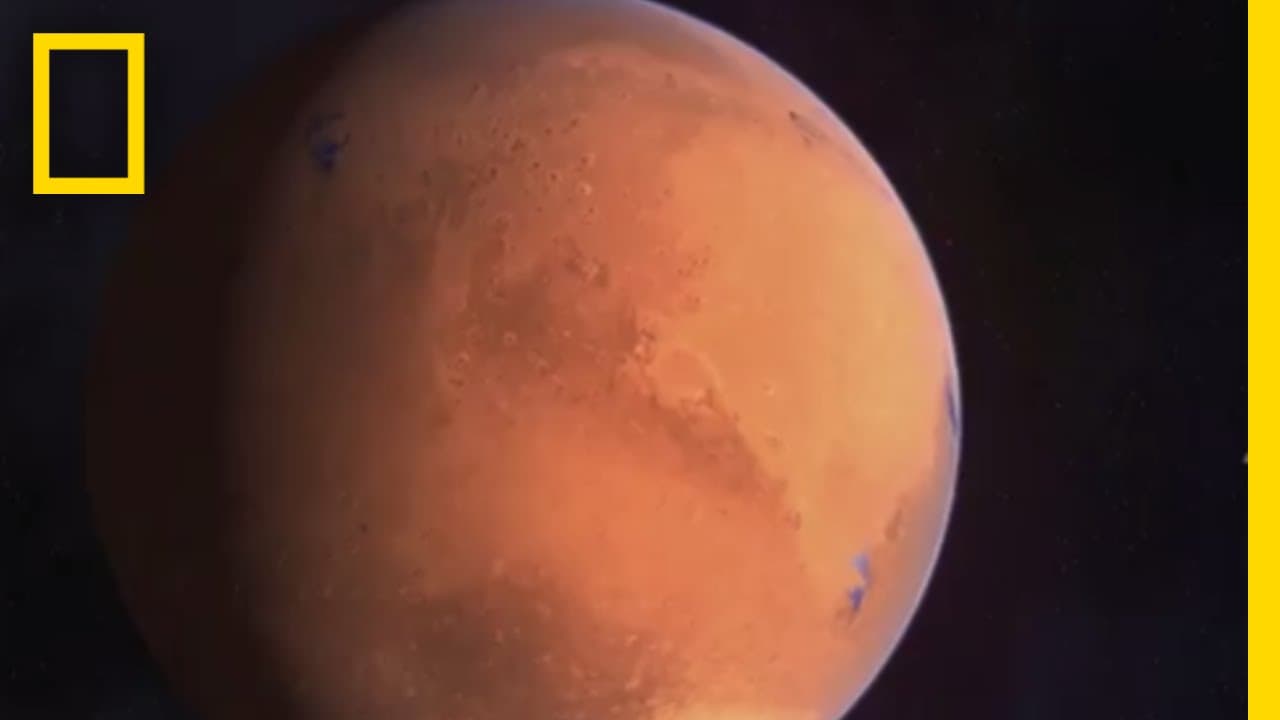
Mars was once similar to Earth, but environmental changes caused it to become inhospitable.
Transcript
in the early formation of the solar system when all the planets were being formed Mars and Earth were actually surprisingly similar Mars at one time was once fertile temperate much like Earth and something happened to it there are massive a water erosion features that are on Mars dating from its early period the young Mars had rivers and lakes it e... Read More
Key Insights
- 💦 Mars was once similar to Earth, with water bodies and a temperate climate.
- 😚 Solar wind caused Mars to lose its atmosphere, leading to environmental changes.
- 🛟 The abundance of essential elements for life on Mars offers potential for human colonization.
- 🤔 Mars' thin atmosphere and lack of pressure pose significant challenges for human survival.
- 👻 The distance between Mars and Earth allows for a six-month journey using current technology.
- 😘 The extreme cold temperatures, thin atmosphere, and low gravity make Mars a hostile environment.
- 😪 Mars' unique landscapes include tall mountains and deep valleys in a red and blue sky.
Install to Summarize YouTube Videos and Get Transcripts
Explore YouTube Video Summarizer or Get YouTube Transcript Extractor
Questions & Answers
Q: How did Mars evolve from being similar to Earth to its current inhospitable state?
Mars was once similar to Earth with water bodies, but as its atmosphere thinned due to solar wind, the planet lost its ability to sustain a temperate environment, leading to extreme cold and inhospitable conditions.
Q: What are the key similarities between Mars and Earth in terms of essential elements for life?
Mars has carbon, hydrogen, oxygen, and nitrogen in abundance, similar to Earth, making it potentially suitable for sustaining life if the environment were hospitable.
Q: What are the major challenges humans would face living on Mars?
Living on Mars poses challenges such as extreme cold temperatures, thin atmosphere, low gravity, and lack of pressure, making it a hostile environment requiring significant adaptations for survival.
Q: How does the scale of distance between Mars and Earth compare to other celestial bodies?
Mars is about half again as far from the Sun as Earth, making it colder than Earth due to the greater distance. In cosmic terms, however, the proximity makes it a feasible destination for human exploration.
Summary & Key Takeaways
-
In the early formation of the solar system, Mars resembled Earth with water erosion features, rivers, and lakes.
-
Mars had the critical elements for life but lost its atmosphere, leading to a cold, inhospitable environment.
-
Despite similarities to Earth, Mars poses challenges such as extreme cold, thin atmosphere, and gravity differences.
Read in Other Languages (beta)
Share This Summary 📚
Summarize YouTube Videos and Get Video Transcripts with 1-Click
Try YouTube Summary with ChatGPT & Claude or YouTube Transcript Generator
Explore More Summaries from National Geographic 📚



Summarize YouTube Videos and Get Video Transcripts with 1-Click
Try YouTube Summary with ChatGPT & Claude or YouTube Transcript Generator