Our Best View Of Bacteria Is...From Space?!
TL;DR
Satellites allow us to observe the effects of microbes on Earth, helping monitor plant health, predict cholera outbreaks, and search for signs of life on other planets.
Transcript
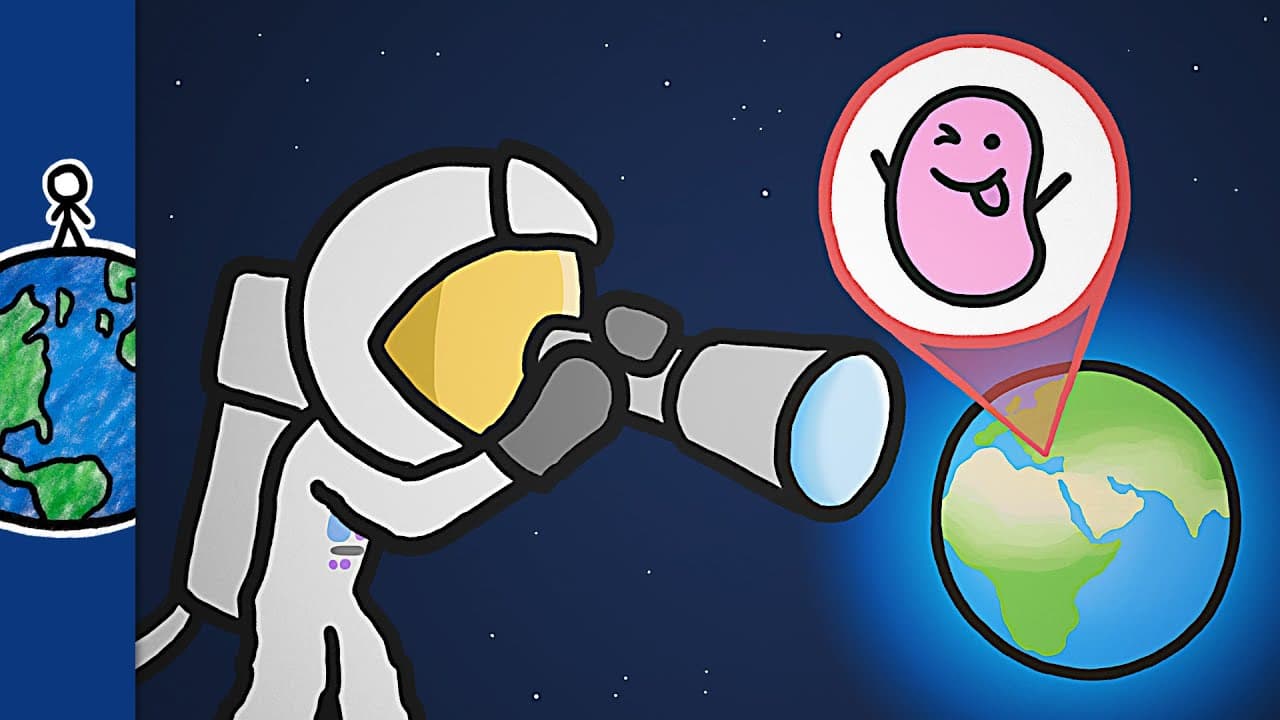
Hi, this is Julián from MinuteEarth. Microbes are incredibly tiny. Their name, microbe, literally means “tiny lifeform” and to see them, you need a tiny lifeform-seer, more commonly known as a microscope. Except, it’s sometimes more useful to observe microbes from space … well, at least observe their effects. That’s because the impacts these tiny l... Read More
Key Insights
- 🛰️ Microbes have tremendous impacts on our planet, visible from satellites in space.
- 👻 Satellite data on plant health allows for efficient monitoring of large areas, helping forest managers and farmers make informed decisions.
- 🦻 Satellite data on phytoplankton can aid in predicting cholera outbreaks, potentially saving lives.
- 👨🎤 Satellites can identify patterns in rocks on Mars, indicating the possibility of past microbial life on the planet.
- 🦠 A combination of microscopes and satellites provides a comprehensive understanding of microbes and their effects on Earth and other planets.
- 🧑⚕️ Remote sensing technology developed by researchers at the University of Minnesota contributes to sustaining forest health.
- 👾 Monitoring microbes from space helps in assuring clean water and sustainable ecosystems.
Install to Summarize YouTube Videos and Get Transcripts
Explore YouTube Video Summarizer or Get YouTube Transcript Extractor
Questions & Answers
Q: How can satellites help monitor plant health?
Satellites measure changes in visible and infrared light to assess changes in forest and crop health, allowing for efficient monitoring of large areas and prioritization of resources.
Q: What information can satellite data on phytoplankton blooms provide?
Satellite data on phytoplankton blooms can help predict cholera outbreaks by showing a combination of warm waters, high ocean levels, and a concentration of phytoplankton, allowing for timely interventions.
Q: How can satellites assist in the search for signs of life on other planets?
Satellites can identify patterns in salt-rich rocks caused by salt-loving microbes on Mars, suggesting the possibility of past microbial life. This information guides the selection of locations for rovers to search for traces of life.
Q: Are satellites a replacement for lab work and ground observations?
Satellites do not replace lab work and ground observations but complement them. Satellites provide a macroscopic perspective and help gather data efficiently, while microscopes and on-the-ground observations are still needed to understand the microbes in detail.
Summary & Key Takeaways
-
Microbes have significant impacts on our planet, visible from satellites over 400 miles away.
-
Satellites can measure changes in visible and infrared light to assess plant health efficiently.
-
Satellite data on phytoplankton blooms helps forecast cholera outbreaks and discover signs of life on other planets.
Read in Other Languages (beta)
Share This Summary 📚
Summarize YouTube Videos and Get Video Transcripts with 1-Click
Try YouTube Summary with ChatGPT & Claude or YouTube Transcript Generator
Explore More Summaries from MinuteEarth 📚






Summarize YouTube Videos and Get Video Transcripts with 1-Click
Try YouTube Summary with ChatGPT & Claude or YouTube Transcript Generator