What Are Horizontal and Vertical Lines of Symmetry?
TL;DR
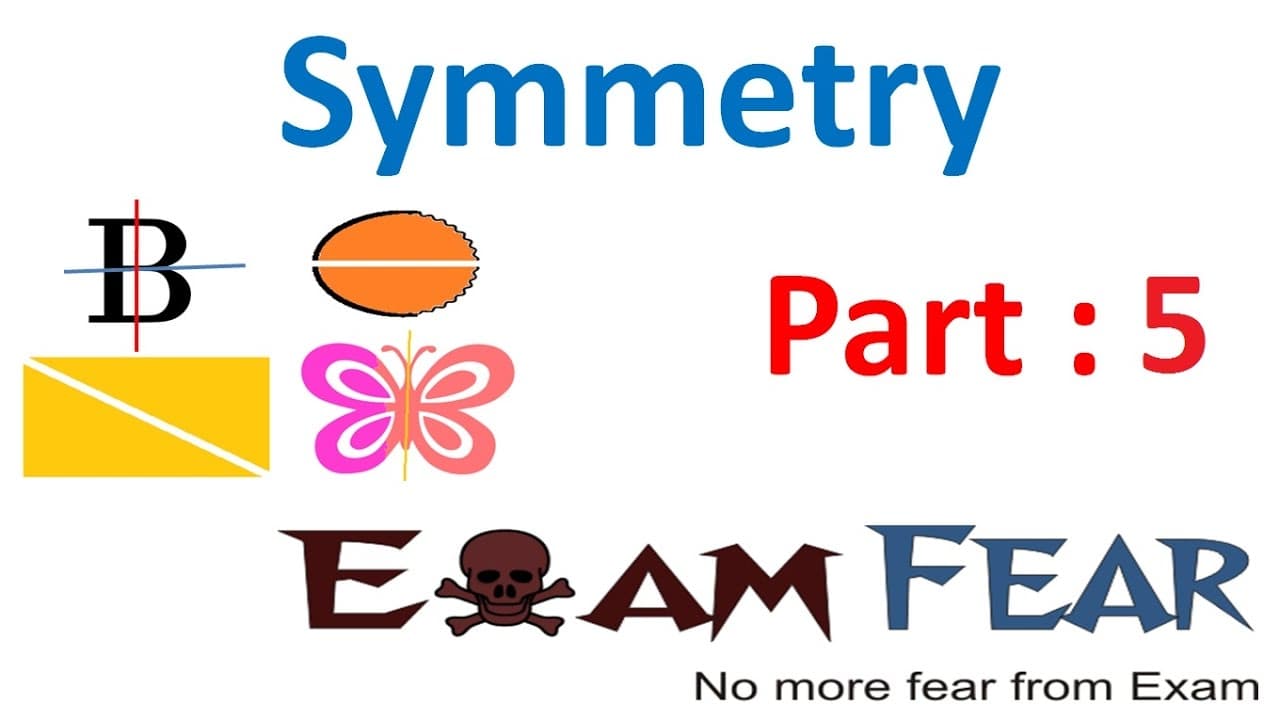
Horizontal lines of symmetry divide objects into two equal parts that completely overlap, while vertical lines do so with parts that may not be identical. Some shapes have only horizontal or vertical symmetry, others have both, and some have none.
Transcript
hello friends this video on symmetry part 5 is brought to you by exam fire calm no more fear from exam now that you have already learned what is the line of symmetry let's talk about horizontal and vertical lines of symmetry so can you guess what could be horizontal and vertical lines of symmetry I think you would have guessed it partially so any h... Read More
Key Insights
- 🫥 Horizontal lines of symmetry divide objects into equal halves that cover each other completely.
- 🫥 Vertical lines of symmetry divide objects into equal halves that overlap each other.
- 🫥 Some objects may have only horizontal lines of symmetry, while others may have only vertical lines or both.
- 🫥 Rectangles are an example of objects that have both horizontal and vertical lines of symmetry.
- 🫥 Some objects may have neither horizontal nor vertical lines of symmetry.
- 🫥 Lines of symmetry help in understanding the symmetry and balance of objects.
- 🫥 Imagining different lines can help determine if an object has a line of symmetry.
Install to Summarize YouTube Videos and Get Transcripts
Explore YouTube Video Summarizer or Get YouTube Transcript Extractor
Questions & Answers
Q: What are horizontal and vertical lines of symmetry?
Horizontal lines of symmetry divide objects into two equal halves that cover each other completely, while vertical lines of symmetry divide objects into two equal halves that overlap each other.
Q: How can we determine if an object has a line of symmetry?
By imagining different lines and observing if they divide the object into two equal parts, we can determine if the object has a line of symmetry.
Q: Can an object have both horizontal and vertical lines of symmetry?
Yes, some objects, like rectangles, can have both horizontal and vertical lines of symmetry if these lines divide the object into two equal halves.
Q: Can an object have neither horizontal nor vertical lines of symmetry?
Yes, some objects do not have any lines of symmetry, meaning they cannot be divided into two equal halves either horizontally or vertically.
Summary & Key Takeaways
-
Horizontal lines of symmetry divide objects into two equal halves that cover each other completely.
-
Vertical lines of symmetry divide objects into two equal halves that overlap each other.
-
Some objects have only horizontal or vertical lines of symmetry, while others may have both or none.
Read in Other Languages (beta)
Share This Summary 📚
Summarize YouTube Videos and Get Video Transcripts with 1-Click
Try YouTube Summary with ChatGPT & Claude or YouTube Transcript Generator
Explore More Summaries from LearnoHub - Class 11, 12 📚





Summarize YouTube Videos and Get Video Transcripts with 1-Click
Try YouTube Summary with ChatGPT & Claude or YouTube Transcript Generator