Como é FEITO o BOTIJÃO de GÁS #Boravê
TL;DR
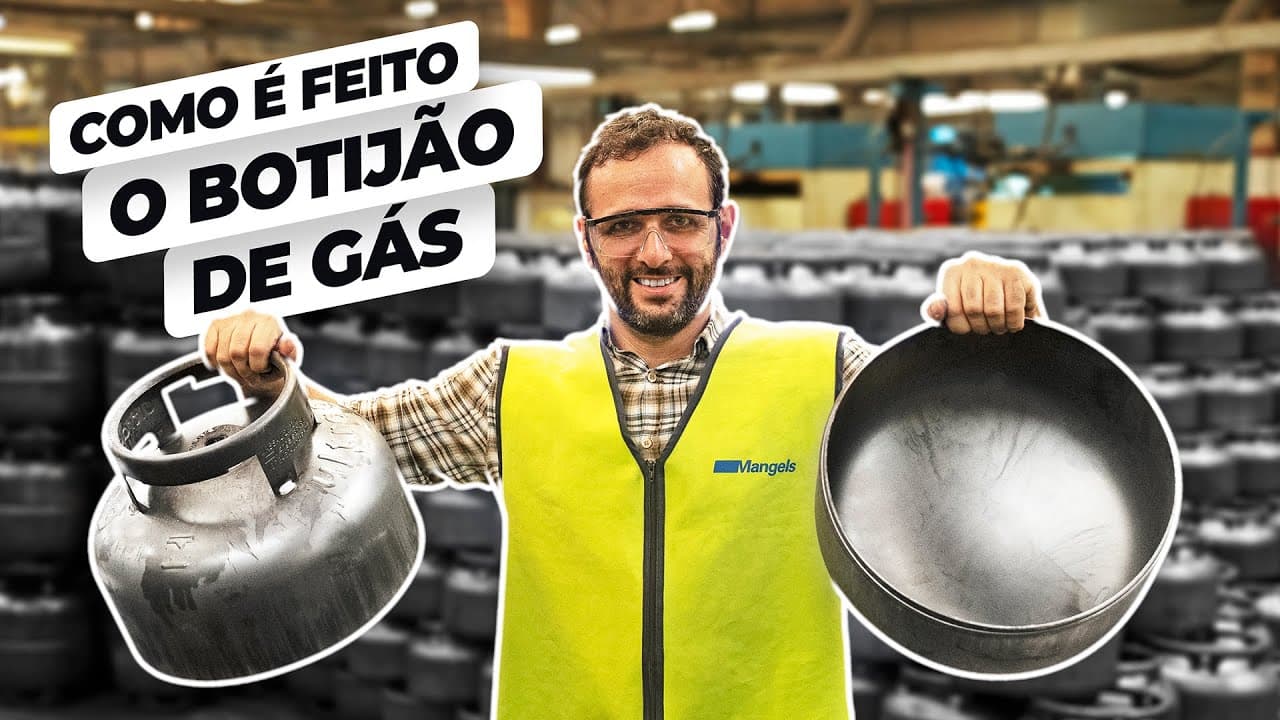
The video explores the intricate process of manufacturing gas cylinders.
Transcript
I don't know about you, but I've always been very curious about the gas cylinder. So much so that in Manual do Mundo we already cut it in half to see what's inside because we have this thing in the kitchen, it's full of flammable gas inside, and it has to be extremely safe. So, today, we came to a factory to understand how it is made. The bottle b... Read More
Key Insights
- The gas cylinder, often found in kitchens, is a complex product made from steel and composed of several parts including domes, handles, and a flange.
- Steel coils, the primary raw material, are unrolled and processed into the cylinder's components, which undergo various shaping and welding techniques.
- Safety is paramount; cylinders must pass rigorous tests such as mechanical, water jacket, and burst tests to ensure they withstand high pressures.
- The manufacturing process includes a thermal treatment called annealing to relieve stress points in the steel, preventing brittleness.
- Cylinders are cleaned using steel grit spraying and painted with multiple layers to prevent corrosion, followed by drying in an oven.
- Safety plugs with bismuth alloy prevent explosions in case of fire by melting and releasing gas safely.
- Each cylinder undergoes a high-pressure water test to ensure no leaks, with defects only causing minor water leaks instead of explosions.
- The production process concludes with weighing, applying a tare plate, and preparing cylinders for distribution, ensuring a lifespan of over 40 years if maintained properly.
Install to Summarize YouTube Videos and Get Transcripts
Explore YouTube Video Summarizer or Get YouTube Transcript Extractor
Questions & Answers
Q: What are the main components of a gas cylinder?
A gas cylinder primarily consists of five major parts: the lower handle or base, the lower dome, the upper dome, the upper handle, and the flange. Additionally, it includes smaller components like the valve, safety plug, and tare plate, all crucial for its functionality and safety.
Q: Why is annealing important in the manufacturing process?
Annealing is a thermal treatment process crucial for relieving stress points in the steel structure created during welding. By heating the cylinder to 650 degrees Celsius and then cooling it, the process prevents the steel from becoming brittle and ensures the cylinder's durability and safety under high pressure.
Q: How is the safety of the gas cylinder ensured during production?
Safety is ensured through rigorous testing, including mechanical tests to assess steel strength, water jacket tests for flexibility, and burst tests to check pressure limits. Additionally, a safety plug with bismuth alloy prevents explosions by safely releasing gas in case of fire.
Q: What role does the bismuth alloy safety plug play?
The bismuth alloy safety plug is designed to melt easily in case of a fire, allowing gas to escape safely. This feature prevents the cylinder from exploding during a fire, ensuring the safety of the surrounding environment and reducing potential hazards.
Q: How are the cylinders cleaned and prepared for painting?
Cylinders are cleaned using a machine that sprays steel grit, a fine steel powder resembling sand, to remove residues. This process results in a clean and slightly rough surface, ideal for applying multiple layers of anti-corrosive, primer, and enamel paint for protection.
Q: What tests are conducted to ensure cylinder durability?
Cylinders undergo a series of tests including mechanical stretching until breakage, water jacket tests for flexibility, and burst tests to determine pressure limits. These tests ensure the cylinder's ability to withstand high pressures and prevent leaks or explosions.
Q: How is the valve of the cylinder secured and tested?
The valve is secured with a sealant and tightened using a torque wrench to ensure precise force application. It is then tested for leaks by pressurizing with compressed air and immersing it in water to check for air bubbles, ensuring a secure and leak-proof fit.
Q: What is the significance of the tare plate on a gas cylinder?
The tare plate indicates the empty weight of the cylinder, which is crucial for determining the net weight of the gas it contains. This information helps in calculating refills and ensures accurate billing, making it an essential component for both consumers and distributors.
Summary & Key Takeaways
-
The video details the manufacturing process of gas cylinders, highlighting the importance of safety due to the flammable nature of LPG stored inside. The process involves shaping steel into components, welding, and rigorous testing to ensure durability.
-
Key stages include annealing to relieve stress, cleaning and painting for corrosion resistance, and safety measures such as bismuth alloy plugs to prevent explosions. Each cylinder is tested for pressure and leaks before distribution.
-
The final product is a robust and safe gas cylinder, ready for distribution and use in homes. The video emphasizes the complex manufacturing process and the extensive safety measures in place to ensure reliability and longevity.
Read in Other Languages (beta)
Share This Summary 📚
Summarize YouTube Videos and Get Video Transcripts with 1-Click
Try YouTube Summary with ChatGPT & Claude or YouTube Transcript Generator
Explore More Summaries from Manual do Mundo 📚


Summarize YouTube Videos and Get Video Transcripts with 1-Click
Try YouTube Summary with ChatGPT & Claude or YouTube Transcript Generator