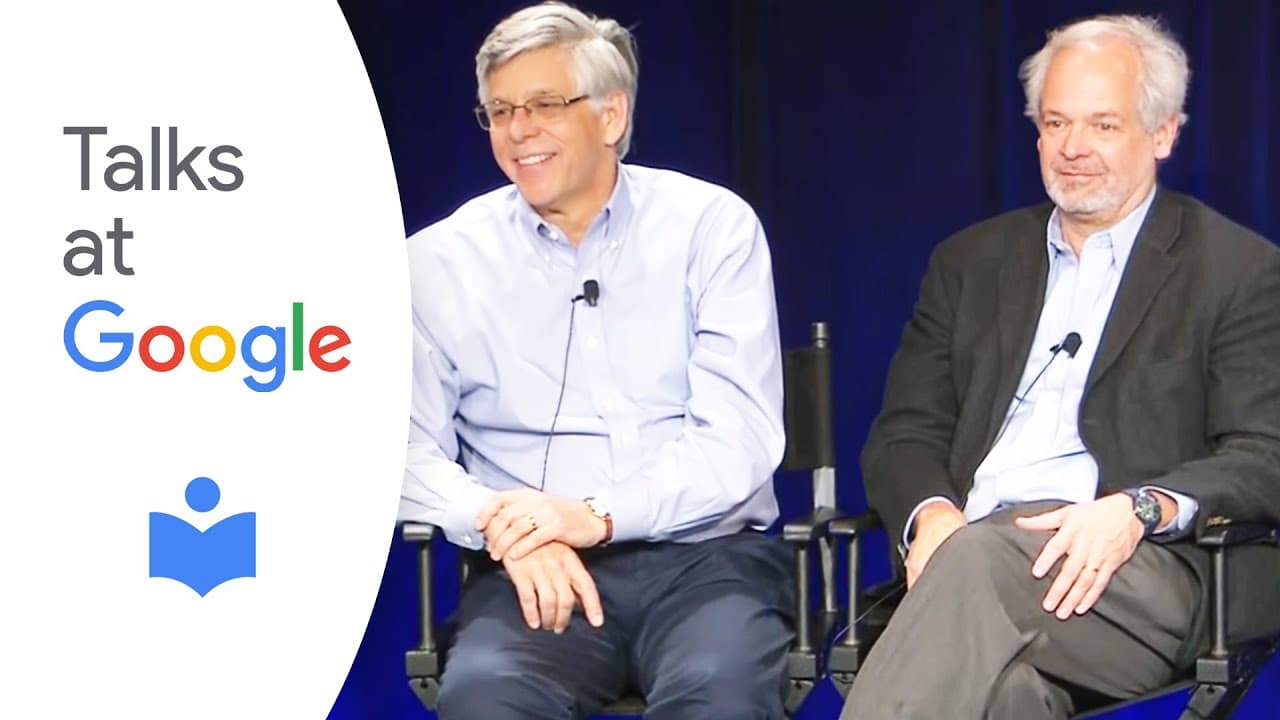
Evolving Ourselves | Juan Enriquez & Steve Gullans | Talks at Google
TL;DR
Humans are now in control of evolution, using unnatural selection and nonrandom mutation to determine what lives and what dies, leading to significant changes in the morphology of species and potential consequences for the future.
Transcript
MALE SPEAKER: Good afternoon and welcome to Talks at Google in Cambridge, Massachusetts. Today it's my great pleasure to introduce Juan Enriquez and Steve Gullans. Juan and Steve are here today to talk about their book, "Evolving Ourselves: How Unnatural Selection and Nonrandom Mutation are Changing Life on Earth," in which they state, "we are the ... Read More
Key Insights
- 🫒 Humans are now the primary drivers of evolution, determining what lives and dies through unnatural selection and nonrandom mutation.
- 🍰 Changes in the morphology of the human body, such as obesity, shorter lifespans, and weaker physical capabilities, can be attributed to human-driven evolution.
- 👻 Genetic technologies, such as gene editing and synthetic biology, allow for precise control over evolution, enabling the creation of desired traits or the elimination of diseases.
- 🤗 The future of evolution is now in the hands of humans, with potential consequences for both individuals and the entire ecosystem.
- 👨💻 As we continue to explore and manipulate life code, there are tremendous opportunities for advancements in healthcare, agriculture, and other industries.
- 🤨 The ethical implications of designing and altering organisms raise important questions about the responsibility and societal impacts of human intervention in evolution.
Install to Summarize YouTube Videos and Get Transcripts
Explore YouTube Video Summarizer or Get YouTube Transcript Extractor
Questions & Answers
Q: What is the difference between natural selection and unnatural selection?
Natural selection occurs through random mutations and survival of the fittest, while unnatural selection is driven by human intervention and deliberate breeding or genetic modification.
Q: How has human domestication led to changes in evolution?
By living in large urban communities and changing our lifestyles, humans have domesticated themselves, leading to a collapse in violence and changes in physical attributes such as obesity.
Q: How are humans affecting evolution through nonrandom mutation?
Scientists can now manipulate and code the DNA of cells, creating nonrandom mutations and programming cells to execute specific functions. This enables rapid evolution and control over the genetic makeup of species.
Q: What are the potential consequences of humans taking control of evolution?
The consequences include changes in diseases, lifespan, species diversity, and the potential for gene editing in humans. It also raises ethical questions about the future direction of evolution.
Summary & Key Takeaways
-
Life evolves through natural selection and random mutation, but humans are now the primary drivers of evolution.
-
In the last century, humans have changed their environment, population, and domestication practices, leading to rapid changes in the morphology of the human body.
-
Unnatural selection and nonrandom mutation are now determining what lives and dies, as humans selectively breed and genetically modify plants, animals, and themselves.
Read in Other Languages (beta)
Share This Summary 📚
Summarize YouTube Videos and Get Video Transcripts with 1-Click
Try YouTube Summary with ChatGPT & Claude or YouTube Transcript Generator
Explore More Summaries from Talks at Google 📚

Summarize YouTube Videos and Get Video Transcripts with 1-Click
Try YouTube Summary with ChatGPT & Claude or YouTube Transcript Generator