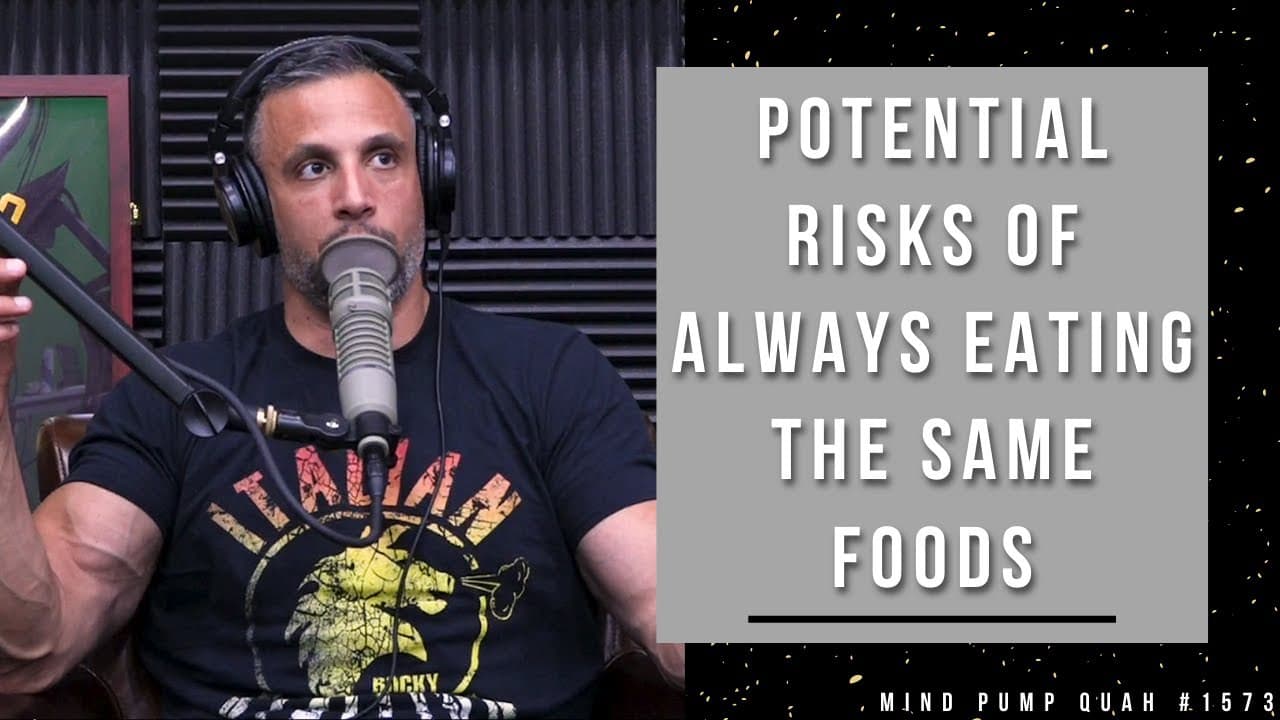
Does Your Body Get Used To The Same Foods Over Time?
TL;DR
Eating the same foods doesn't reduce nutrient benefits but may cause deficiencies.
Transcript
next question is from 713 clown if you eat the same healthy foods on a regular basis does your body get used to the nutrients and they stop being beneficial i've heard this before and i don't know if i believe it no it doesn't work like that what could happen is you could have nutrient deficiencies because you're not eating foods that contain parti... Read More
Key Insights
- Eating the same healthy foods regularly does not make nutrients less beneficial, but it could lead to nutrient deficiencies due to lack of variety.
- Vegans may face nutrient deficiencies if they rely on the same food sources, highlighting the need for a diverse diet to meet nutritional needs.
- Consuming the same foods continuously can lead to gut inflammation and potential food intolerances, as the body might develop an immune response to these foods.
- Meat, being nutrient-dense, generally provides essential nutrients, reducing the risk of deficiencies compared to a limited plant-based diet.
- Psychological benefits arise from varying dietary patterns, such as eating seasonally or diversifying food choices, preventing rigid eating habits and potential binge eating.
- Bodybuilders often eat repetitive diets during pre-contest phases, which can lead to psychological challenges when dietary restrictions are lifted.
- Rotating foods, including proteins and vegetables, ensures a broader intake of nutrients, supporting overall health and reducing the risk of deficiencies.
- Nature's seasonal patterns offer a natural way to vary diet, providing different nutrients needed during specific times of the year.
Install to Summarize YouTube Videos and Get Transcripts
Explore YouTube Video Summarizer or Get YouTube Transcript Extractor
Questions & Answers
Q: Does eating the same foods reduce their nutrient benefits?
No, eating the same foods does not reduce their nutrient benefits. The nutrients remain beneficial, but the risk lies in developing nutrient deficiencies due to a lack of dietary variety. Consuming a diverse range of foods ensures a comprehensive intake of essential nutrients.
Q: Why might vegans face nutrient deficiencies?
Vegans might face nutrient deficiencies if they rely on the same food sources, as plant-based diets require careful planning to meet all nutritional needs. A diverse diet is crucial for vegans to obtain adequate amounts of essential nutrients like protein, iron, and vitamin B12.
Q: How can eating the same foods lead to food intolerances?
Eating the same foods can lead to food intolerances due to gut inflammation. Continuous exposure to the same foods may cause the body to develop an immune response, resulting in intolerances. This highlights the importance of varying one's diet to maintain gut health.
Q: What psychological benefits come from varying dietary patterns?
Varying dietary patterns provides psychological benefits by preventing rigid eating habits and reducing the likelihood of binge eating. Eating seasonally or diversifying food choices encourages a balanced intake of nutrients and helps maintain a healthy relationship with food.
Q: Why is food rotation important in a diet?
Food rotation is important as it ensures a broader intake of nutrients, supporting overall health and reducing the risk of deficiencies. Different foods provide different nutrients, and rotating them helps cover nutritional bases, promoting a balanced and healthy diet.
Q: How does nature's seasonal patterns influence diet?
Nature's seasonal patterns influence diet by providing different nutrients needed during specific times of the year. Eating seasonally offers a natural way to vary one's diet, ensuring a diverse intake of nutrients and aligning with the body's changing nutritional needs.
Q: What challenges do bodybuilders face with repetitive diets?
Bodybuilders face psychological challenges with repetitive diets, especially during pre-contest phases. Eating the same foods can lead to rigid eating habits, and when dietary restrictions are lifted, it may result in binge eating or difficulty adjusting to a more varied diet.
Q: How does meat consumption affect nutrient intake?
Meat consumption generally provides essential nutrients, reducing the risk of deficiencies compared to a limited plant-based diet. Meat is nutrient-dense, offering a wide range of vitamins and minerals, which helps meet nutritional needs and supports overall health.
Summary & Key Takeaways
-
Eating the same foods regularly does not reduce their nutrient benefits. However, it may lead to nutrient deficiencies if the diet lacks variety, especially in vegan diets. It's essential to include a wide range of foods to meet all nutritional needs.
-
Regularly consuming the same foods can cause gut inflammation and potential food intolerances. This is due to the body's immune response to repeated exposure, highlighting the importance of dietary diversity for maintaining gut health.
-
Varying dietary patterns, like eating seasonally, provides psychological benefits and prevents rigid eating habits. This approach encourages a balanced intake of nutrients and reduces the likelihood of binge eating when dietary restrictions are lifted.
Read in Other Languages (beta)
Share This Summary 📚
Summarize YouTube Videos and Get Video Transcripts with 1-Click
Try YouTube Summary with ChatGPT & Claude or YouTube Transcript Generator
Explore More Summaries from Mind Pump Show 📚






Summarize YouTube Videos and Get Video Transcripts with 1-Click
Try YouTube Summary with ChatGPT & Claude or YouTube Transcript Generator