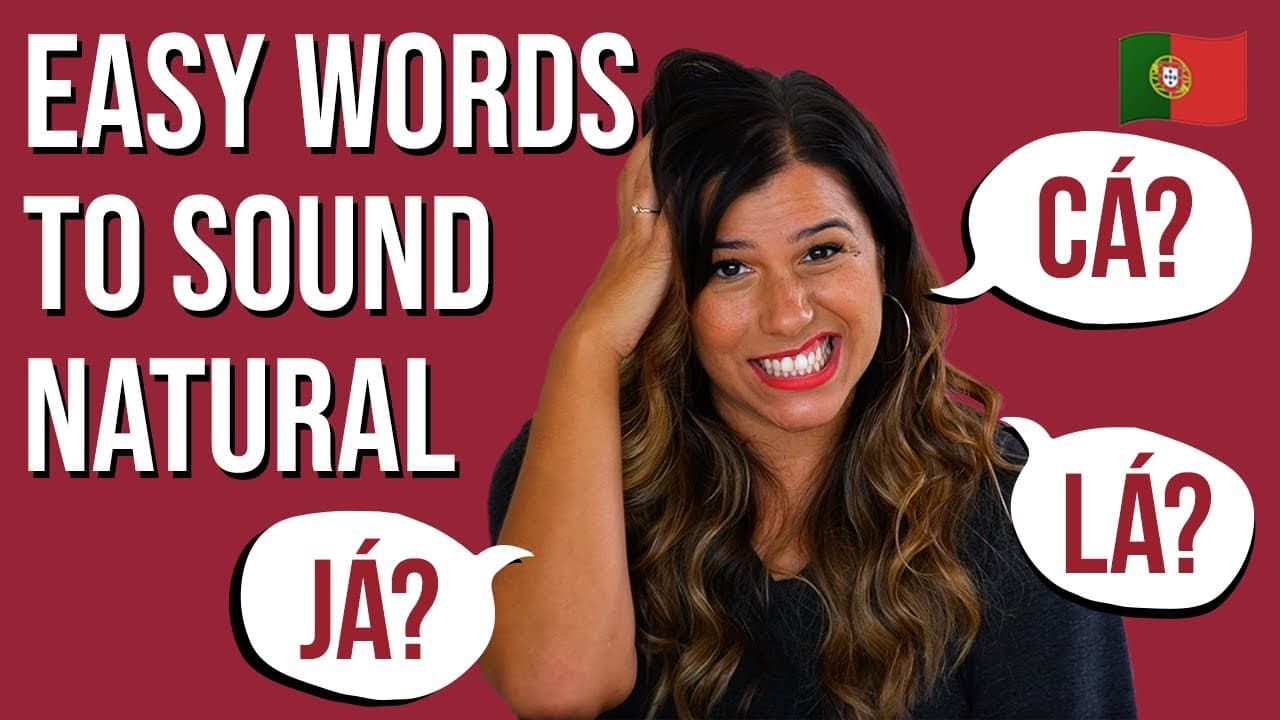
European Portuguese | Já, Cá & Lá Explained (Everyday Words to Sound Like a Local!)
TL;DR
Learn to use 'já', 'cá', and 'lá' for natural Portuguese.
Transcript
nobody wants to sound like a robot when they speak Portuguese but unfortunately when you learn from stuffy textbooks and audio guides you can end up sounding a bit stiff and stilted when you speak so how do we get around this you need to master the everyday words that native speakers will use themselves this will lead to a much more relaxed tur... Read More
Key Insights
- Understanding 'já' is crucial as it can mean 'already', 'now', or 'soon' based on its position in a sentence. Mastering its use can significantly enhance conversational fluency.
- 'Cá' is a more general term for 'here', contrasting with 'aqui', which is used for specific locations. It is often used informally.
- 'Lá' and 'ali' both mean 'there', but 'lá' refers to places not in sight, while 'ali' is used for visible locations.
- Expressions using 'já' can convey understanding or impatience, such as 'I get it now' or 'that's enough already'.
- The use of 'lá' in expressions can indicate impatience or urgency, like in 'anda lá' meaning 'come on, hurry up'.
- Learning these small words can make Portuguese sound more natural and less robotic, moving away from textbook language.
- Expressions with 'lá' can also be used politely, such as in a shop when asked for information, indicating readiness to proceed.
- The video emphasizes the importance of context and sentence structure in determining the meaning of these words.
Install to Summarize YouTube Videos and Get Transcripts
Explore YouTube Video Summarizer or Get YouTube Transcript Extractor
Questions & Answers
Q: What is the main focus of the video?
The main focus of the video is to teach learners how to use the small but significant Portuguese words 'já', 'cá', and 'lá'. These words are essential for sounding more natural and fluent in everyday conversations, as they have multiple meanings based on context and sentence structure.
Q: How does the word 'já' change meaning based on its position in a sentence?
The word 'já' can mean 'already', 'now', or 'soon' depending on its position. When placed before a verb, it typically means 'already'. However, when placed after a verb, it can mean 'now' or 'very soon'. Understanding its placement is crucial for using it correctly in conversation.
Q: What is the difference between 'cá' and 'aqui'?
The difference between 'cá' and 'aqui' lies in their specificity. 'Cá' is used for more general references to 'here', while 'aqui' is used for specific locations. 'Cá' is also more informal and commonly used in casual conversations, making it an important word for sounding natural in Portuguese.
Q: How does 'lá' differ from 'ali'?
'Lá' and 'ali' both mean 'there', but 'lá' is used for locations not in sight, whereas 'ali' refers to places that are visible. This distinction helps in accurately describing locations and is important for conveying the correct meaning in conversations.
Q: What are some expressions that use 'já'?
Expressions using 'já' include phrases like 'I get it now' or 'that's enough already'. These expressions convey understanding or impatience and are part of set phrases that can make a speaker sound more like a native Portuguese speaker. Learning these expressions is key to sounding natural.
Q: How can 'lá' be used in expressions?
'Lá' can be used in expressions to convey impatience or urgency, such as 'anda lá' meaning 'come on, hurry up'. It can also be used politely, such as when a shopkeeper asks for information, indicating readiness to proceed. These expressions help in sounding more natural and fluent.
Q: Why is it important to learn these small words?
Learning these small words is important because they can make a big difference in how natural and fluent a speaker sounds in Portuguese. They help move away from stiff textbook language and allow learners to express themselves more naturally, as native speakers do in everyday conversations.
Q: What resources does the video offer for further learning?
The video offers several resources for further learning, including a free Portuguese lesson for beginners and a pronunciation guide. These resources aim to help learners improve their language skills, focusing on sounding more natural and confident in Portuguese conversations. Links to these resources are provided in the video description.
Summary & Key Takeaways
-
The video explains how mastering small words like 'já', 'cá', and 'lá' can help learners sound more like native Portuguese speakers. It focuses on the importance of context and sentence placement in determining their meanings.
-
The word 'já' can mean 'already', 'now', or 'soon' depending on its position in a sentence. 'Cá' and 'lá' are used for general locations, contrasting with 'aqui' and 'ali', which are more specific.
-
Expressions using these words can convey different emotions and intentions, such as impatience or understanding. The video aims to help learners sound more natural and confident in their Portuguese conversations.
Read in Other Languages (beta)
Share This Summary 📚
Summarize YouTube Videos and Get Video Transcripts with 1-Click
Try YouTube Summary with ChatGPT & Claude or YouTube Transcript Generator
Explore More Summaries from Talk the Streets 📚


![Learn European Portuguese Outside of Portugal! [NEW apps & TOP tips!] thumbnail](/_next/image?url=https%3A%2F%2Fi.ytimg.com%2Fvi%2F0K81C-5Z1I0%2Fhqdefault.jpg&w=750&q=75)

Summarize YouTube Videos and Get Video Transcripts with 1-Click
Try YouTube Summary with ChatGPT & Claude or YouTube Transcript Generator