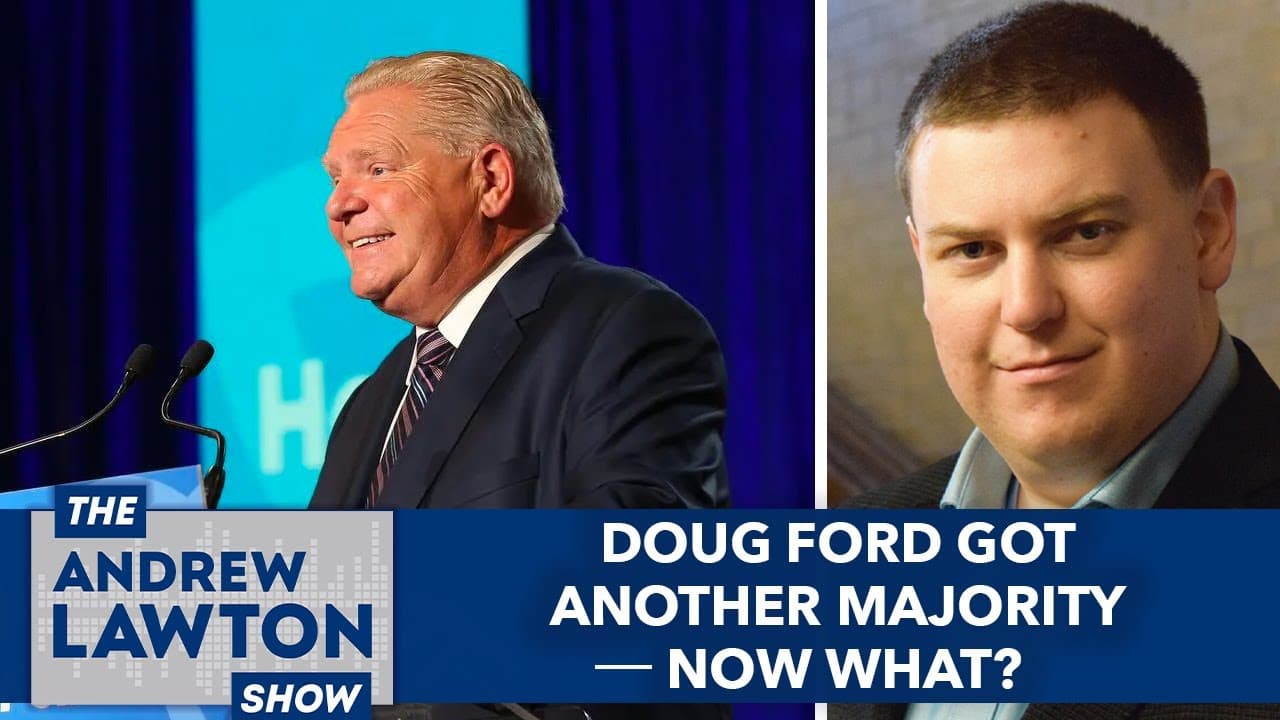
Doug Ford got another majority – now what?
TL;DR
The Ontario election results highlight discontent among voters and political party realignments.
Transcript
welcome to canada's most irreverent talk show this is the andrew lawton show brought to you by true north coming up what does yesterday's ontario election mean for ontario and for conservatism in canada plus a little bit of personal news to end the show the andrew lawton show starts right now hello and welcome to the andrew lawton show canada's mos... Read More
Key Insights
- 🤨 Doug Ford’s victory raises questions about the nature of conservatism in Ontario, as he leans more towards populism than traditional conservative values.
- 😘 Low voter turnout in the recent election reflects widespread voter apathy and dissatisfaction with current political options.
- 🥳 The existence of independent candidates indicates a significant discontent among voters who feel unrepresented by established parties.
- 🇳🇨 New parties like New Blue and the Ontario Party show that there is a demand for more traditional conservative options in Ontario, despite their current limited electoral success.
- 🥳 The media's role in shaping political narratives has made it challenging for new conservative voices to gain mainstream attention compared to established left-leaning parties.
- 🥳 The electoral landscape is shifting, with a growing disconnect evidenced between party leadership and base constituents of traditional political parties.
- 🥳 Both the NDP and Liberal parties are grappling with internal factions and identity questions, risking further alienation of their voter bases if they do not establish a clear platform.
Install to Summarize YouTube Videos and Get Transcripts
Explore YouTube Video Summarizer or Get YouTube Transcript Extractor
Questions & Answers
Q: What was the significant outcome of the recent Ontario election regarding Doug Ford?
Doug Ford secured a majority government, marking his re-election, but the win has raised questions about his conservative ideology as he has often been viewed more as a populist than a traditional conservative, leading to mixed feelings among conservative supporters.
Q: Why was the voter turnout in this Ontario election historically low?
The voter turnout was the lowest in any provincial election in Ontario’s history, highlighting a general apathy among voters towards the candidates and platforms offered. The election was characterized by a lack of motivating issues, often described as a “Seinfeld election” with little substantive engagement from the electorate.
Q: How do the results reflect upon the future of the Progressive Conservative party?
The results indicate significant internal divisions within the Progressive Conservative party and dissatisfaction among its base, as illustrated by the successful independent bid by Bobby Ann Brady, signaling a demand for alternative conservative representation that may lead to further fragmentation.
Q: What role did independent candidates play in the election?
Independent candidates, such as Bobby Ann Brady, showcased voters' frustrations with party politics by successfully winning seats against official candidates, indicating a potential shift towards more independent representation in Ontario politics.
Q: What do the numbers concerning new parties like New Blue and Ontario Party suggest?
The combined vote share of New Blue and Ontario Party, around 4.5%, suggests that there is a segment of voters seeking alternative conservative representation. While their electoral impact was minor, their presence indicates growing dissatisfaction with traditional parties.
Q: How did the media influence perceptions of the election?
The media's portrayal of Doug Ford and the focus on populist themes have shaped public perception, potentially exaggerating his mainstream acceptance while sidelining the discontent among traditional conservative bases that may not feel represented under his governance.
Q: What key issues did Doug Ford reportedly avoid during his first term?
Doug Ford has been criticized for not adequately addressing key conservative issues, such as education reforms and accountability regarding public spending, leading many to question his commitment to traditional conservative values amidst a seemingly more centrist or left-leaning governance.
Q: What challenges do the NDP and Liberal parties face post-election?
Both the NDP and the Liberal parties face identity crises, struggling to define their platforms in a way that resonates with voters while managing internal factions. The election results suggest they may need to recalibrate their messages to clarify their political ideologies and rally support.
Summary & Key Takeaways
-
The Ontario provincial election resulted in a majority for Doug Ford, highlighting a growing disillusionment among conservative voters with the Progressive Conservative party's direction and leadership.
-
Low voter turnout marked this election as historically significant, reflecting a lack of enthusiasm among all major political parties and raising concerns about their ideological clarity and appeal.
-
The emergence of alternative parties, like New Blue and Ontario Party, signifies a fragmented conservative base seeking representation as voters feel abandoned by traditional parties.
Read in Other Languages (beta)
Share This Summary 📚
Summarize YouTube Videos and Get Video Transcripts with 1-Click
Try YouTube Summary with ChatGPT & Claude or YouTube Transcript Generator
Explore More Summaries from True North 📚


Summarize YouTube Videos and Get Video Transcripts with 1-Click
Try YouTube Summary with ChatGPT & Claude or YouTube Transcript Generator