How Netflix Overcame Rejection to Dominate Media
TL;DR
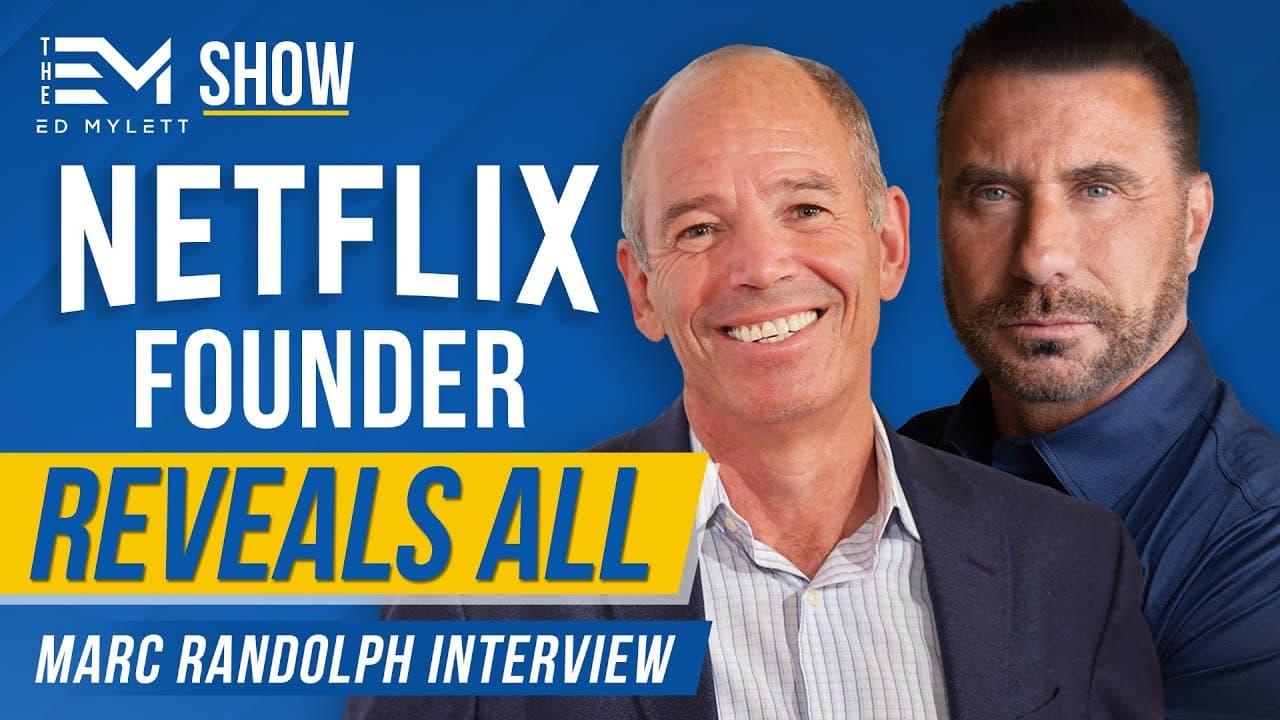
Netflix's success story is a testament to persistence and innovation. Marc Randolph, its co-founder, faced skepticism and rejection but turned Netflix into a $250 billion company. He emphasizes focusing on solving problems rather than falling in love with ideas, which helps navigate failures and adapt to changing circumstances.
Transcript
i don't think about failure as failure and i've kind of only now realized in the last handful of years what's going on is that i never fall in love with the idea i always fall in love with the problem so welcome back to max out everybody i'm so excited today we have a guest say that founded this little company you've never heard of before he was th... Read More
Key Insights
- Marc Randolph emphasizes falling in love with the problem, not the idea, as the problem persists while ideas evolve.
- Netflix's initial idea faced skepticism, but persistence and adaptation led to its success.
- Blockbuster's failure was due to a lack of courage to pivot from their existing model, despite recognizing the future trend.
- Entrepreneurs should focus on non-repeatable, non-scalable tests initially to validate ideas cheaply and quickly.
- Marc Randolph advises against raising money prematurely, as it can lead to unnecessary dilution of ownership.
- The ability to pivot and adapt quickly is crucial for startups, as demonstrated by Netflix's evolution and success.
- Marc Randolph believes that the most rewarding times are often the most challenging ones in entrepreneurship.
- The emotional load of entrepreneurship is significant, but overcoming it is key to long-term success.
Install to Summarize YouTube Videos and Get Transcripts
Explore YouTube Video Summarizer or Get YouTube Transcript Extractor
Questions & Answers
Q: How did Netflix overcome initial rejection?
Netflix overcame initial rejection by focusing on solving the problem of convenient media access rather than sticking to a rigid idea. Co-founder Marc Randolph and his team conducted simple tests to validate their concepts and adapted their business model based on customer feedback and market demands, ultimately creating a scalable model that attracted millions of subscribers.
Q: What led to Blockbuster's failure?
Blockbuster failed because it lacked the courage to pivot from its existing business model, despite recognizing future trends. The company was unwilling to prioritize new digital strategies over its successful physical store model, which led to its inability to compete with agile companies like Netflix that focused on customer needs and technological advancements.
Q: What is Marc Randolph's approach to entrepreneurship?
Marc Randolph's approach to entrepreneurship involves falling in love with the problem rather than the idea, allowing for flexibility and adaptation. He emphasizes conducting simple, non-scalable tests to validate ideas quickly and cheaply, learning from failures, and focusing on customer needs to build a successful business.
Q: How can startups validate their business ideas effectively?
Startups can validate their business ideas effectively by conducting non-scalable, simple tests to gather real-world feedback. This approach allows entrepreneurs to learn quickly and adapt without significant investment. Marc Randolph advises against building complex systems initially and instead suggests focusing on understanding customer needs and refining the idea based on actual interactions.
Q: Why is it important not to raise money prematurely?
Raising money prematurely can lead to unnecessary dilution of ownership and often pressures startups to scale before they have validated their business model. Marc Randolph suggests that entrepreneurs should first focus on proving their concept through simple tests and understanding their market before seeking investment, ensuring they retain more control and equity in their company.
Q: What advantage do small businesses have over large companies?
Small businesses have the advantage of flexibility and the ability to pivot quickly compared to large companies. They can adapt to market changes and customer needs more efficiently, allowing them to innovate and compete effectively. Marc Randolph highlights that this agility is a significant asset for startups facing larger, less nimble competitors.
Q: How does Marc Randolph view failure?
Marc Randolph views failure as a learning opportunity rather than a setback. By focusing on solving problems, he sees each failed attempt as a step towards finding a successful solution. This mindset allows entrepreneurs to iterate on their ideas, refine their approach, and ultimately achieve success by learning from mistakes and adapting their strategies.
Q: What role does culture play in a company's ability to adapt?
Culture plays a crucial role in a company's ability to adapt, as it influences how employees respond to change and challenges. A culture that encourages flexibility, innovation, and problem-solving enables a company to pivot and react to market changes effectively. Marc Randolph emphasizes the importance of fostering a startup mentality, even in larger organizations, to maintain agility and resilience.
Summary & Key Takeaways
-
Marc Randolph, co-founder of Netflix, turned initial rejection into a $250 billion success. He believes in solving problems rather than fixating on ideas, which helps in navigating failures. Netflix's journey from a small startup to a global media giant involved persistence, adaptability, and a focus on customer needs.
-
Blockbuster's inability to pivot from its existing model led to its downfall, while Netflix thrived by embracing change and focusing on customer satisfaction. Randolph advises entrepreneurs to conduct simple, non-scalable tests to validate ideas before seeking funding.
-
Entrepreneurship involves significant emotional challenges, but Randolph finds the most rewarding experiences often come from overcoming these hurdles. His approach emphasizes flexibility, problem-solving, and learning from failures to achieve long-term success.
Read in Other Languages (beta)
Share This Summary 📚
Summarize YouTube Videos and Get Video Transcripts with 1-Click
Try YouTube Summary with ChatGPT & Claude or YouTube Transcript Generator
Explore More Summaries from Ed Mylett 📚

Summarize YouTube Videos and Get Video Transcripts with 1-Click
Try YouTube Summary with ChatGPT & Claude or YouTube Transcript Generator