How Birds Fooled Military Radar
TL;DR
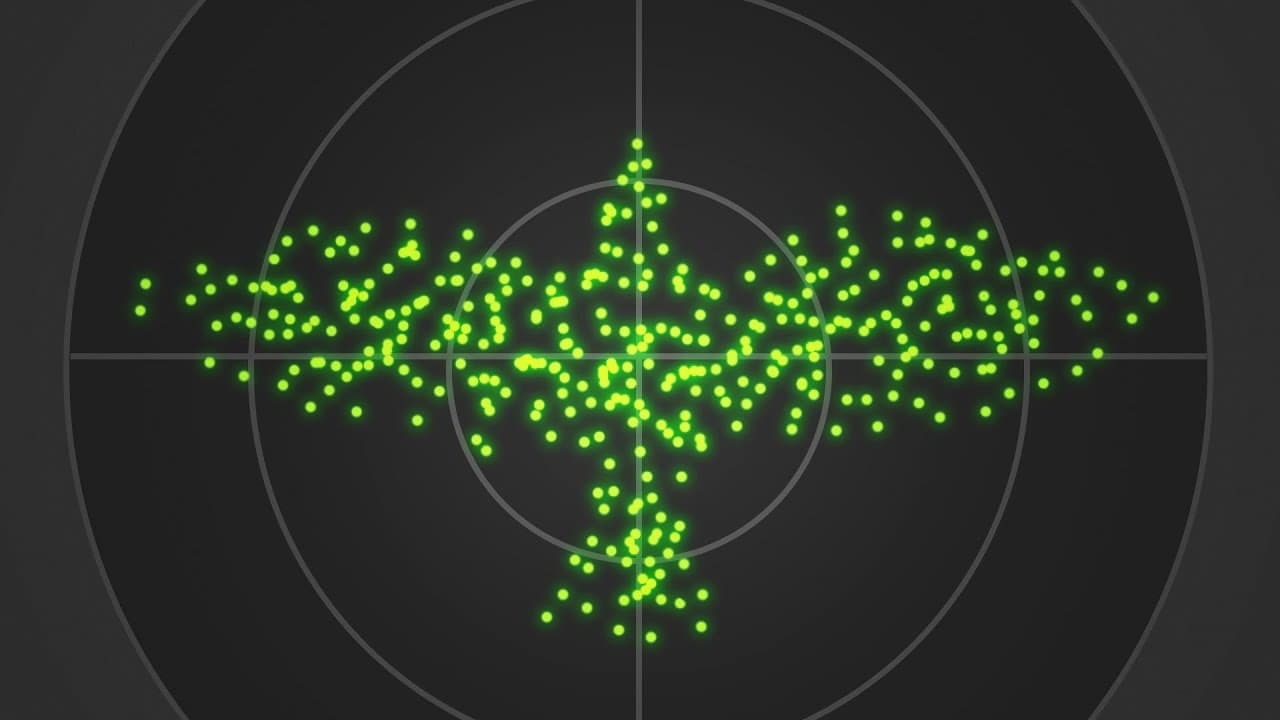
Radar technology, initially used to detect Soviet bombers, has evolved to accurately track birds and aid in conservation efforts.
Transcript
Hi, this is Julián from MinuteEarth. Early in the Cold War, US military radar scanning for Soviet bombers detected that something had entered North American airspace. The US and Canada started prepping for action...although we don’t exactly know what action since all these files are confidential. But we do know that before any really drast... Read More
Key Insights
- 👻 Radar technology has improved over time, allowing for more in-depth analysis and accurate identification of objects in the sky.
- 👣 Filtering techniques used in weather radar have been reversed to track the movements of birds during their migratory journeys.
- 🐦 Radar technology has helped conservationists locate and protect threatened bird species by identifying potential roosting sites.
- 🥃 Dual-polarization radars have enhanced weather forecasting by providing more detailed data on the consistency of objects in the sky.
- 😒 The use of radar technology has aided in the preservation of bird habitats, as it allows for better tracking and understanding of migratory patterns.
- 🕵️ Radar technology has evolved from detecting military threats to becoming a valuable tool in conservation efforts.
- 💁 Publicly available weather radar, combined with filtering techniques, provides unprecedented information on bird movements.
Install to Summarize YouTube Videos and Get Transcripts
Explore YouTube Video Summarizer or Get YouTube Transcript Extractor
Questions & Answers
Q: How did radar technology initially help identify threats during the Cold War?
Radar technology was used to detect incoming aircraft, but it sometimes identified birds as potential Soviet bombers, as demonstrated by the flock of Canada geese incident.
Q: What improvements have been made in radar technology to distinguish birds from planes?
Radar upgrades, such as detecting shifts in wave frequencies, allow for measuring an object's speed in the sky, making it easier to differentiate between birds and planes flying at high speeds.
Q: How do dual-polarization radars help improve weather forecasting?
By transmitting both horizontally and vertically-oriented waves, dual-polarization radars provide more data to evaluate the consistency in size and shape of objects in the sky, enabling better identification of weather patterns.
Q: How have conservationists utilized radar technology to track birds?
Conservationists have reversed the filtering process of weather radar to track birds during their migratory journeys, allowing them to locate and monitor roosting sites, such as those for threatened Canadian swallows.
Summary & Key Takeaways
-
Early in the Cold War, radar technology used to detect Soviet bombers mistakenly identified a flock of Canada geese as a threat.
-
Improved radar technology now allows us to distinguish birds from planes and analyze data in real-time, providing more information about objects in the sky.
-
Conservationists have reversed the filtering process of weather radar to track birds, including threatened Canadian swallows, during their migratory journey.
Read in Other Languages (beta)
Share This Summary 📚
Summarize YouTube Videos and Get Video Transcripts with 1-Click
Try YouTube Summary with ChatGPT & Claude or YouTube Transcript Generator
Explore More Summaries from MinuteEarth 📚





Summarize YouTube Videos and Get Video Transcripts with 1-Click
Try YouTube Summary with ChatGPT & Claude or YouTube Transcript Generator