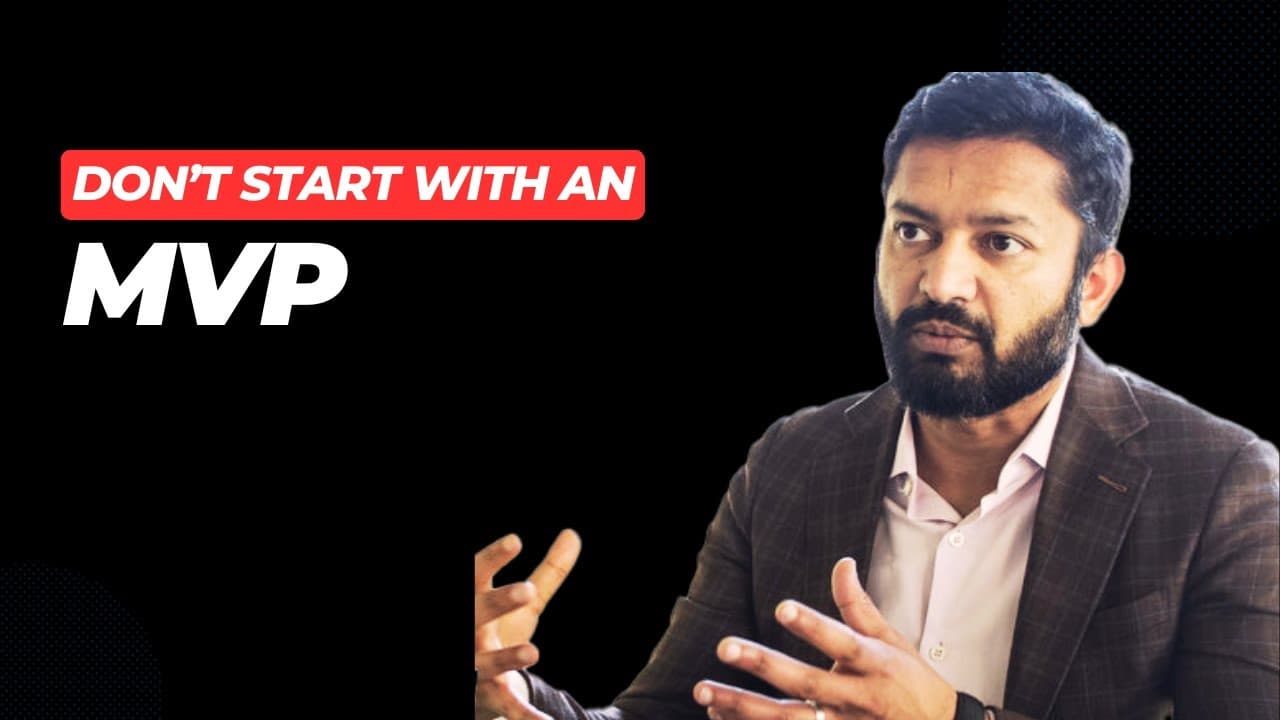
Why You Shouldn’t Start With A Minimum Viable Product
TL;DR
Starting with an MVP may not be effective; consider other strategies.
Transcript
early stage Founders are often told to quickly build and launch the first version of their product also known as the minimum viable product and then iterate from there in this video I'm going to explain why this approach no longer works and what to do instead hi there if you're new to this channel my name is Ash Moria I'm an... Read More
Key Insights
- The traditional MVP approach is outdated due to increased product options and lower entry barriers, leading to customer churn.
- A demo-first strategy can better validate customer interest and problem-solution fit before building a product.
- Understanding customer problems deeply can lead to better product solutions and more compelling offers.
- Customer Discovery conversations are crucial for identifying root causes of customer problems, requiring fewer interviews than expected.
- Demos allow testing of value propositions, solutions, and pricing models, reducing risks before product development.
- Metrics and analytics can mislead without direct customer feedback; understanding customer needs is crucial.
- A 'mafia offer' solves customer problems precisely, increasing the likelihood of customer engagement and purchase.
- A traction roadmap helps determine customer interest and readiness before investing in product development.
Install to Summarize YouTube Videos and Get Transcripts
Explore YouTube Video Summarizer or Get YouTube Transcript Extractor
Questions & Answers
Q: Why is starting with an MVP no longer effective?
Starting with an MVP is less effective today because the barriers to entry for new products are lower, leading to more competition and options for customers. When customers encounter an MVP that does not immediately deliver value, they often switch to another product, leaving little room for feedback and iteration.
Q: What alternative strategy is suggested instead of starting with an MVP?
The video suggests starting with a demo-first strategy. This involves creating a demo to validate customer interest and the problem-solution fit before building a product. This approach allows for testing key assumptions and refining the offer without the cost and time associated with developing a full MVP.
Q: How can entrepreneurs better understand customer problems?
Entrepreneurs can better understand customer problems through Customer Discovery conversations. These conversations aim to deeply understand the customer's challenges and identify root causes. By focusing on these insights, entrepreneurs can design more effective solutions and offers that resonate with their target audience.
Q: What are the benefits of conducting Customer Discovery conversations?
Customer Discovery conversations help entrepreneurs gain a deeper understanding of customer problems, which is crucial for designing effective solutions. These conversations allow entrepreneurs to uncover insights that customers themselves may not be aware of, leading to more targeted and successful product development.
Q: How does a demo-first approach test business assumptions?
A demo-first approach tests business assumptions by allowing entrepreneurs to validate their unique value proposition, solution, and pricing model before developing a product. By packaging a demo into an offer, entrepreneurs can gauge customer interest and willingness to pay, reducing the risk of building something that does not meet market needs.
Q: What is a 'mafia offer' and why is it important?
A 'mafia offer' is an offer that customers cannot refuse because it solves their problems precisely. It is important because it demonstrates a deep understanding of customer needs, leading to higher engagement and purchase rates. Crafting such an offer requires thorough customer problem discovery and effective communication of the solution.
Q: Why are metrics and analytics not enough for understanding customer needs?
Metrics and analytics can indicate what is happening, such as low sales, but they do not explain why customers are not engaging. Without direct feedback from customers, entrepreneurs are left guessing how to improve their offers. Direct customer conversations provide the insights needed to understand and address the root causes of customer behavior.
Q: What role does a traction roadmap play in product development?
A traction roadmap helps entrepreneurs determine how many customers are interested in their offer before investing in product development. It is part of the business model design blueprint and provides a structured approach to testing customer interest and readiness, ensuring that resources are allocated effectively and reducing the risk of building a product that does not meet market demand.
Summary & Key Takeaways
-
The video explains why starting with a Minimum Viable Product (MVP) is no longer effective in today's market, where customer choices are abundant. Instead, it suggests focusing on customer problem discovery and creating demos to validate solutions before building a product.
-
By deeply understanding customer problems, entrepreneurs can create better solutions and offers. This approach involves fewer interviews but requires careful analysis of customer needs and challenges, leading to more effective product development and increased chances of success.
-
Testing assumptions through demos, rather than building an MVP, allows entrepreneurs to refine their value propositions, solutions, and pricing models. This process minimizes risks and ensures that the final product meets customer needs and expectations, enhancing the likelihood of a successful venture.
Read in Other Languages (beta)
Share This Summary 📚
Summarize YouTube Videos and Get Video Transcripts with 1-Click
Try YouTube Summary with ChatGPT & Claude or YouTube Transcript Generator
Explore More Summaries from Ash Maurya - LEANFoundry 📚



Summarize YouTube Videos and Get Video Transcripts with 1-Click
Try YouTube Summary with ChatGPT & Claude or YouTube Transcript Generator