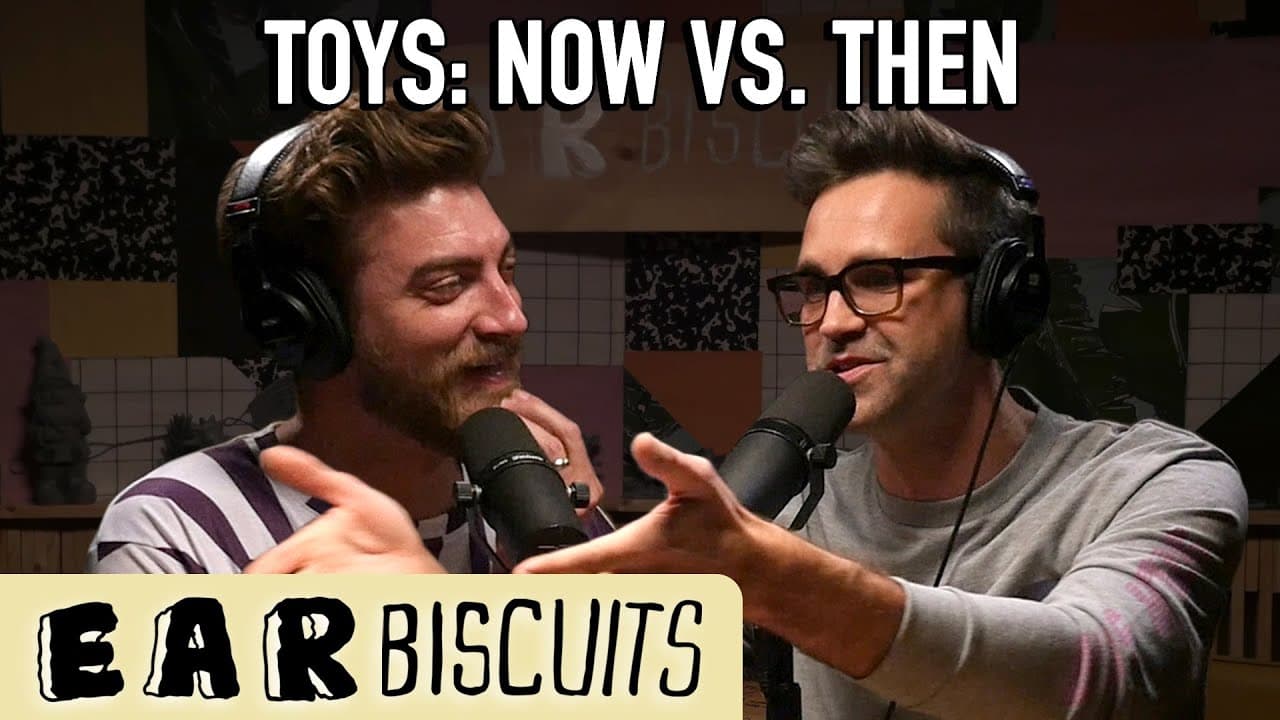
What Happened to Toys?
TL;DR
A discussion on the evolution and decline of traditional toys in modern childhood.
Transcript
welcome to ear biscuits I'm linked and I'm read this week at the round table of dim lighting we are exploring the question what happened to toys and we were just saying what's gonna be funny if you dislike you just go up to somebody a friend Gwaine it's family member acquaintances and you're just like you know what I got this nagging question what ... Read More
Key Insights
- 🖐️ Nostalgia for toys stems from positive childhood experiences tied to imagination and creative play, often overshadowed by modern screen-focused entertainment.
- 👶 The evolution of children's toys has shifted significantly towards digital options, reducing the role of physical toys in daily life.
- 🤑 Action figures and collectible toys provided rich, imaginative play experiences that fostered social interaction and creativity among children.
- 😮 The decline of traditional toy retailers is closely linked to the rise of online shopping and the immediate gratification of digital gameplay.
- 👪 Parents face challenges in encouraging children to engage with tangible toys while competing with the allure of screen-based entertainment.
- 🖐️ Hands-on, creative toys that incorporate technology may represent a future direction for play, allowing children to experience both digital and physical engagement.
- 🖐️ The podcast emphasizes the importance of preserving toy culture to ensure that future generations can enjoy imaginative, play-based experiences.
Install to Summarize YouTube Videos and Get Transcripts
Explore YouTube Video Summarizer or Get YouTube Transcript Extractor
Questions & Answers
Q: What are some popular toys mentioned that have shaped childhood experiences?
The podcast highlights iconic toys such as He-Man, GI Joe, and Transformers, emphasizing how they provided imaginative play experiences. Rhett recalls collecting and interacting with these figures, creating elaborate scenarios that were a significant part of childhood exploration.
Q: How has screen time affected children's play today compared to past generations?
Screen time has drastically reduced the engagement with traditional toys. Kids today have instant access to games and shows, leading to more passive entertainment. The hosts discuss how their children prefer screens over engaging in imaginative play with toys, which were once a staple of childhood.
Q: What does the podcast suggest about the nostalgia for toys?
The podcast suggests that nostalgia for toys reflects a longing for simpler times filled with imaginative play. Rhett and Link express that the tactile experience of physical toys contributed significantly to their development, a contrast to the isolating experiences often associated with screens.
Q: What do the hosts believe are the reasons behind the decline of toy stores like Toys R Us?
The decline of toy stores is attributed to the shift towards online shopping and the overwhelming influence of screens on children's lives. The hosts note that shopping for toys provided a unique experience that cannot be replicated online, highlighting the sentimental value of toy stores.
Q: Did the hosts participate in any specific childhood games that involved their toys?
Yes, the hosts share how they created elaborate scenarios with their action figures, often combining different toy universes. Rhett recalls the joy of displaying his GI Joe figures, which he treated like still life artworks, contrasting it with a more chaotic style of play enjoyed by Link.
Q: How do the hosts suggest parents can encourage traditional play in their children?
The hosts suggest introducing their kids to engaging, hands-on toys that offer both physical interaction and creative building scenarios. They discuss the potential benefits of combining screen technology with tangible experiences, such as VR-enabled toys that foster creativity.
Q: What impact does the conversation indicate about the future of toys?
The future of toys appears to be increasingly integrated with digital elements, raising concerns about the balance between physical play and screen-based entertainment. The hosts express a desire to reintroduce traditional toys while adapting to contemporary interests, hoping to preserve imaginative play.
Summary & Key Takeaways
-
The podcast explores the nostalgic impact of toys from childhood, questioning their decline in importance within contemporary society and the prevalence of screen time.
-
Host Rhett shares memories of past toys like He-Man and GI Joe, contrasting them with current trends in children's play that emphasize screens over imaginative play.
-
The conversation delves into how parents can navigate the changing toy landscape, weighing the benefits of traditional toys against the allure of digital entertainment.
Read in Other Languages (beta)
Share This Summary 📚
Summarize YouTube Videos and Get Video Transcripts with 1-Click
Try YouTube Summary with ChatGPT & Claude or YouTube Transcript Generator
Explore More Summaries from Ear Biscuits 📚

Summarize YouTube Videos and Get Video Transcripts with 1-Click
Try YouTube Summary with ChatGPT & Claude or YouTube Transcript Generator