How to Make Polite Requests in English
TL;DR
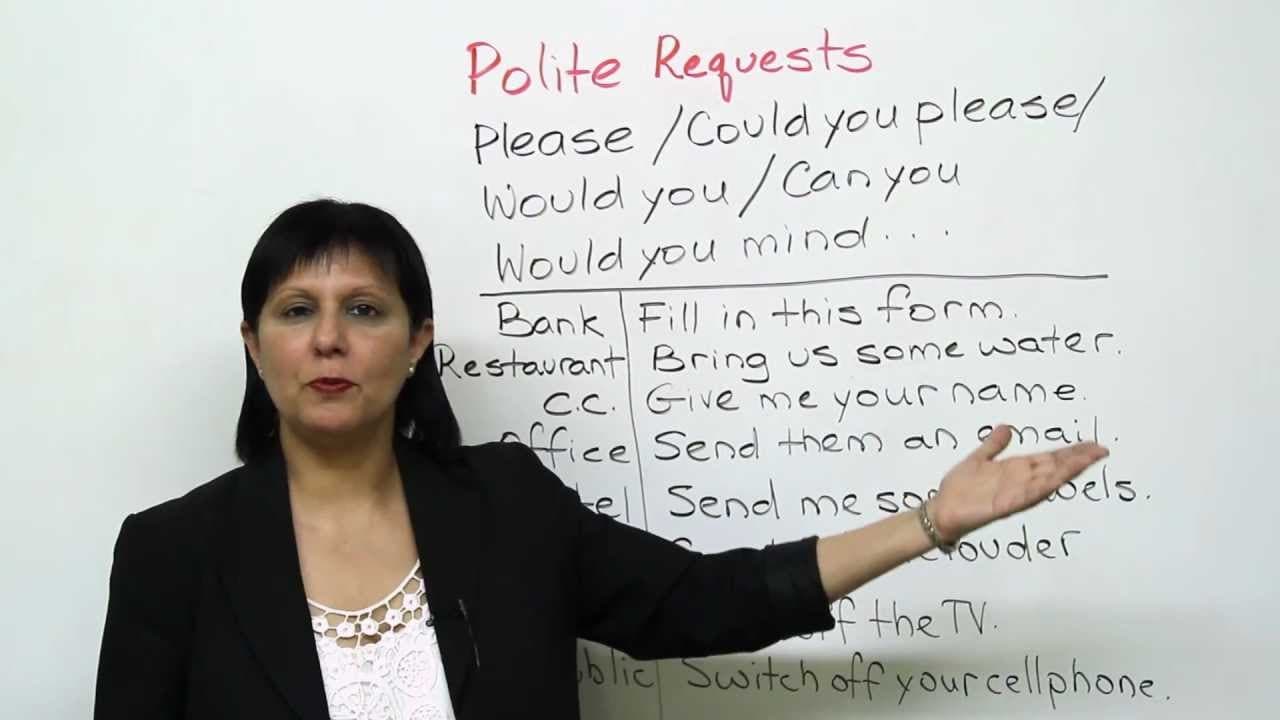
To make polite requests in English, use phrases like 'Could you please?' or 'Would you mind?' These expressions not only enhance your politeness but also increase the likelihood of a positive response. Incorporating these phrases in both personal and professional contexts fosters kindness and respect in communication.
Transcript
Hi. We all want people to be polite to us, yet sometimes we forget how to behave politely towards others. My name is Rebecca, and in today's lesson, I'm going to show you how to be polite to others and how to make requests politely so that people are more likely to do what you ask them to do. Okay? Let's look at the board. I... Read More
Key Insights
- Using 'please' in requests can significantly increase the likelihood of compliance, as it is a basic yet powerful word for politeness.
- Expressions like 'Could you please?' and 'Would you mind?' are versatile and suitable for both formal and informal contexts.
- 'Could you?' is often more polite than 'Can you?' and is preferable in professional settings.
- Understanding the subtle differences in expressions can prevent misunderstandings, especially in multicultural environments.
- Incorporating polite language in daily interactions, such as at restaurants or banks, can improve social interactions.
- Using polite requests in professional environments like call centers can enhance customer service and client satisfaction.
- Adapting polite language at home and in personal relationships can foster a kinder and more respectful living environment.
- Polite requests contribute to a more pleasant and cooperative public atmosphere, benefiting both personal and global interactions.
Install to Summarize YouTube Videos and Get Transcripts
Explore YouTube Video Summarizer or Get YouTube Transcript Extractor
Questions & Answers
Q: Why is using 'please' important in requests?
Using 'please' in requests is important because it is a fundamental aspect of polite communication. It softens the request, making it more likely that the person being asked will comply willingly. Politeness in language reflects respect and consideration for others, fostering positive interactions.
Q: What is the difference between 'Could you?' and 'Can you?'?
'Could you?' is generally considered more polite than 'Can you?' because it suggests a higher level of deference and respect. 'Could you?' is often used in formal or professional contexts, whereas 'Can you?' is more casual and may be perceived as less courteous.
Q: How can polite requests improve professional interactions?
Polite requests can improve professional interactions by creating a more respectful and cooperative work environment. They help in maintaining professionalism, especially in customer service roles, where politeness can enhance client satisfaction and loyalty. Polite language also reduces misunderstandings and fosters better communication.
Q: What role do polite requests play in personal relationships?
In personal relationships, polite requests help maintain harmony and respect among family members and friends. They prevent conflicts that may arise from perceived demands or orders, promoting a kinder and more understanding home environment. Politeness in communication shows care and consideration for loved ones.
Q: Why is it beneficial to use polite language in public settings?
Using polite language in public settings benefits everyone by creating a more pleasant and cooperative atmosphere. It helps in avoiding confrontations and misunderstandings, making public interactions smoother. Politeness can also set a positive example for others, encouraging a culture of respect and kindness.
Q: How can one practice making polite requests?
One can practice making polite requests by consciously incorporating polite expressions into daily conversations. Practicing with phrases like 'Could you please?' or 'Would you mind?' in various scenarios can help make them a natural part of speech. Engaging in role-play or taking quizzes on politeness can also be beneficial.
Q: What are some examples of polite requests in different contexts?
In a restaurant, saying 'Could you please bring us some water?' is more polite than 'Bring us some water.' At work, 'Could you please send them an email?' is preferable to 'Send them an email.' At home, 'Could you please turn off the TV?' is more courteous than 'Turn off the TV.'
Q: What is the impact of politeness on global interactions?
Politeness in global interactions can lead to more effective communication across cultures by showing respect for diverse customs and social norms. It helps in building trust and cooperation internationally, as polite language is universally appreciated and can bridge cultural differences, contributing to a more peaceful global community.
Summary & Key Takeaways
-
This lesson emphasizes the importance of using polite language when making requests. It introduces expressions such as 'Could you please?' and 'Would you mind?' to enhance politeness and effectiveness in communication.
-
Rebecca explains the nuances of different expressions and their appropriate contexts, highlighting the importance of politeness in both personal and professional settings.
-
The lesson provides practical examples of polite requests in various scenarios, encouraging learners to incorporate these expressions into their daily interactions for improved social and professional outcomes.
Read in Other Languages (beta)
Share This Summary 📚
Summarize YouTube Videos and Get Video Transcripts with 1-Click
Try YouTube Summary with ChatGPT & Claude or YouTube Transcript Generator
Explore More Summaries from Learn English with Rebecca · engVid 📚






Summarize YouTube Videos and Get Video Transcripts with 1-Click
Try YouTube Summary with ChatGPT & Claude or YouTube Transcript Generator