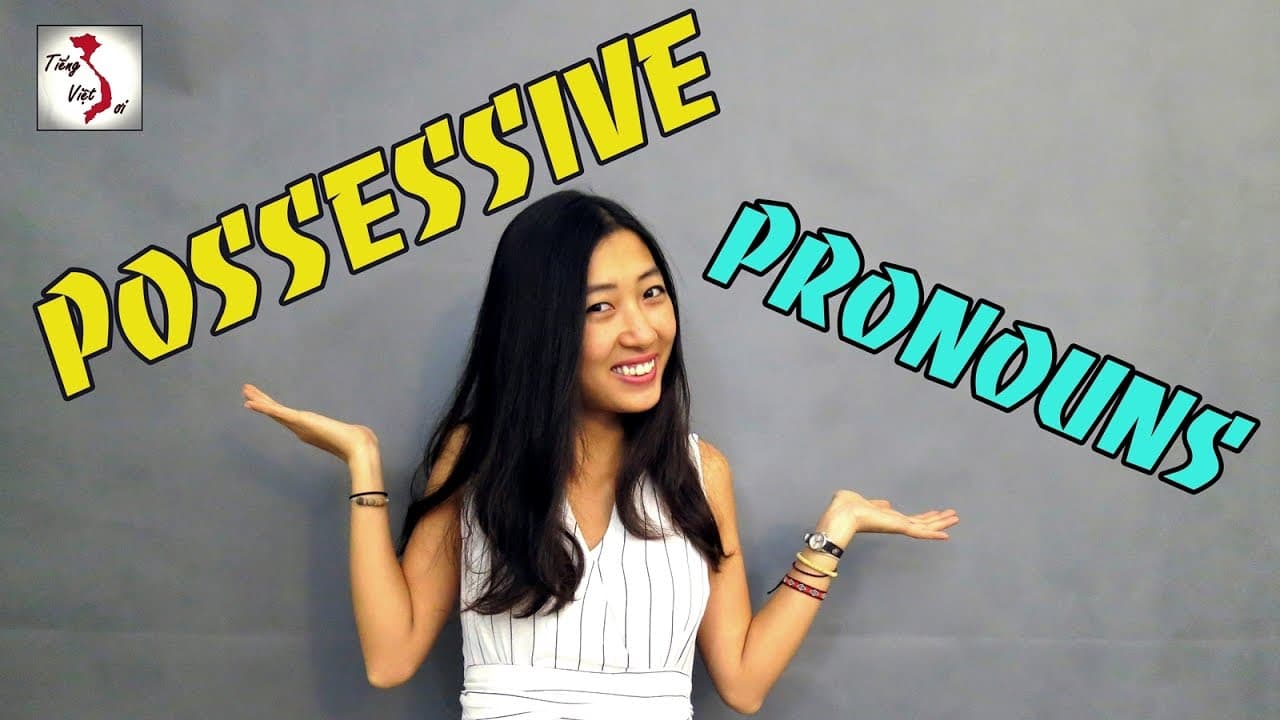
Learn Vietnamese with TVO | Possessive Pronouns
TL;DR
Learn Vietnamese possessive pronouns through practical examples and exercises.
Transcript
[âm nhạc] Xin chào this Lan from ti ơ and this video was made to teach you how to use possessive pronouns in [âm nhạc] Vietnam in English you have to learn so many new words for possessive pronouns like my your his her vi Which is Used as of in vietnamese we don't say my cat but inad we say cat of me in vietnames we don't have objective pronouns We... Read More
Key Insights
- Vietnamese possessive pronouns are expressed using 'of' structure, unlike English which uses distinct possessive pronouns.
- In Vietnamese, the structure 'object + của + pronoun' is used to denote possession, such as 'mèo của tôi' for 'my cat'.
- Subjective and objective pronouns are not differentiated in Vietnamese, making it simpler in some contexts.
- The use of possessive pronouns in sentences can involve multiple layers, such as 'kính của ông của Lan' for 'Lan's grandpa's glasses'.
- Vietnamese allows for the omission of 'của' in some possessive phrases to make sentences more natural and concise.
- Pronouns in Vietnamese are often based on the speaker's age relative to the person being addressed, influencing possessive forms.
- Practical exercises are provided to reinforce the understanding of Vietnamese possessive pronouns, catering to different age-based pronoun usage.
- Tieng Viet Oi offers personalized Vietnamese lessons, emphasizing practical and friendly learning experiences for foreigners.
Install to Summarize YouTube Videos and Get Transcripts
Explore YouTube Video Summarizer or Get YouTube Transcript Extractor
Questions & Answers
Q: How are possessive pronouns expressed in Vietnamese?
In Vietnamese, possessive pronouns are expressed using the structure 'object + của + pronoun'. This translates to 'of' in English. For example, 'my cat' is expressed as 'mèo của tôi', which directly translates to 'cat of me'. This structure simplifies the need for different possessive pronouns found in English.
Q: What is a key difference between Vietnamese and English possessive pronouns?
A key difference is that Vietnamese does not differentiate between subjective and objective pronouns. The same pronoun is used regardless of its grammatical role in a sentence. This contrasts with English, where subjective and objective pronouns differ, such as 'she' and 'her'.
Q: Can possessive phrases in Vietnamese omit certain words?
Yes, Vietnamese can omit 'của' in possessive phrases to make sentences more natural and concise. For instance, instead of saying 'Bố của tôi', one can say 'Bố tôi'. However, this should be done judiciously, as natural fluency sometimes requires the full phrase.
Q: How does age affect pronoun usage in Vietnamese?
Pronoun usage in Vietnamese is influenced by the speaker's age relative to the person being addressed. This affects possessive forms as well. For example, younger people might use different pronouns to address older individuals, which impacts how possessive phrases are constructed.
Q: What exercises are provided to practice Vietnamese possessive pronouns?
The video provides practical exercises that involve translating phrases using possessive pronouns. These exercises help reinforce the structure 'object + của + pronoun' and demonstrate the use of multiple possessive layers in sentences, catering to different age-based pronoun usage.
Q: What services does Tieng Viet Oi offer for language learners?
Tieng Viet Oi offers personalized Vietnamese lessons for foreigners, emphasizing practical and friendly learning experiences. They provide one-on-one, group, and online lessons tailored to the needs of expats living in Vietnam or anyone interested in learning Vietnamese.
Q: How are multiple possessive pronouns used in a Vietnamese sentence?
Multiple possessive pronouns in a Vietnamese sentence are structured by layering 'của' phrases. For example, 'Lan's grandpa's glasses' is translated as 'kính của ông của Lan', meaning 'glasses of grandpa of Lan'. This structure helps express complex ownership relationships.
Q: What is the primary teaching approach of Tieng Viet Oi?
Tieng Viet Oi focuses on providing fun, friendly, and practical Vietnamese lessons. Their approach caters to expats and foreigners, using interactive methods and exercises to make learning engaging and effective. They emphasize real-world language use and cultural understanding.
Summary & Key Takeaways
-
The video explains how Vietnamese possessive pronouns differ from English by using an 'of' structure instead of distinct pronouns. Examples include 'mèo của tôi' for 'my cat'.
-
Possessive pronouns in Vietnamese can involve complex sentences with multiple possessive layers, such as 'kính của ông của Lan' for 'Lan's grandpa's glasses'.
-
Tieng Viet Oi provides practical exercises to help learners practice Vietnamese possessive pronouns and offers personalized lessons for foreigners interested in the language.
Read in Other Languages (beta)
Share This Summary 📚
Summarize YouTube Videos and Get Video Transcripts with 1-Click
Try YouTube Summary with ChatGPT & Claude or YouTube Transcript Generator
Explore More Summaries from Tieng Viet Oi - Vietnamese Lessons 📚

Summarize YouTube Videos and Get Video Transcripts with 1-Click
Try YouTube Summary with ChatGPT & Claude or YouTube Transcript Generator