Why Is Art So Expensive and What Drives Its Value?
TL;DR
The high-end art market is driven by limited supply, prestige, and speculative investment. Art is often used by the wealthy for tax avoidance and as a financial tool, despite not generating cash flow like other investments. The art market's value is largely based on perception and the Greater Fool Theory, where buyers hope to sell at higher prices.
Transcript
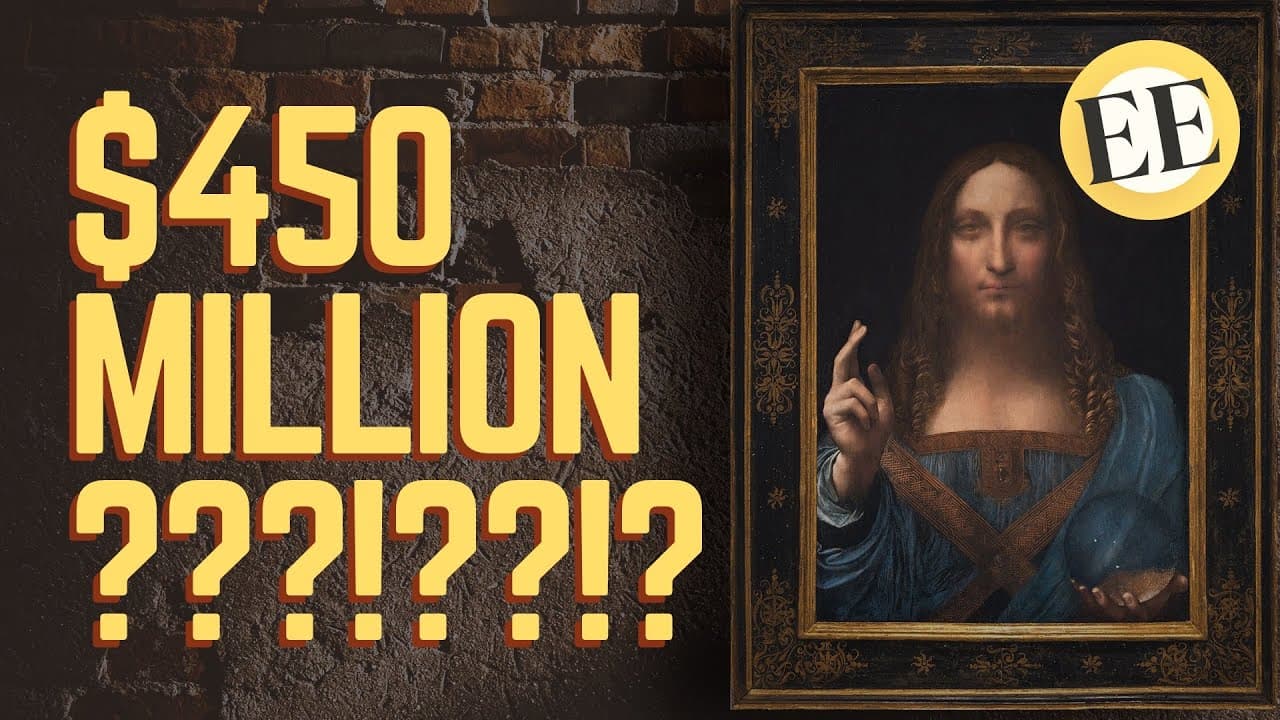
In 2017 at Christie’s Auction House in New York, a mysterious art buyer won this painting after bidding a record-breaking $450 million dollars. But this wasn’t just any piece of art: this was the Salvator Mundi; a painting by the legendary Leonardo da Vinci. News of the staggering purchase price sent shockwaves throughout the entire art market – wh... Read More
Key Insights
- The art market can indicate impending market bubbles due to its speculative nature.
- Art doesn't generate cash flow; its value relies on the Greater Fool Theory.
- Art's value is driven by limited supply and the prestige of owning rare pieces.
- Collectors' items, like art, defy normal supply and demand due to limited availability.
- Opportunity cost in art highlights emotional decision-making over economic logic.
- Art can be used for tax avoidance by donating overvalued pieces to museums.
- Artworks serve as financial instruments for moving money discreetly.
- The high-end art market is filled with savvy investors, not just art enthusiasts.
Install to Summarize YouTube Videos and Get Transcripts
Explore YouTube Video Summarizer or Get YouTube Transcript Extractor
Questions & Answers
Q: How does the art market indicate market bubbles?
The art market can indicate market bubbles due to its speculative nature. When art prices rise rapidly and unpredictably, it reflects speculative investment rather than intrinsic value. This pattern, driven by the Greater Fool Theory, can signal excessive risk-taking in broader financial markets, potentially foreshadowing economic instability.
Q: Why doesn't art generate cash flow like other investments?
Art doesn't generate cash flow because it lacks the ability to produce income. Unlike real estate or dividend-paying stocks, which provide regular returns, art's value is based on appreciation and resale potential. Its worth relies on finding a buyer willing to pay more, making it speculative rather than a revenue-generating asset.
Q: What drives the high-end art market's value?
The high-end art market's value is driven by limited supply, prestige, and speculative investment. Rare artworks, like those by famous artists, attract wealthy buyers due to their scarcity and status. The market also relies on the Greater Fool Theory, where buyers hope to resell at higher prices, creating a speculative environment.
Q: How is art used for tax avoidance?
Art is used for tax avoidance by donating overvalued pieces to museums, claiming substantial tax deductions. Wealthy individuals can inflate art's value through strategic sales and donations, reducing taxable income. This practice benefits donors, who save on taxes, and museums, which receive valuable artworks, despite the initial purchase cost being much lower.
Q: What is the Greater Fool Theory in the art market?
The Greater Fool Theory in the art market suggests that buyers purchase art not for its intrinsic value but with the expectation of selling it to another buyer at a higher price. This speculative approach relies on finding a 'greater fool' willing to pay more, driving prices up without a basis in tangible value or income generation.
Q: Why are collectors' items an economic anomaly?
Collectors' items are an economic anomaly because they defy normal supply and demand principles. Their value is not based on production costs but on rarity and desirability. Limited availability and emotional attachment drive prices, leading to speculative investment and market behaviors that differ from typical economic transactions.
Q: How does opportunity cost affect art valuation?
Opportunity cost affects art valuation by highlighting the emotional decisions of owners who value their art higher than potential purchases. This psychological markup leads to speculative investment, as owners may forgo selling at high prices, expecting further appreciation, despite economic logic suggesting they should buy or sell at equivalent values.
Q: How do wealthy individuals use art for financial maneuvering?
Wealthy individuals use art for financial maneuvering by leveraging its high value and portability. Art can be discreetly moved and stored, serving as a financial instrument for wealth transfer and tax avoidance. By inflating art's value and donating it, they can claim significant tax deductions, effectively using art as a tool for strategic financial planning.
Summary & Key Takeaways
-
The art market is an economic anomaly driven by limited supply and prestige, with prices often reflecting speculation rather than intrinsic value. Art is not a traditional investment as it doesn't generate cash flow, relying instead on the Greater Fool Theory, where buyers hope to sell at higher prices.
-
Art's value is largely subjective, influenced by emotional decision-making and the perceived prestige of owning rare pieces. Opportunity cost plays a role, as owners may value their art higher than potential purchases, leading to speculative investment and potential market bubbles.
-
Wealthy individuals use art for tax avoidance and financial maneuvering, donating overvalued pieces to museums for tax deductions. Artworks, like high-end watches, serve as discreet financial instruments, allowing the movement of wealth without attracting attention.
Read in Other Languages (beta)
Share This Summary 📚
Summarize YouTube Videos and Get Video Transcripts with 1-Click
Try YouTube Summary with ChatGPT & Claude or YouTube Transcript Generator
Explore More Summaries from Economics Explained 📚



Summarize YouTube Videos and Get Video Transcripts with 1-Click
Try YouTube Summary with ChatGPT & Claude or YouTube Transcript Generator