The Nuts and Bolts of Farming Regeneratively: From Soil to Sales

TL;DR
The conversation emphasizes the importance of regenerative agriculture for human health, the environment, and farming sustainability.
Transcript
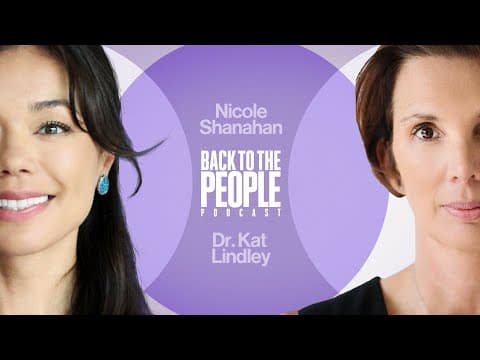
I'm Nicole Shanahan Bobby Kennedy's running mate welcome to back to the people podcast which highlights the growth of a movement uniting America where our government is free from corporate capture and where we give voice back to the American public the only logical and beneficial approach to addressing the climate crisis is regenerative agriculture... Read More
Key Insights
- 🧑⚕️ The movement towards regenerative agriculture seeks to restore soil health, combat climate change, and improve public health.
- 🧑⚕️ Personal health challenges can motivate farmers to adopt organic and regenerative practices that promote better nutrition.
- 🦻 The current farm bill disproportionately supports conventional farming practices, limiting aid for regenerative approaches.
- 🥺 Regenerative practices can lead to significant cost savings and higher profits for farmers despite a short-term reduction in yield.
- 😋 Nutrient-dense foods produced through regenerative agriculture can provide better health outcomes, reducing the reliance on pharmaceuticals.
- 💦 Soil organic matter enhances water retention and resilience against extreme weather conditions, providing regenerative farms an advantage.
- 👋 Education and community engagement are essential for farmers to successfully transition to regenerative practices and share best practices.
Install to Summarize YouTube Videos and Get Transcripts
Explore YouTube Video Summarizer or Get YouTube Transcript Extractor
Questions & Answers
Q: What is regenerative agriculture, and why is it important?
Regenerative agriculture is a method of farming that focuses on restoring soil health, increasing biodiversity, and improving ecosystems. It is essential because it addresses climate change, enhances food security, and promotes human health by reducing reliance on harmful chemicals and increasing nutrient density in crops.
Q: How did personal experiences influence the speaker's shift toward regenerative farming?
The speaker's journey into regenerative agriculture stemmed from personal experiences, including witnessing the struggles of family members with cancer and recognizing the connection between diet, farming practices, and health. These experiences motivated him to seek safe, organic farming methods that contribute positively to human health and the environment.
Q: What challenges do regenerative farmers face in comparison to conventional farmers?
Regenerative farmers encounter higher initial costs and educational barriers when transitioning from conventional methods. They often lack access to crop insurance due to differing practices and face skepticism from a predominately conventional farming community entrenched in traditional methods. Resilience during extreme weather events is also a significant concern.
Q: Why does the speaker argue for a reevaluation of the farm bill?
The speaker contends that the current farm bill prioritizes industrial farming methods and subsidizes unhealthy food systems while neglecting regenerative practices that could enhance human health and soil fertility. He advocates for a shift in policy focus to support sustainable agricultural practices and the well-being of farmers and communities.
Q: How does the speaker measure success in farming?
The speaker emphasizes a holistic view of success that goes beyond just yield. He focuses on human health, soil health, and the financial return on investment, arguing that profitability should be achieved through lower inputs, increased nutrient-dense output, and sustainable practices rather than sheer productivity.
Q: What are some practices regenerative farmers use to improve soil health?
Regenerative farmers implement practices such as cover cropping, reduced tillage, diverse crop rotations, and organic inputs aimed at rebuilding soil microbiomes and enhancing ecosystem resilience. These methods help maintain soil structure, improve water retention, and reduce erosion.
Q: What role do personal narratives play in advocating for regenerative practices?
Personal stories illustrate the connection between health challenges and agricultural practices. The speaker emphasizes how sharing experiences creates empathy, raises awareness, and motivates others to transition to regenerative methods, underscoring the importance of community support and education in this movement.
Q: Why is community engagement crucial for the movement towards regenerative agriculture?
Engaging communities promotes sharing of knowledge, success stories, and encouragement for those transitioning from conventional methods. It fosters a collective effort to advocate for policy change and support system-wide shifts towards sustainable and healthy food systems, enhancing resilience and food security for all.
Summary & Key Takeaways
-
Nicole Shanahan discusses regenerative agriculture with Bobby Kennedy's running mate, highlighting its necessity to combat environmental degradation and health issues caused by conventional farming.
-
The focus on healthy food systems and organic practices reveals how changing agricultural approaches leads to improved human health and financial sustainability for farmers.
-
The conversation raises awareness about the inadequacies of the current farm bill, advocating for a transformative investment in regenerative practices to promote economic viability and food security.
Read in Other Languages (beta)
Share This Summary 📚
Summarize YouTube Videos and Get Video Transcripts with 1-Click
Try YouTube Summary with ChatGPT & Claude or YouTube Transcript Generator
Explore More Summaries from Back to the People 📚


Summarize YouTube Videos and Get Video Transcripts with 1-Click
Try YouTube Summary with ChatGPT & Claude or YouTube Transcript Generator