How to Implement Data Ingestion and Drift Detection
TL;DR
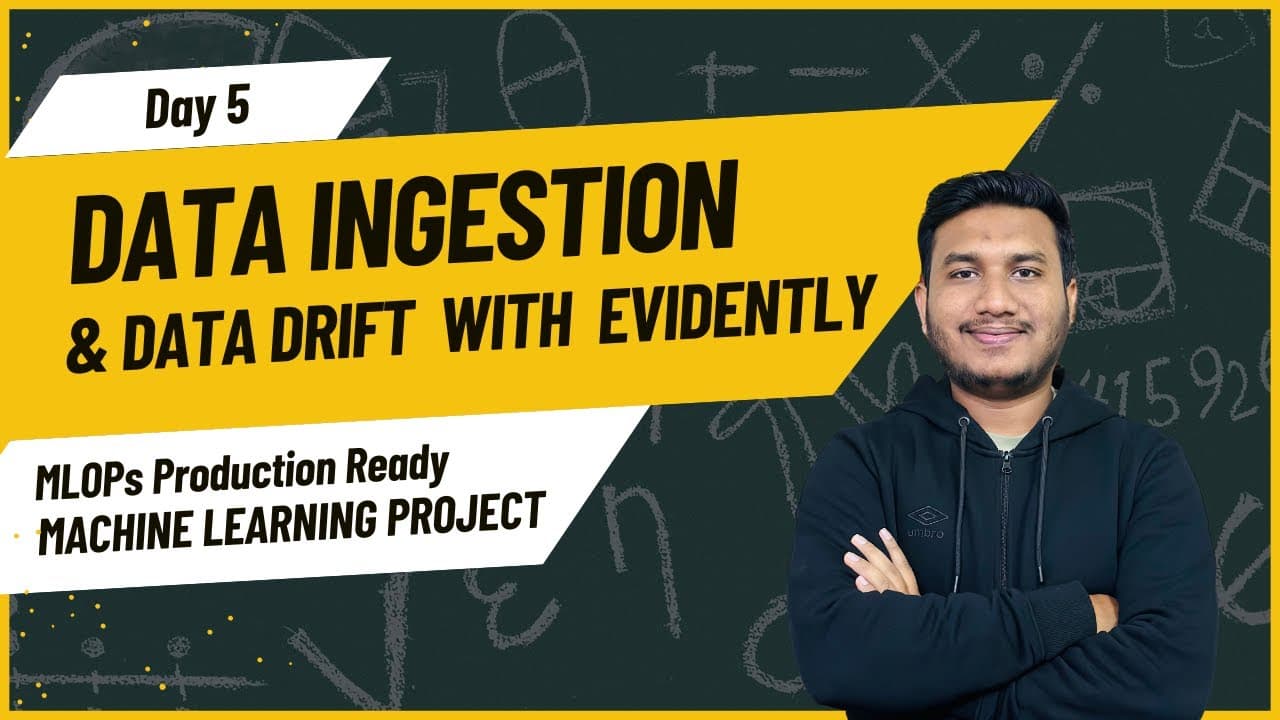
Implement data ingestion by fetching data from MongoDB and structuring it for machine learning pipelines. The session also covers detecting data drift using Evidently, emphasizing modular coding and secure environment variables for MongoDB connections. Hands-on coding practices and a flowchart illustrate the data ingestion workflow.
Transcript
e for uh hello everyone good evening I hope I'm audible guys to all of you just let me know in the chat okay guys I think I'm audible you can hear me you can see me so I will start the session within one minute uh let's uh let's wait for 1 minute guys so that everyone can join and we can start the session uh yeah hi ... Read More
Key Insights
- The session focuses on implementing data ingestion and detecting data drift using Evidently, a tool in MLOps.
- Data ingestion involves fetching data from MongoDB and preparing it for machine learning pipelines.
- The instructor emphasizes the importance of modular coding for managing complex machine learning projects.
- Data version control is implemented by creating timestamped directories for storing ingested data.
- The session includes a detailed walkthrough of setting up environment variables for secure MongoDB connections.
- A flowchart is used to illustrate the data ingestion process, aiding in understanding the workflow.
- The instructor encourages hands-on practice by executing the code to enhance understanding.
- The session also highlights the use of data classes in Python for managing configuration and artifact entities.
Install to Summarize YouTube Videos and Get Transcripts
Explore YouTube Video Summarizer or Get YouTube Transcript Extractor
Questions & Answers
Q: What is the main focus of the session?
The main focus of the session is on data ingestion and data drift detection using Evidently in an MLOps production-ready machine learning project. The instructor explains how to fetch data from MongoDB and prepare it for machine learning pipelines, emphasizing modular coding and data version control.
Q: How is data version control implemented in the project?
Data version control is implemented by creating timestamped directories for storing ingested data. This approach ensures that each data ingestion process creates a new directory with a unique timestamp, allowing for easy tracking and management of different data versions without overwriting previous data.
Q: What tool is introduced for detecting data drift?
The session introduces Evidently, a tool used in MLOps for detecting data drift in machine learning pipelines. Evidently helps in identifying changes in the data distribution over time, which is crucial for maintaining the performance and reliability of machine learning models in production environments.
Q: Why is modular coding emphasized in the session?
Modular coding is emphasized because it allows for better management of complex machine learning projects by separating different functionalities into distinct modules. This approach makes the codebase more organized, easier to maintain, and scalable, which is essential for production-ready machine learning systems.
Q: How are environment variables used in the project?
Environment variables are used to securely store and manage sensitive information like MongoDB connection strings. By setting these variables in the system, the project can access necessary credentials without hardcoding them into the source code, enhancing security and flexibility.
Q: What is the role of configuration and artifact entities?
Configuration entities manage the setup and paths required for different components in the pipeline, while artifact entities handle the output generated by these components. They facilitate the flow of data and configuration settings across the pipeline, ensuring that each component receives the necessary inputs and outputs.
Q: What is the significance of using data classes in Python?
Data classes in Python are used to manage configuration and artifact entities more efficiently. They provide a concise way to define classes that primarily store data, reducing boilerplate code and enhancing readability. This is particularly useful in managing complex configurations and outputs in a machine learning pipeline.
Q: How does the session encourage hands-on practice?
The session encourages hands-on practice by providing a detailed walkthrough of the code and explaining the logic behind each step. The instructor advises participants to execute the code on their systems to better understand the workflow and concepts discussed, which is crucial for mastering the implementation of production-ready machine learning projects.
Summary & Key Takeaways
-
The session covers day five of an MLOps production-ready machine learning project, focusing on data ingestion and data drift detection. The instructor explains the setup of a MongoDB connection and the modular coding approach to manage the project efficiently.
-
Data ingestion is implemented by fetching data from MongoDB and storing it in a structured format, with an emphasis on data version control through timestamped directories. The session also introduces Evidently, a tool for detecting data drift in machine learning pipelines.
-
A comprehensive explanation of the project's workflow is provided, including the use of configuration and artifact entities, environment variables for secure connections, and the importance of modular coding. The session encourages hands-on practice to fully grasp the concepts discussed.
Read in Other Languages (beta)
Share This Summary 📚
Summarize YouTube Videos and Get Video Transcripts with 1-Click
Try YouTube Summary with ChatGPT & Claude or YouTube Transcript Generator
Explore More Summaries from DSwithBappy 📚





Summarize YouTube Videos and Get Video Transcripts with 1-Click
Try YouTube Summary with ChatGPT & Claude or YouTube Transcript Generator