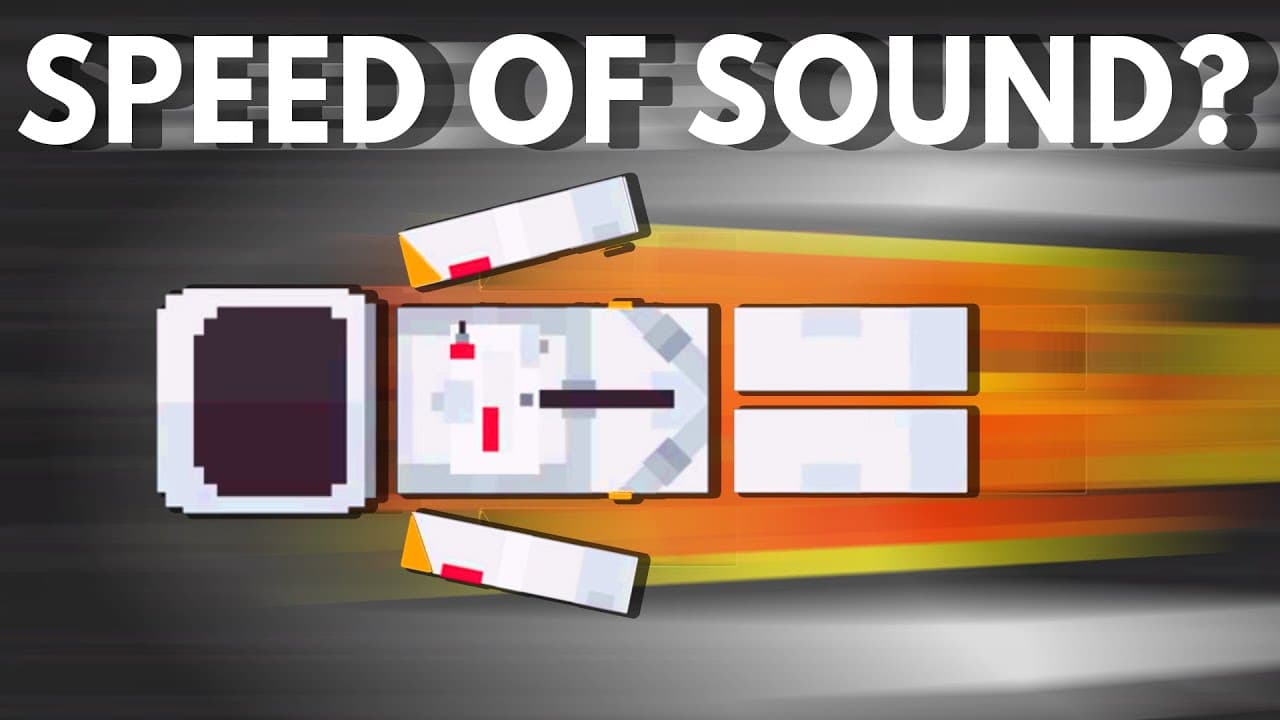
What If You Break The Speed Of Sound With Your Body?
TL;DR
Breaking the sound barrier involves encountering resistance and compression in the air at supersonic speeds, with risks of g-forces affecting the human body.
Transcript
Blocko: Hey there, welcome to Life Noggin. Zhooom Zhooom! Those were cars… As a… Car sounds. Imagine what would happen if you went speeding through a wall. You’re probably thinking: Ow. But not all barriers are made of brick. Humans have been breaking through the sound barrier for decades, but what exactly does that mean? And how does that affect y... Read More
Key Insights
- 👂 Supersonic speeds encounter resistance known as the sound barrier.
- 🌸 G-forces from rapid acceleration can harm pilots, causing loss of vision or consciousness.
- 🥶 Felix Baumgartner broke the sound barrier with his body during a free fall.
- 😀 Humans face unique risks during supersonic travel compared to modern aircraft.
- 🗺️ Specialized equipment and training are necessary for safe supersonic travel.
- 👂 The sound barrier isn't physically felt or heard when broken at high speeds.
- 👂 Breaking the sound barrier requires careful preparation and awareness of potential hazards.
Install to Summarize YouTube Videos and Get Transcripts
Explore YouTube Video Summarizer or Get YouTube Transcript Extractor
Questions & Answers
Q: What is the sound barrier and how does it affect the human body?
The sound barrier is an invisible wall of resistance in the air at supersonic speeds, causing compression and risks of g-forces affecting the human body.
Q: How do pilots mitigate the risks of breaking the sound barrier?
Pilots wear oxygen masks, anti G-suits, and practice special breathing techniques and muscle squeezing exercises to prevent harm from g-forces during supersonic speeds.
Q: What were the challenges faced by Felix Baumgartner when he broke the sound barrier with his body?
Felix Baumgartner faced challenges like potential internal injuries, hypothermia, and the risk of a flat spin during his free fall from the edge of space.
Q: Why is breaking the sound barrier safer in modern aircraft than for humans?
Modern aircraft are designed for supersonic travel, with pressurized, wind-protected vehicles to ensure safety, unlike humans who face various hazards at supersonic speeds.
Summary & Key Takeaways
-
Breaking the sound barrier involves encountering resistance and compression in the air at supersonic speeds.
-
Pilots face risks of g-forces causing harm, including loss of vision or consciousness.
-
Felix Baumgartner became the first human to break the sound barrier with his body, facing unique challenges during his free fall.
Read in Other Languages (beta)
Share This Summary 📚
Summarize YouTube Videos and Get Video Transcripts with 1-Click
Try YouTube Summary with ChatGPT & Claude or YouTube Transcript Generator
Explore More Summaries from Life Noggin 📚


Summarize YouTube Videos and Get Video Transcripts with 1-Click
Try YouTube Summary with ChatGPT & Claude or YouTube Transcript Generator