How Do Hackers Bypass Two-Factor Authentication?
TL;DR
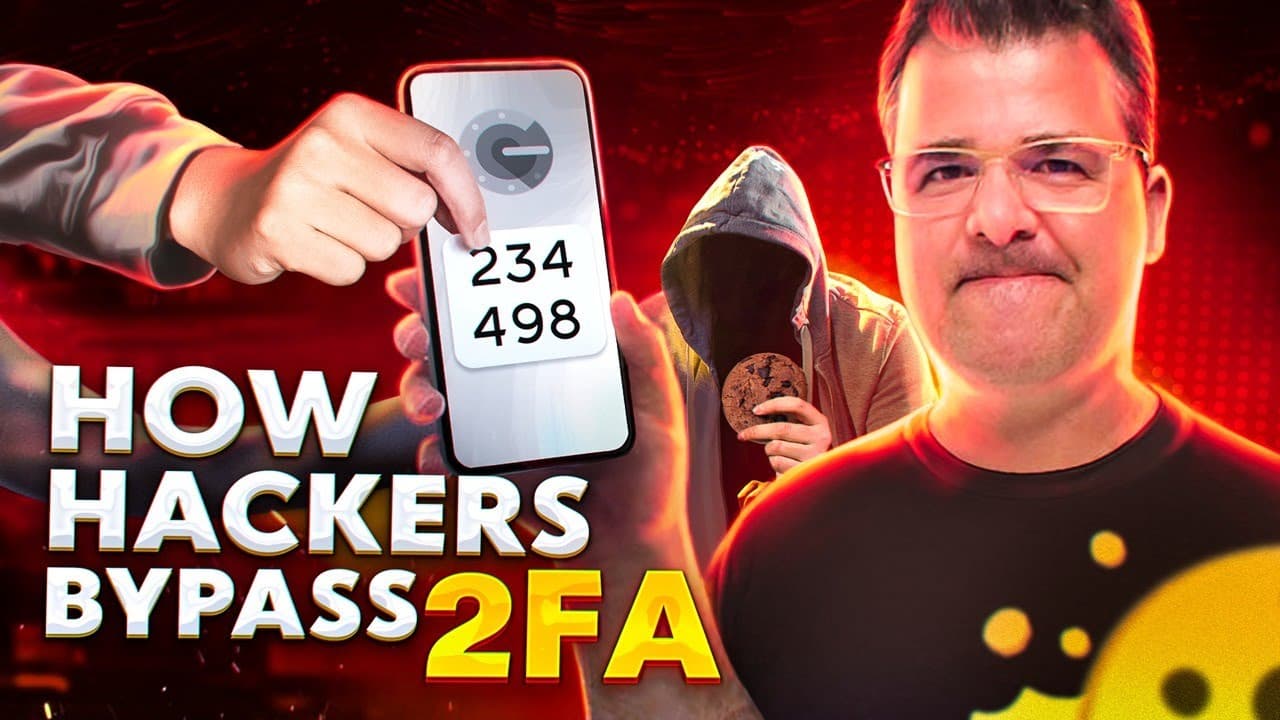
Hackers can bypass two-factor authentication (2FA) using several techniques, including man-in-the-middle attacks, cookie theft, and exploiting vulnerabilities in SMS codes. While 2FA enhances security by requiring a second verification method, no system is entirely foolproof. To defend against these attacks, users should employ a mix of strong passwords, U2F devices, and vigilant monitoring of their accounts.
Transcript
in a nutshell attacker needs to find a way to reroute the traffic prove the evil genics proxy first the real server is doing so the user will be able to see the real site and not a replica is using pitching site method hey everyone welcome back to the channel if you are new here my name is Jenny Wolfman and I am nit and cyber security expert with m... Read More
Key Insights
- 🧑🏭 Two-factor authentication adds an extra layer of security to online accounts, making it harder for hackers to gain unauthorized access.
- 🛟 Different methods of 2FA provide various advantages and drawbacks, but they all serve the same purpose of enhancing security.
- 💁 Multi-factor authentication (MFA) requires additional pieces of information beyond 2FA, making it theoretically more secure but potentially frustrating for average users.
- 👊 Attackers can bypass 2FA using techniques such as evil genics setups, passing the cookie, SMS man-in-the-middle attacks, and attacks on soft tokens.
- 👨🦱 Protecting against 2FA bypass techniques involves monitoring URLs, using U2F devices, adding contextual authentication methods, and being cautious of phishing attempts.
- 🔐 Hardware tokens like FIDO U2F keys and Ubiki provide stronger security than SMS or app-based 2FA methods.
- 🤨 Regularly monitoring accounts for suspicious activities and keeping devices secure with antivirus software are important steps in maintaining account security.
Install to Summarize YouTube Videos and Get Transcripts
Explore YouTube Video Summarizer or Get YouTube Transcript Extractor
Questions & Answers
Q: How does two-factor authentication work?
Two-factor authentication requires an additional piece of information, such as a code, to verify a user's identity. This adds an extra layer of security.
Q: What are the different methods of 2FA?
Some methods of 2FA include SMS codes, authenticator applications, security keys, and biometric authentication.
Q: How can attackers bypass 2FA using evil genics setups?
Attackers can reroute traffic through an evil genics proxy, capturing the user's authentication cookie. This allows them to bypass 2FA and gain full access to the account.
Q: How can users protect themselves from 2FA bypass techniques?
Users can protect themselves by monitoring URLs, using U2F devices, adding contextual authentication methods, and being cautious of suspicious links or attachments.
Key Insights:
- Two-factor authentication adds an extra layer of security to online accounts, making it harder for hackers to gain unauthorized access.
- Different methods of 2FA provide various advantages and drawbacks, but they all serve the same purpose of enhancing security.
- Multi-factor authentication (MFA) requires additional pieces of information beyond 2FA, making it theoretically more secure but potentially frustrating for average users.
- Attackers can bypass 2FA using techniques such as evil genics setups, passing the cookie, SMS man-in-the-middle attacks, and attacks on soft tokens.
- Protecting against 2FA bypass techniques involves monitoring URLs, using U2F devices, adding contextual authentication methods, and being cautious of phishing attempts.
- Hardware tokens like FIDO U2F keys and Ubiki provide stronger security than SMS or app-based 2FA methods.
- Regularly monitoring accounts for suspicious activities and keeping devices secure with antivirus software are important steps in maintaining account security.
- While 2FA is not foolproof, it is still a highly recommended security measure to protect online accounts.
Summary & Key Takeaways
-
Two-factor authentication (2FA) requires a second form of verification, such as a code or biometric feature, in addition to a password.
-
Different methods of 2FA include SMS codes, authenticator applications, security keys, and biometric authentication.
-
Attackers can bypass 2FA using techniques like evil genics setups, passing the cookie, SMS man-in-the-middle attacks, and attacks on soft tokens.
Read in Other Languages (beta)
Share This Summary 📚
Summarize YouTube Videos and Get Video Transcripts with 1-Click
Try YouTube Summary with ChatGPT & Claude or YouTube Transcript Generator
Explore More Summaries from Yaniv Hoffman 📚




Summarize YouTube Videos and Get Video Transcripts with 1-Click
Try YouTube Summary with ChatGPT & Claude or YouTube Transcript Generator