What Are the Trends in Vietnam's Executive Recruitment Market?
TL;DR
Vietnam's executive recruitment market is currently candidate-driven, with a significant gap between supply and demand for qualified candidates. The localization of leadership roles offers opportunities for Vietnamese professionals, but the education system needs to better align with its market demands. Programs like 'Come Home for Good' aim to attract overseas Vietnamese talent, while companies face challenges due to Gen Z's tendency for shorter job tenures.
Transcript
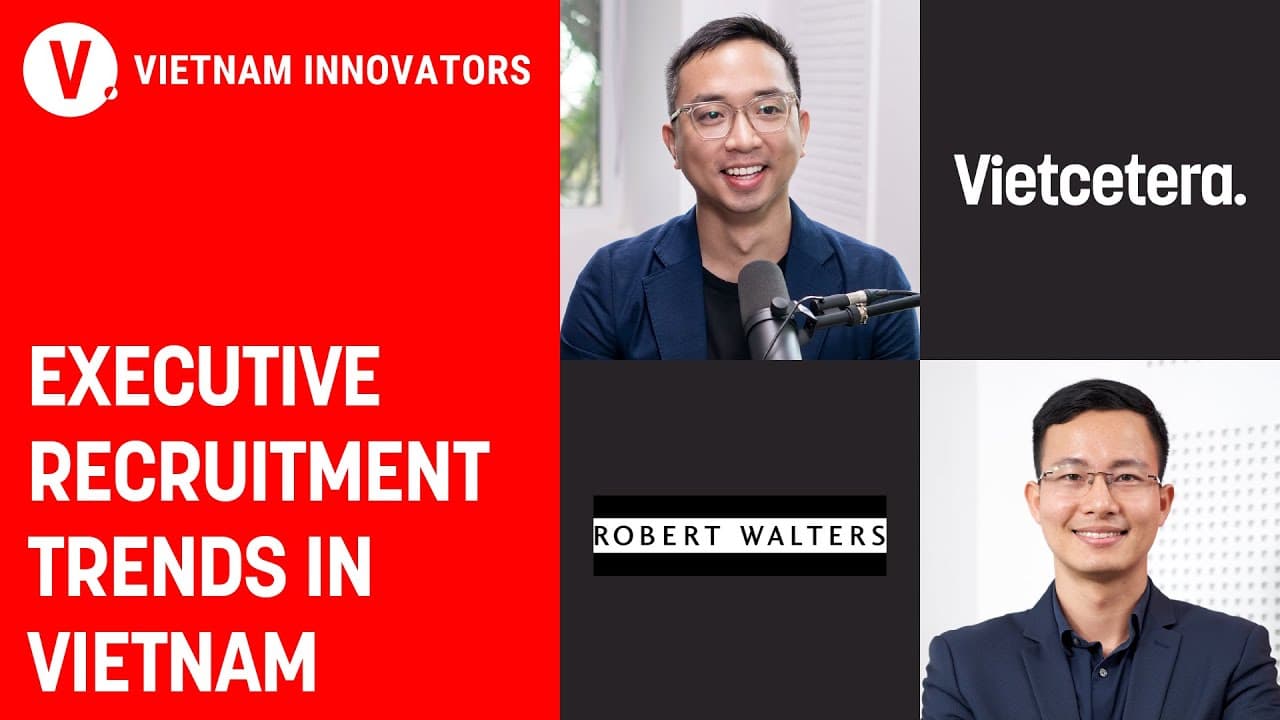
good morning everyone welcome to another episode of Vietnam innovators I'm your host Hal thank you for coming in and tuning in supporting the show as always uh today's guest is fukwam he's the country manager of Robert Walters Vietnam Robert Walters is one of the most uh well-known executive specializes in executive recruitment uh in Vietnam and th... Read More
Key Insights
- Phuc Pham, Country Manager at Robert Walters Vietnam, shares his journey and insights into the executive recruitment industry in Vietnam.
- The recruitment market in Vietnam is candidate-driven, with a gap between supply and demand for qualified executives.
- Localization of leadership roles presents significant opportunities for Vietnamese professionals to ascend to senior positions.
- The education system in Vietnam needs to align more closely with market demands to produce qualified candidates for executive roles.
- Robert Walters Vietnam runs programs like 'Come Home for Good' to attract overseas Vietnamese back to the local job market.
- The Gen Z workforce shows a trend of shorter job tenures, posing challenges for long-term career planning and development.
- There is a significant demand for digital and technological skills, driven by changes in consumer behavior and business operations.
- Vietnam's manufacturing sector is rapidly growing, attracting foreign investment and creating demand for specialized talent.
Install to Summarize YouTube Videos and Get Transcripts
Explore YouTube Video Summarizer or Get YouTube Transcript Extractor
Questions & Answers
Q: What is the main challenge in the recruitment market in Vietnam?
The main challenge in the Vietnamese recruitment market is the gap between supply and demand for qualified candidates, particularly for senior executive roles. The market is candidate-driven, meaning there are more job openings than available qualified candidates, making it difficult for companies to find the right talent.
Q: How does Robert Walters Vietnam address the talent gap?
Robert Walters Vietnam addresses the talent gap through programs like 'Come Home for Good,' which aims to attract overseas Vietnamese professionals back to the country. They also focus on hiring based on potential, encouraging companies to consider candidates who may not have immediate experience but show promise for growth.
Q: What advice does Phuc Pham offer to young professionals starting their careers?
Phuc Pham advises young professionals to understand their own values and career goals from the inside out. He emphasizes the importance of patience, resilience, and being proactive in communicating career aspirations to mentors and leaders to achieve long-term success.
Q: What trends are impacting executive recruitment in Vietnam?
Trends impacting executive recruitment in Vietnam include a high demand for digital and technological skills, the shift from offline to online business practices, and the localization of leadership roles. Additionally, the influx of foreign investment in manufacturing is creating a demand for specialized talent.
Q: How does the education system in Vietnam affect the talent pool?
The education system in Vietnam is not fully aligned with the demands of the job market, creating a gap in the talent pool. There is a need for educational reforms to better prepare graduates with the skills and expertise required for executive roles, particularly in technology and digital sectors.
Q: What role does localization play in the Vietnamese job market?
Localization plays a critical role in the Vietnamese job market by creating opportunities for local professionals to ascend to senior leadership positions. This trend is driven by the desire of multinational companies to have local leaders who understand the market dynamics and cultural nuances.
Q: What are the challenges of hiring Gen Z employees in Vietnam?
Hiring Gen Z employees in Vietnam presents challenges due to their tendency for shorter job tenures, averaging 1.5 years. This makes it difficult for companies to plan for succession and career development, as well as for employees to build expertise and see the long-term results of their work.
Q: Which regions show the most interest in working in Vietnam?
Regions showing the most interest in working in Vietnam include Southeast Asia, particularly Singapore, as well as Australia, the USA, and the UK. These regions are attracted to Vietnam's fast-growing economy, dynamic business environment, and the opportunity to make a tangible impact on the ground.
Summary & Key Takeaways
-
Phuc Pham discusses his career path and the executive recruitment landscape in Vietnam, highlighting the candidate-driven market and the challenges in finding qualified candidates for senior roles.
-
He emphasizes the importance of aligning the education system with market demands and the potential for Vietnamese professionals to fill leadership roles through localization efforts.
-
Robert Walters Vietnam's initiatives like 'Come Home for Good' aim to bridge talent gaps by attracting overseas Vietnamese, while addressing the challenges posed by Gen Z's shorter job tenures.
Read in Other Languages (beta)
Share This Summary 📚
Summarize YouTube Videos and Get Video Transcripts with 1-Click
Try YouTube Summary with ChatGPT & Claude or YouTube Transcript Generator
Explore More Summaries from Vietcetera 📚





Summarize YouTube Videos and Get Video Transcripts with 1-Click
Try YouTube Summary with ChatGPT & Claude or YouTube Transcript Generator