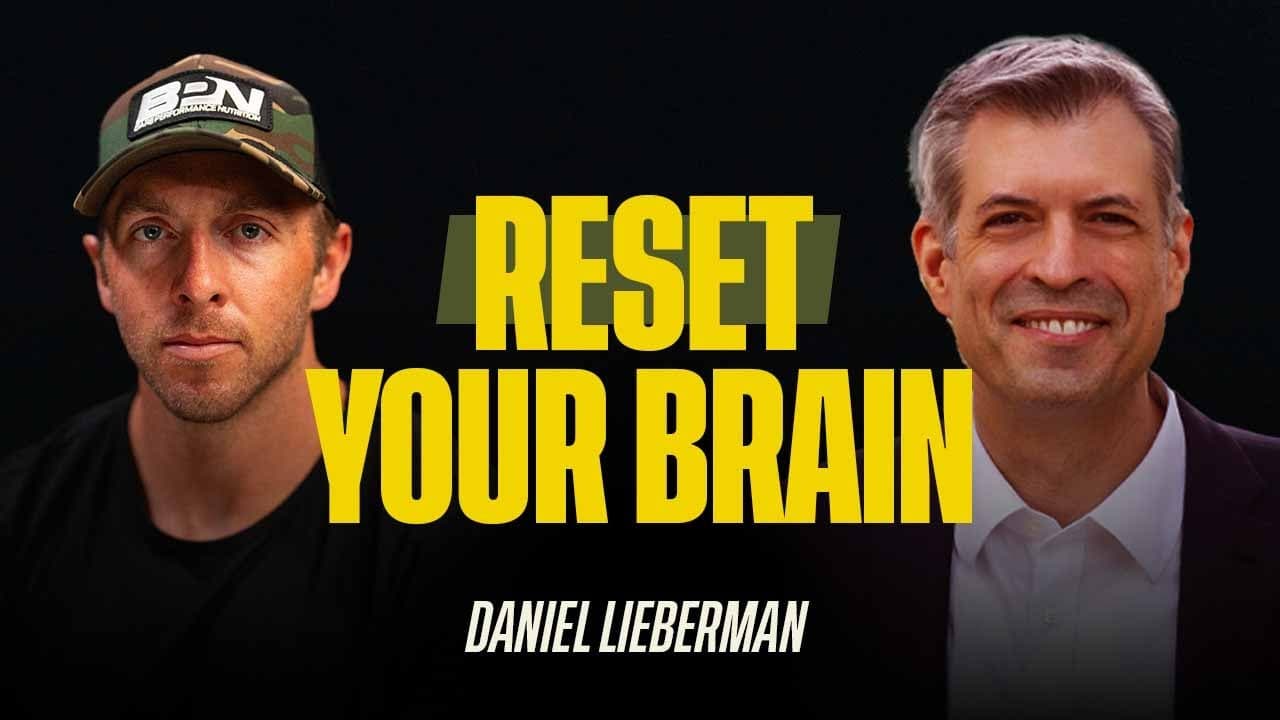
How To Master Dopamine And Find Happiness, Motivation, and Discipline | 028
TL;DR
Dopamine drives motivation and pleasure but requires balance for true happiness.
Transcript
to anticipate something that you want is better than actually having it and I think that that's a sign of the modern disease of too much dopamine everything in our society persuades us to live a dopaminergic life so I think what we need to do is pay attention and ask ourselves is this really giving me the enjoyment I'm expecting and what's the pric... Read More
Key Insights
- Dopamine is crucial for motivation and future planning but can also lead to dissatisfaction if not managed properly.
- Society's constant stimulation of dopamine circuits makes achieving happiness challenging in the modern world.
- Dopamine is responsible for technological advancements but can also lead to destructive behaviors if unchecked.
- Awareness and meditation can help control dopamine's influence, promoting contentment in the present moment.
- Social media exploits dopamine, leading to addiction-like behaviors despite offering diminishing returns of pleasure.
- The transition from passionate to companionate love involves shifting from dopamine-driven desires to deeper connections.
- Humanity without dopamine would lack art, science, and technology, highlighting its essential role in evolution.
- Social support is more effective than willpower alone in overcoming dopamine-driven habits and addictions.
Install to Summarize YouTube Videos and Get Transcripts
Explore YouTube Video Summarizer or Get YouTube Transcript Extractor
Questions & Answers
Q: What is dopamine's primary role in the brain?
Dopamine acts as a conductor in the brain, determining which parts are active and influencing motivation, passion, and future planning. It drives us to make the future better than the present, but it also leads to dissatisfaction as it constantly seeks more, never signaling 'enough.'
Q: How does dopamine affect social media usage?
Social media companies exploit dopamine by creating platforms that offer the potential for quick dopamine hits, like notifications or new content. This leads to addictive behaviors, where users continue to scroll despite feeling bored or fatigued, driven by the dopamine-induced anticipation of finding something rewarding.
Q: What is the difference between desire and pleasure circuits in the brain?
Desire circuits, driven by dopamine, focus on future wants and are responsible for motivation and anticipation. Pleasure circuits, which use chemicals like endorphins and serotonin, are active in the present and responsible for enjoying experiences. Often, what we desire doesn't match what we enjoy due to these separate circuits.
Q: Can meditation help control dopamine's influence?
Yes, meditation can help control dopamine's influence by strengthening the brain's frontal cortex, which is responsible for rational thought and self-control. Regular meditation can thicken this part of the brain, allowing individuals to act more deliberately and resist dopamine-driven impulses more effectively.
Q: Why do some people transition from passionate to companionate love?
Passionate love, driven by dopamine, is intense and short-lived, typically lasting 12 to 18 months. As dopamine's influence fades, relationships transition to companionate love, characterized by deeper emotional connections and mutual support. This transition can lead to more enduring and fulfilling relationships if navigated successfully.
Q: What would humanity look like without dopamine?
Without dopamine, humanity would lack the drive for art, science, and technology, as dopamine enables abstract thinking and future planning. We would miss out on advancements and creative expressions, highlighting dopamine's essential role in human evolution and societal development.
Q: How can individuals overcome dopamine-driven habits?
Overcoming dopamine-driven habits requires strategies beyond willpower, such as creating environments that minimize temptation and seeking social support. For example, alcoholics benefit from avoiding bars and participating in support groups like AA, which leverage social reinforcement to strengthen resolve against dopamine-driven impulses.
Q: What impact did the pandemic have on dopamine and mental health?
The pandemic led to increased rates of mental illness due to social isolation and disrupted routines, which negatively impacted dopamine regulation. The lack of social interactions and increased reliance on technology for connection heightened dopamine-driven behaviors, contributing to mental health challenges during this period.
Summary & Key Takeaways
-
Dopamine is a powerful brain chemical that drives motivation and future planning but can lead to dissatisfaction if not managed. Dr. Daniel Lieberman explains how society's constant stimulation of dopamine circuits makes achieving happiness challenging and offers strategies like meditation to control its influence.
-
Dopamine is crucial for technological advancements but can also lead to destructive behaviors. Social media exploits dopamine, leading to addiction-like behaviors despite offering diminishing returns of pleasure. Awareness and social support can help overcome dopamine-driven habits.
-
The transition from passionate to companionate love involves shifting from dopamine-driven desires to deeper connections. Humanity without dopamine would lack art, science, and technology, highlighting its essential role in evolution. Social support is more effective than willpower in managing dopamine's influence.
Read in Other Languages (beta)
Share This Summary 📚
Summarize YouTube Videos and Get Video Transcripts with 1-Click
Try YouTube Summary with ChatGPT & Claude or YouTube Transcript Generator
Explore More Summaries from The Nick Bare Podcast 📚



Summarize YouTube Videos and Get Video Transcripts with 1-Click
Try YouTube Summary with ChatGPT & Claude or YouTube Transcript Generator