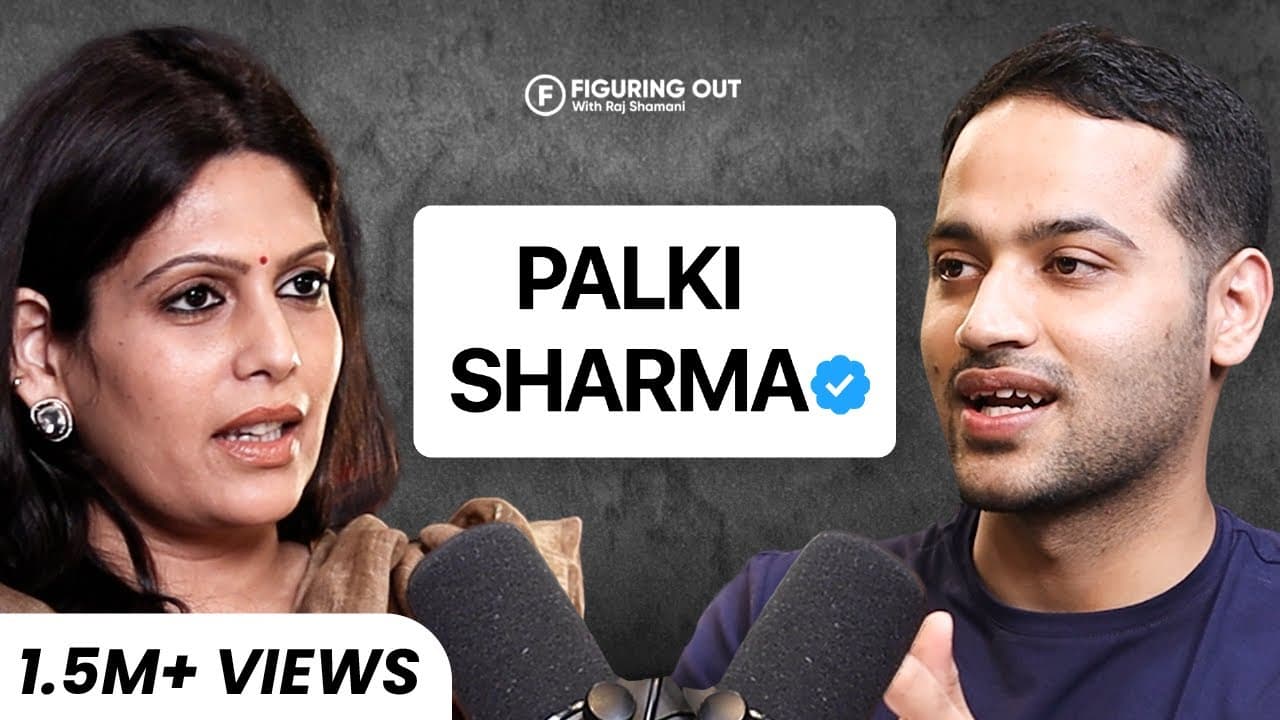
The REALITY Of Indian News Media Ft. Palki Sharma On Figuring Out 110 | Raj Shamani
TL;DR
This discussion explores the evolution of journalism, media influence, and India's global power dynamics.
Transcript
in American newspaper said oh it's not safe to come to India I mean look at what's happening in the U.S a six-year-old shot his teachers so I'm sorry before you talk about how safe it is to travel to India look at what's happening in the U.S we are not the kind of nation it is not in our strategic culture to intervene I think the West has given its... Read More
Key Insights
- 💦 Journalism is increasingly being viewed as less appealing due to demanding work environments and poor financial compensation.
- 🔉 Trust in traditional media is waning as social media platforms emerge as primary news sources for many consumers.
- ⚖️ Effective storytelling is vital in journalism today, necessitating a balance between engagement and factual reporting.
- 🔉 Social media offers both challenges and opportunities for modern journalists, reshaping how news is consumed.
- ✊ India's soft power is crucial for its global positioning, particularly through cultural exports and diplomatic initiatives.
- 👶 Journalists must adapt to the evolving landscape by becoming adept at using new mediums and engaging audiences meaningfully.
- 💗 The importance of context in news reporting has grown, as audiences seek to understand not just the event but its implications.
Install to Summarize YouTube Videos and Get Transcripts
Explore YouTube Video Summarizer or Get YouTube Transcript Extractor
Questions & Answers
Q: What factors have contributed to the declining interest in journalism as a career?
Several factors have led to the declining interest in journalism, including inadequate pay and the increasing pressure of meeting tight deadlines. Young talent is more transactional and may prioritize careers that offer better financial security and work-life balance. The impact of social media also plays a role, as many people now prefer to consume news from independent online sources rather than traditional news channels.
Q: How has social media influenced public perception of the news?
Social media has greatly influenced public perception of news by providing alternative platforms where individuals can find diverse opinions and perspectives. This democratization of information has led to an erosion of trust in conventional media outlets, as many people view them as biased or out of touch, favoring the immediacy and relatability of social media content.
Q: What can media companies do to regain the trust of viewers?
To regain viewer trust, media companies should prioritize transparency and accountability in their reporting. They must additionally work on creating quality content that respects the audience's intelligence and curiosity. Engaging storytelling that connects with viewers on a deeper level can help rebuild faith in journalism, as people tend to gravitate towards media that provides both information and context.
Q: How does soft power play a role in India's global influence?
Soft power impacts India's global influence through cultural exports like Bollywood and the widespread practice of yoga. These cultural elements serve as a tool for diplomacy, promoting a positive image of India abroad. The ability to shape perceptions without using military force positions India favorably in international relations and enhances its role as a potential peacekeeper in global conflicts.
Q: What are some unique challenges that journalists face in today's digital age?
Journalists face challenges such as misinformation, the pressure to produce content rapidly, and the need to compete for audience attention in a crowded digital space. Maintaining credibility while navigating the fast-paced nature of online news is a delicate balance. Additionally, journalistic integrity often comes under scrutiny from audiences who demand accountability and transparency.
Q: How has the role of storytelling evolved in journalism?
Storytelling has evolved to focus on creating engaging narratives that resonate with audiences while presenting complex issues clearly. Journalists now must anticipate viewers' questions and address them within their storytelling framework. This involves crafting narratives that not only inform but also connect emotionally with the audience, providing context and insight into the importance of the news.
Summary & Key Takeaways
-
The conversation delves into the challenges faced by journalists today, emphasizing the declining interest in journalism due to low pay and high demands. It highlights a shift toward social media for news consumption, altering public trust in traditional outlets.
-
A recounting of personal experiences reveals the guest's journey from uncertainty to becoming a journalist, underscoring the importance of adaptability and skill development in a rapidly changing media landscape. This highlights the significant role of storytelling in journalism.
-
The dialogue carefully examines the broader implications of India's growing soft power and its potential as a global player. The discussion includes how cultural exports like Bollywood enhance India's image and the necessity for Indian talent to be channelized for further development.
Read in Other Languages (beta)
Share This Summary 📚
Summarize YouTube Videos and Get Video Transcripts with 1-Click
Try YouTube Summary with ChatGPT & Claude or YouTube Transcript Generator
Explore More Summaries from Figuring Out With Raj Shamani 📚

Summarize YouTube Videos and Get Video Transcripts with 1-Click
Try YouTube Summary with ChatGPT & Claude or YouTube Transcript Generator