How to Use Fibonacci Retracement Lines in Trading
TL;DR
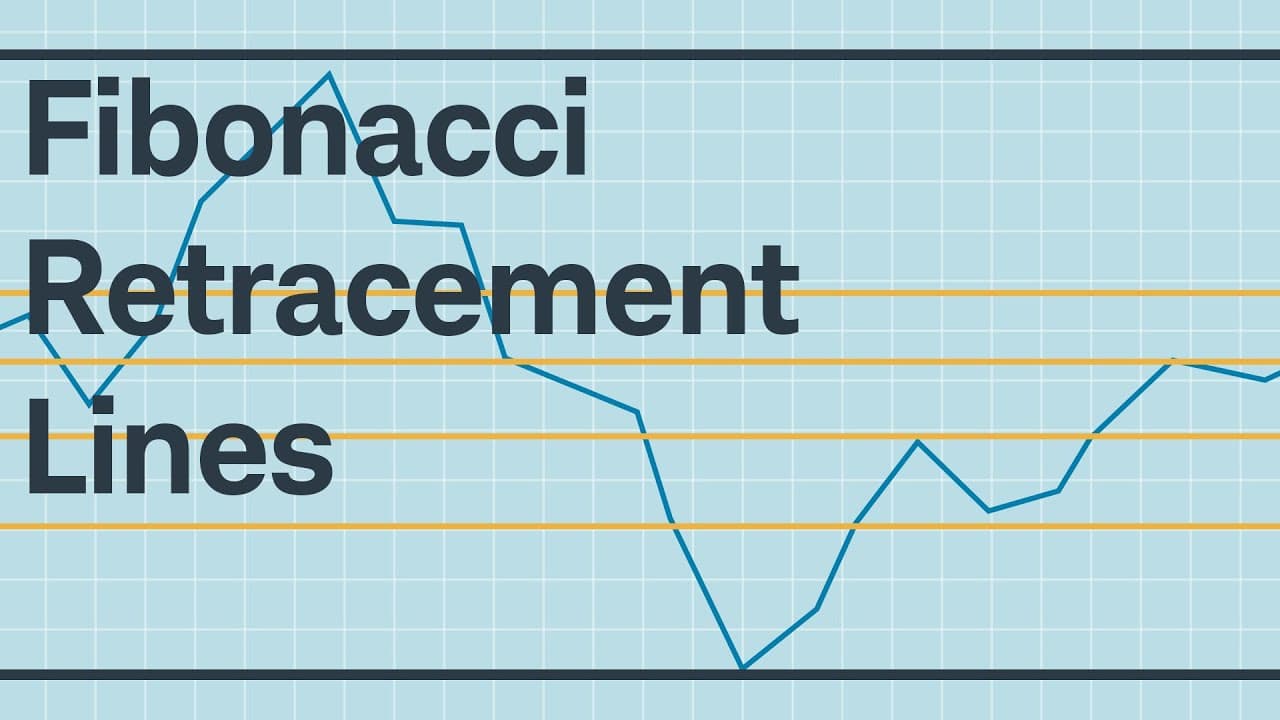
Fibonacci retracement lines help traders identify potential support and resistance levels by marking key percentage levels of price movements. By analyzing these levels, traders can spot possible bull traps and buying opportunities, allowing for informed trading decisions during market fluctuations.
Transcript
In the previous video, we learned about bull traps, or temporary rallies that can appear during a downtrend, luring overly-optimistic traders back to the market, only to frustrate them when the downtrend returns. So how do you know if you’re looking at a potential bull trap? Some traders use a technical tool called the "Fibonacci Retracement Trend”... Read More
Key Insights
- 🚄 Bull traps are temporary rallies during downtrends that can deceive traders.
- 💟 Fibonacci retracement lines are a technical tool that uses ratios established by Leonardo de Pisa to identify potential support and resistance levels.
- 🫥 Overlaying Fibonacci retracement lines on price action can help identify potential bull traps and buying opportunities.
- 🧘 Traders may wait for a breakout of a Fibonacci retracement level and confirmation from moving averages before entering a position.
- 🔨 Fibonacci tools are not infallible and should be used in conjunction with other technical indicators and risk management strategies.
- 🫰 The S&P 500 index provides an example of how Fibonacci retracement levels and moving averages can be used to identify a bull trap in 2008 and a buying opportunity in 2009.
- 😫 Traders should test their convictions and set appropriate risk levels when using Fibonacci tools.
Install to Summarize YouTube Videos and Get Transcripts
Explore YouTube Video Summarizer or Get YouTube Transcript Extractor
Questions & Answers
Q: What is a bull trap?
A bull trap is a temporary rally during a downtrend that lures traders back into the market, only to frustrate them when the downtrend resumes.
Q: How can Fibonacci retracement lines help identify bull traps?
Fibonacci retracement lines can be used to identify key support and resistance levels in the market, helping traders determine if a rally is likely to hold or if it's a potential bull trap.
Q: How are Fibonacci retracement lines created?
Traders choose a major peak and trough on a stock chart and apply Fibonacci ratios (23.6%, 38.2%, 50%, 61.8%) to create horizontal lines. These lines represent potential support and resistance levels.
Q: How can moving averages be used in conjunction with Fibonacci retracement lines?
Moving averages can be used to confirm an upward or downward trend. Traders can add a moving average, such as the 50-day simple moving average, to further validate the potential buying or selling opportunity identified through Fibonacci retracement.
Summary & Key Takeaways
-
Fibonacci retracement lines can be used to identify possible support and resistance levels in the market.
-
Traders can create Fibonacci retracement lines by choosing a major peak and trough on a stock chart and applying ratios established by Leonardo de Pisa.
-
By overlaying Fibonacci retracement lines on price action, traders can identify potential bull traps and buying opportunities.
Read in Other Languages (beta)
Share This Summary 📚
Summarize YouTube Videos and Get Video Transcripts with 1-Click
Try YouTube Summary with ChatGPT & Claude or YouTube Transcript Generator
Explore More Summaries from Charles Schwab 📚



Summarize YouTube Videos and Get Video Transcripts with 1-Click
Try YouTube Summary with ChatGPT & Claude or YouTube Transcript Generator