Arrogant Islamic Claims HUMBLED by History: Dr. Jay Smith EXPOSES Foundations
TL;DR
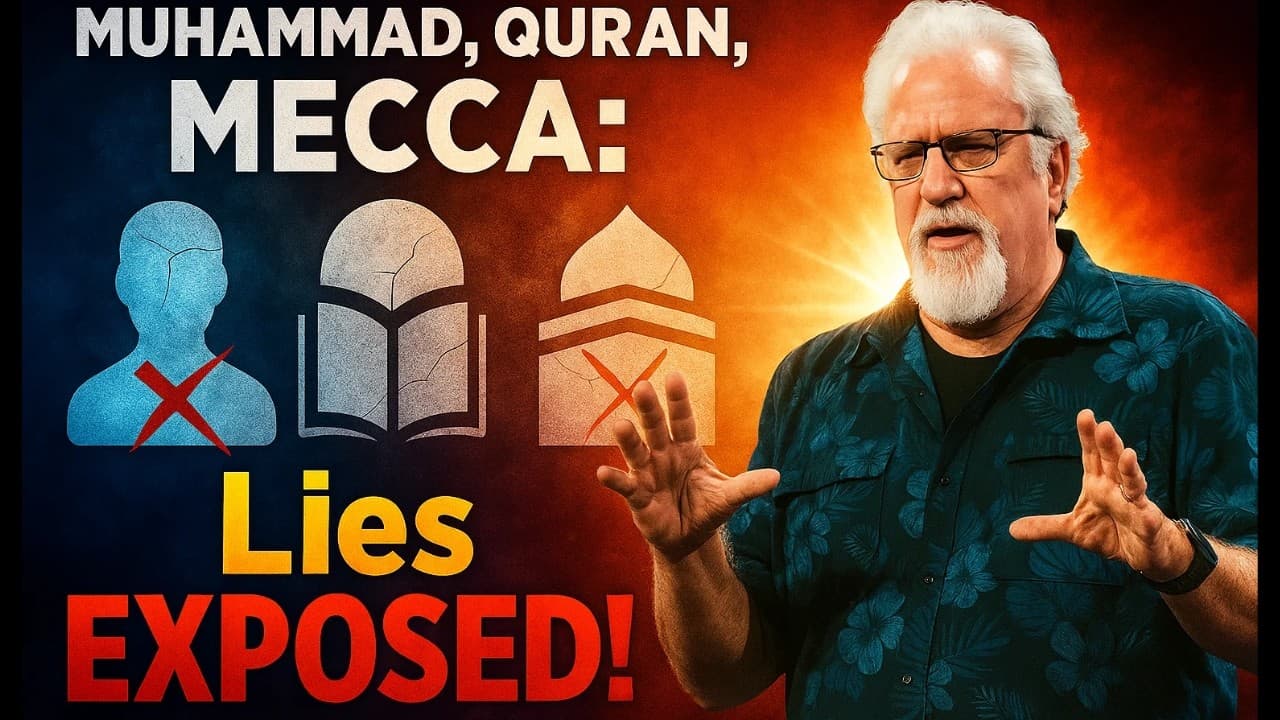
Dr. Jay Smith questions Islam's historical foundations.
Transcript
now here's the question everything I've just told you how in the world and where do you get it from well you would hope that it comes from people that were actually living at that time right and from people who are actually living there right eyewitnesses like we have with Jesus matthew he was an eyewitness john he was an eyewitness you would hope ... Read More
Key Insights
- Dr. Jay Smith highlights the lack of early sources for Islam compared to Christianity, emphasizing the gap in eyewitness accounts for Muhammad's life.
- The traditional Islamic narrative relies on sources written centuries after Muhammad's death, raising questions about their historical accuracy and authenticity.
- Mecca's historical significance is questioned due to the absence of early corroborating evidence, challenging its central role in Islamic tradition.
- The Quran's compilation is scrutinized, with suggestions that it evolved over decades rather than being revealed in a short span, as traditionally claimed.
- The Abbasid caliphate's influence on the formation of Islamic narratives is examined, suggesting that key elements were shaped long after Muhammad's time.
- Comparative analysis between Islamic and Christian texts shows Christianity's reliance on earlier, more geographically relevant sources.
- The video proposes that Islamic history, as currently understood, might be a later fabrication rather than a true reflection of 7th-century events.
- Dr. Smith's analysis serves as a starting point for further investigation into the historical claims of Islam, promising future content on this topic.
Install to Summarize YouTube Videos and Get Transcripts
Explore YouTube Video Summarizer or Get YouTube Transcript Extractor
Questions & Answers
Q: What is the main argument presented by Dr. Jay Smith in the video?
Dr. Jay Smith argues that the foundational claims of Islam, particularly regarding Muhammad, the Quran, and Mecca, lack early corroborating evidence and rely on sources compiled centuries after the events. He contrasts this with Christianity, which has earlier eyewitness accounts, suggesting that Islamic narratives may have been later fabrications.
Q: How does Dr. Smith compare the sources of Islam and Christianity?
Dr. Smith compares the sources by highlighting that Christianity's texts, such as the Gospels and Paul's letters, were written within decades of Jesus's life by eyewitnesses or those close to them. In contrast, Islamic sources like the Hadith and biographies of Muhammad were compiled centuries later, raising questions about their reliability.
Q: Why does Dr. Smith question Mecca's historical significance?
Dr. Smith questions Mecca's historical significance due to the absence of early evidence supporting its central role in Islam. He points out that none of the early Islamic writers lived in or near Mecca, and the first mentions of Muhammad and Mecca appear decades after his death, suggesting later fabrication.
Q: What role does the Abbasid caliphate play in shaping Islamic narratives?
The Abbasid caliphate, which rose to power in the mid-8th century, is suggested to have played a significant role in shaping Islamic narratives. Dr. Smith argues that key elements of Islam, such as the life of Muhammad and the Quran, were formalized during this period, long after the events supposedly took place.
Q: What does Dr. Smith suggest about the compilation of the Quran?
Dr. Smith suggests that the Quran was not revealed to Muhammad in a span of 22 years, as traditionally claimed, but likely evolved over decades. He points out the lack of early manuscripts and the reliance on later sources, indicating that the Quran's compilation was a gradual process influenced by later political and religious contexts.
Q: How does Dr. Smith's analysis challenge the traditional Islamic narrative?
Dr. Smith's analysis challenges the traditional Islamic narrative by exposing the reliance on late sources for foundational claims about Muhammad and the Quran. He argues that the absence of early evidence and the late emergence of key narratives suggest that Islam's history, as currently understood, may be a later construction.
Q: What future content does Dr. Smith promise in his video series?
Dr. Smith promises future content that will delve deeper into the foundational pillars of Islam: the man Muhammad, the book the Quran, and the place Mecca. He aims to further investigate these topics, providing a more detailed analysis of the historical claims and their implications for the traditional Islamic narrative.
Q: What is the intended impact of Dr. Smith's video on its audience?
The intended impact of Dr. Smith's video is to provoke critical thinking and encourage viewers to question the traditional Islamic narrative. By presenting evidence-based challenges to Islam's foundational claims, Dr. Smith aims to inspire a reevaluation of widely accepted beliefs and promote a more nuanced understanding of Islamic history.
Summary & Key Takeaways
-
Dr. Jay Smith's video challenges the traditional Islamic narrative by highlighting the late compilation of sources on Muhammad and the Quran. He contrasts this with Christianity's earlier eyewitness accounts, questioning the reliability of Islamic historical claims.
-
The video scrutinizes Mecca's historical importance, pointing out the lack of early evidence supporting its central role in Islam. Dr. Smith argues that the Abbasid caliphate may have shaped key Islamic narratives long after the events supposedly occurred.
-
Dr. Smith's analysis suggests that Islam's foundational claims might be later fabrications rather than accurate reflections of 7th-century events. The video sets the stage for further exploration of these topics, promising deeper investigations into Islam's origins.
Read in Other Languages (beta)
Share This Summary 📚
Summarize YouTube Videos and Get Video Transcripts with 1-Click
Try YouTube Summary with ChatGPT & Claude or YouTube Transcript Generator
Explore More Summaries from Daily Reflection 📚
Summarize YouTube Videos and Get Video Transcripts with 1-Click
Try YouTube Summary with ChatGPT & Claude or YouTube Transcript Generator