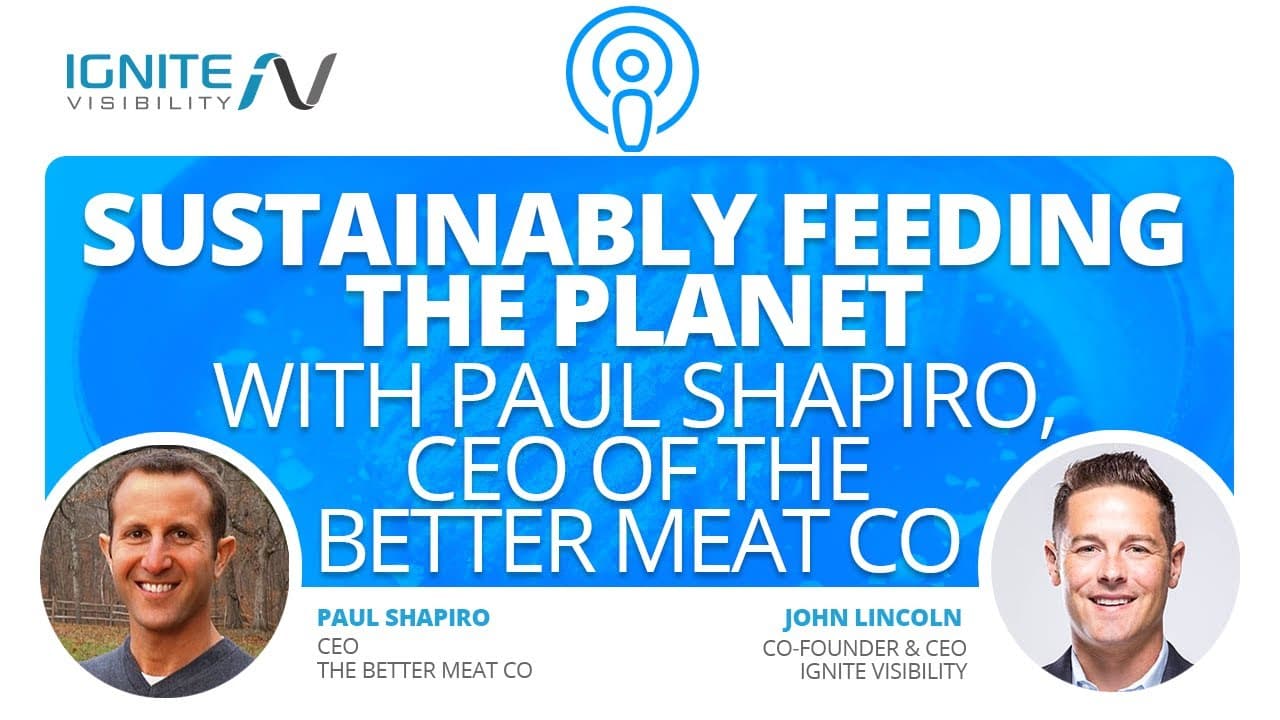
How to Sustainably Feed the Planet with Alternative Proteins
TL;DR
The Better Meat Co uses fermentation to create alternative proteins that mimic meat, requiring fewer resources and reducing environmental impact. Despite rising meat demand, plant-based options offer a sustainable solution. Enhanced meats combine plant and animal proteins, reducing resource use. Future protein sources will be diverse, including cultivated and microbial options.
Transcript
okay everybody welcome to another ignite disability university today i'm so excited because we have paul shapiro here today who is ceo of the better beat co paul how you doing today good john how are you i'm doing fantastic thank you so for everybody listening tell us a little bit about you and your role sure well it's great to be with you john tha... Read More
Key Insights
- Raising animals for food is a leading cause of climate change and resource depletion.
- Meat consumption is increasing globally, particularly in developing countries.
- Plant-based meats like Beyond Burger have no cholesterol and less saturated fat than traditional meat.
- Enhanced meats combine animal and plant proteins to reduce environmental impact.
- The Better Meat Co uses fermentation to create meat alternatives from ingredients like potatoes.
- Microbial fermentation offers a sustainable way to produce high-quality protein products.
- The future of protein includes a diverse array of sources beyond traditional animal agriculture.
- Sustainable food practices are essential for feeding a growing global population without harming the planet.
Install to Summarize YouTube Videos and Get Transcripts
Explore YouTube Video Summarizer or Get YouTube Transcript Extractor
Questions & Answers
Q: How does The Better Meat Co create alternative proteins?
The Better Meat Co uses microbial fermentation to create alternative proteins. They feed ingredients like potatoes to microflora in a natural fermentation process. Within hours, these microflora convert the ingredients into a product that resembles animal meat in taste and texture. This process requires significantly fewer resources, such as land and water, compared to traditional meat production.
Q: Why is meat consumption increasing globally?
Meat consumption is increasing globally due to rising incomes and expanding middle classes in developing countries. As people escape poverty, they can afford more meat, which is often seen as a desirable dietary upgrade. This trend is particularly evident in countries like China, India, Brazil, and Mexico, where meat consumption is growing despite the increasing popularity of plant-based diets.
Q: What are the health benefits of plant-based meats compared to animal meats?
Plant-based meats typically have no cholesterol and less saturated fat than animal meats, making them a healthier option. For example, a Beyond Burger has zero cholesterol and less saturated fat compared to a traditional beef burger. Additionally, plant-based meats often contain more fiber, which is absent in animal meats. While not as healthy as salads, plant-based meats offer a better alternative for those seeking to reduce cholesterol and saturated fat intake.
Q: What are enhanced meats, and why are they important?
Enhanced meats, also known as hybrid or blended meats, combine animal-based meat with plant-based proteins. This approach reduces the environmental footprint of meat production by using fewer resources while maintaining the taste and texture that consumers expect. Enhanced meats are important because they offer a sustainable solution for reducing resource use and environmental impact while still providing a product that appeals to traditional meat eaters.
Q: How does microbial fermentation work in creating meat alternatives?
Microbial fermentation involves using microorganisms to convert raw ingredients into a final product. At The Better Meat Co, microflora are fed ingredients like potatoes in a controlled fermentation environment. Within hours, these microorganisms transform the ingredients into a product that tastes and feels like animal meat. This process is efficient, sustainable, and requires significantly fewer resources than traditional meat production.
Q: What is the future of protein production according to The Better Meat Co?
The future of protein production will involve a diverse array of sources beyond traditional animal agriculture. This includes cultivated meat, plant-based alternatives, and products derived from microbial fermentation. As the global population grows, these sustainable practices will be essential for feeding everyone without depleting resources. The Better Meat Co envisions a more varied protein landscape that reduces reliance on inefficient and environmentally harmful animal agriculture.
Q: Why is current meat production considered unsustainable?
Current meat production is unsustainable because it requires significant amounts of land, water, and other resources, contributing to climate change, deforestation, and environmental degradation. Raising animals for food is inefficient, as it takes more resources to produce animal protein compared to plant-based protein. As the global population grows, continuing with traditional meat production methods will further strain the planet's resources, making it imperative to find more sustainable alternatives.
Q: How does The Better Meat Co contribute to reducing animal cruelty?
The Better Meat Co contributes to reducing animal cruelty by creating alternative proteins that do not require raising and slaughtering animals. Their fermentation-based products mimic the taste and texture of meat, offering consumers a cruelty-free option that satisfies their dietary preferences. By providing viable alternatives to animal-based meats, The Better Meat Co helps decrease the demand for traditional meat, thereby reducing the number of animals raised and killed for food.
Summary & Key Takeaways
-
The Better Meat Co aims to reduce the environmental impact of meat production by creating plant-based alternatives through fermentation. These alternatives mimic the taste and texture of meat but require significantly fewer resources, such as land and water, and eliminate animal cruelty. As global meat consumption rises, these sustainable options are crucial for reducing the planet's food footprint.
-
Despite the rising interest in plant-based foods, traditional meat consumption continues to grow. Enhanced meats, which combine plant and animal proteins, offer a middle ground by reducing the resources needed for production. The Better Meat Co collaborates with companies like Purdue to create hybrid products that are both tasty and environmentally friendly.
-
The future of protein production involves a diverse array of sources, including cultivated meat and microbial fermentation. As the global population approaches 10 billion, sustainable practices are necessary to feed everyone without depleting resources. The Better Meat Co envisions a world where protein comes from various sources, reducing the reliance on traditional animal agriculture.
Read in Other Languages (beta)
Share This Summary 📚
Summarize YouTube Videos and Get Video Transcripts with 1-Click
Try YouTube Summary with ChatGPT & Claude or YouTube Transcript Generator
Explore More Summaries from IgniteVisibility 📚



Summarize YouTube Videos and Get Video Transcripts with 1-Click
Try YouTube Summary with ChatGPT & Claude or YouTube Transcript Generator