These Fossils Came From Space (But Aren’t Aliens)
TL;DR
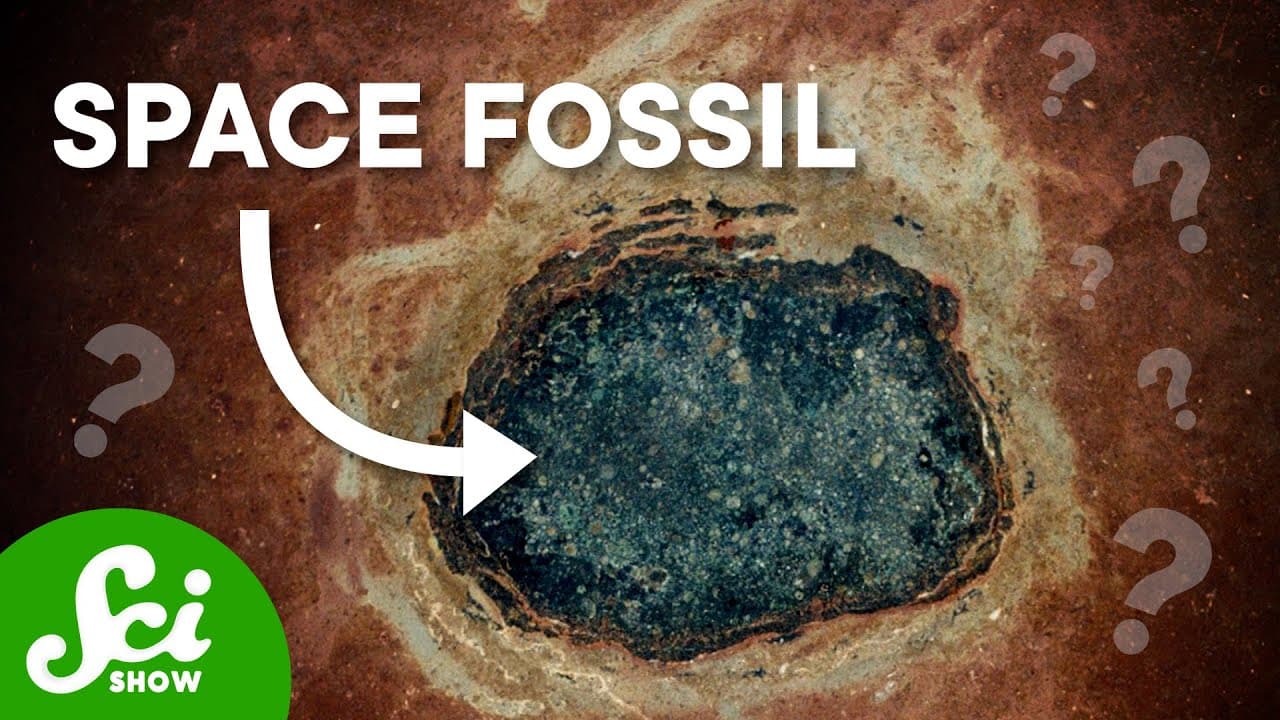
Scientists have found fossil meteorites, rocks from space that have undergone the same fossilization process as dinosaur bones, providing valuable insights into Earth's history and ancient impacts.
Transcript
Thanks to Brilliant for supporting this SciShow video! As a SciShow viewer, you can keep building your STEM skills with a 30 day free trial and 20% off an annual premium subscription at Brilliant.org/SciShow. [♪ INTRO] In 1982, scientists set sail aboard a ship with a giant drill stuck on the back of it. Their goal? To extract columns of seafl... Read More
Key Insights
- 🍝 Fossil meteorites offer valuable insights into Earth's past and the impact events that shaped the planet.
- ❓ The first confirmed fossil meteorite was found in 1952, and since then, only 115 have been discovered.
- ℹ️ Thorsberg limestone quarry in Sweden has been a significant source of fossil meteorites due to its slow formation process.
- 🫤 Fossil meteorites provide evidence of a massive collision in the asteroid belt roughly 470 million years ago.
- ☠️ The high impact rates during that time may have influenced the evolution of marine life.
- 👨🔬 Thorsberg quarry workers are trained to identify potential fossils, and some scientists search public buildings with limestone floors to find unnoticed fossil meteorites.
Install to Summarize YouTube Videos and Get Transcripts
Explore YouTube Video Summarizer or Get YouTube Transcript Extractor
Questions & Answers
Q: How do fossil meteorites become fossilized?
Similar to dinosaur bones, fossil meteorites get buried under sediment and undergo mineral changes through water reactions, removing original minerals and depositing new ones.
Q: What are some clues that help scientists identify fossil meteorites?
Scientists look for unique minerals like spinel and examine the presence of a widmanstätten pattern, which indicates an iron meteorite. Elemental measurements are also compared to known space and Earth rocks.
Q: Can we determine if a specific fossil meteorite caused a mass extinction?
While scientists have found a fossil meteorite dating back to the time of a mass extinction, more fragments with similar composition and age, preferably from different locations, are needed to draw definitive conclusions.
Q: Why are fossil meteorites rare?
Fossil meteorites are extremely rare, and for a long time, geologists debated their existence. Finding them requires extensive searching and luck, although a majority of them have been found in Sweden's Thorsberg limestone quarry.
Summary & Key Takeaways
-
In 1982, scientists discovered a fossilized rock from space, offering a new way to study Earth's past.
-
Fossil meteorites undergo a similar process as dinosaur bones, getting buried under sediment and undergoing mineral changes.
-
Clues like unique mineral composition and texture, along with comparing elemental measurements, help identify fossil meteorites.
Read in Other Languages (beta)
Share This Summary 📚
Summarize YouTube Videos and Get Video Transcripts with 1-Click
Try YouTube Summary with ChatGPT & Claude or YouTube Transcript Generator
Explore More Summaries from SciShow 📚

Summarize YouTube Videos and Get Video Transcripts with 1-Click
Try YouTube Summary with ChatGPT & Claude or YouTube Transcript Generator