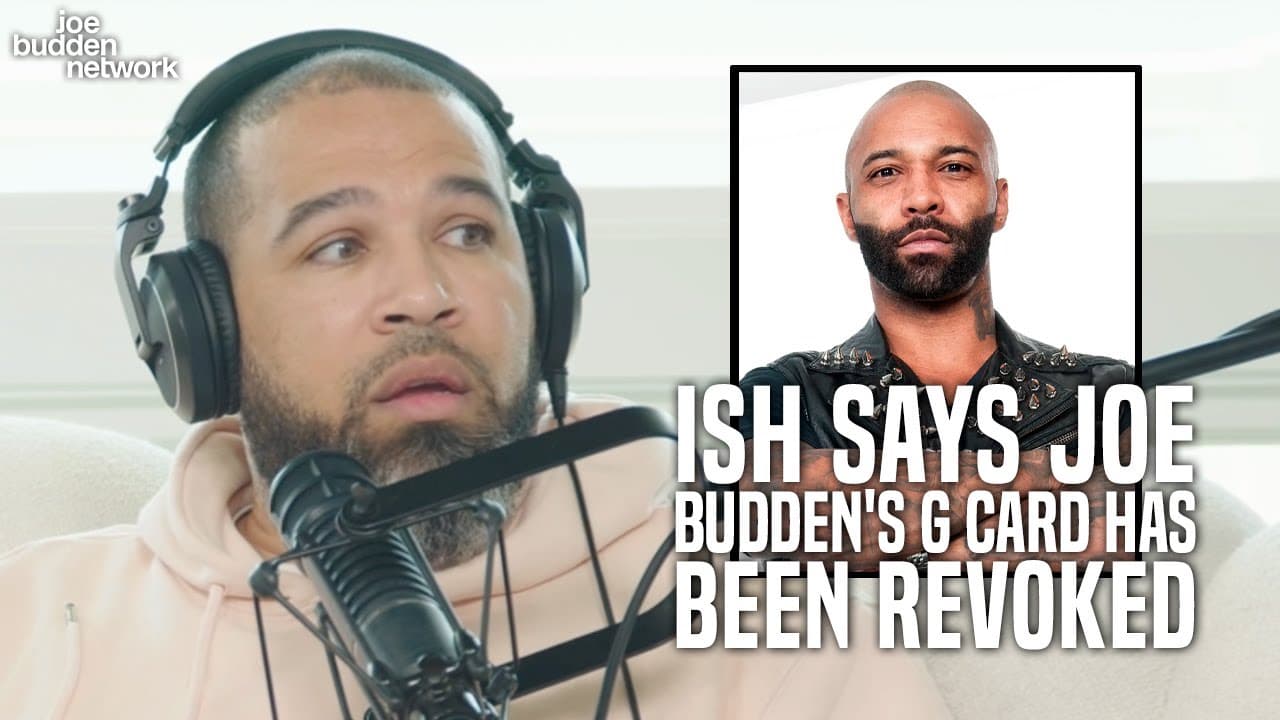
Ish Says Joe Budden's G Card Has Been Revoked | The JBP Reacts
TL;DR
A group discusses the significance of a "G-card" and perceptions of authenticity among friends.
Transcript
yo you remember the alphabet I'mma call your G to the carpet when you when you when you start yo I know you a g when I'm going start going some silent [ __ ] too I don't I think your G card is gone I think you turned that in I think you turned that in I think you turned that in I'm dead ass serious was rev th% rev I think his age I don't know what ... Read More
Key Insights
- 🛟 The "G-card" concept serves as a metaphor for street credibility and the perception of authenticity in personal relationships.
- 🥺 Peer groups significantly influence individual self-image, leading to discussions about authenticity and societal expectations.
- 🍻 The credibility linked to the "G-card" can fluctuate based on lifestyle choices and personal relationships.
- 🤳 There is a tension between self-perception and how others evaluate someone's credibility, prompting introspection.
- 😚 Losing one's "G-card" is subject to personal interpretation and can vary widely between different social contexts.
- 😑 Communication plays a crucial role; expressing personal feelings can aid in understanding perceived authenticity within a group.
- 🫵 The group dynamic often reveals deeper societal views on masculinity, relationships, and self-identity, shaping this discourse on credibility.
Install to Summarize YouTube Videos and Get Transcripts
Explore YouTube Video Summarizer or Get YouTube Transcript Extractor
Questions & Answers
Q: What is a "G-card" in this context?
The "G-card" symbolizes an individual's credibility or authenticity within their social or cultural group. It reflects how peers perceive one's character and actions. Losing one's "G-card" suggests that they no longer meet the expectations or standards that define authenticity in their community.
Q: How do relationships influence one's "G-card" status?
Relationships can play a significant role in shaping perceptions of authenticity. Longer commitments may lead friends to view someone differently, potentially impacting their "G-card." Discussions indicate that being in a relationship may dull the perceived "edge," but this is open to interpretation, making opinions about one’s authenticity subjective.
Q: Can a person's "G-card" be reclaimed once lost?
The debate among the group suggests that reclaiming a "G-card" is possible but challenging and dependent on others' perceptions. As mentioned, if the majority believe someone has lost their credibility, the individual may need to reassess their behavior and social interactions to validate their standing once again.
Q: What happens when group perceptions conflict with individual self-identity?
When individuals see themselves differently from group perceptions, it can lead to internal conflict. This mismatch requires self-reflection; one might decide to disregard others’ opinions or consider making changes to align their actions more closely with the perceptions of their peers.
Summary & Key Takeaways
-
The discussion centers around the idea of a "G-card," symbolizing street credibility and authenticity, with varying opinions on its validity.
-
Participants debate whether personal relationships and lifestyle changes impact an individual's "G-card," leading to the exploration of self-perception among peers.
-
The conversation dives into how perceptions formed by a group can affect one's self-image, leading to questions about the possibility of reclaiming lost credibility.
Read in Other Languages (beta)
Share This Summary 📚
Summarize YouTube Videos and Get Video Transcripts with 1-Click
Try YouTube Summary with ChatGPT & Claude or YouTube Transcript Generator
Explore More Summaries from Joe Budden TV 📚




Summarize YouTube Videos and Get Video Transcripts with 1-Click
Try YouTube Summary with ChatGPT & Claude or YouTube Transcript Generator