PLASMA RAIN?
TL;DR
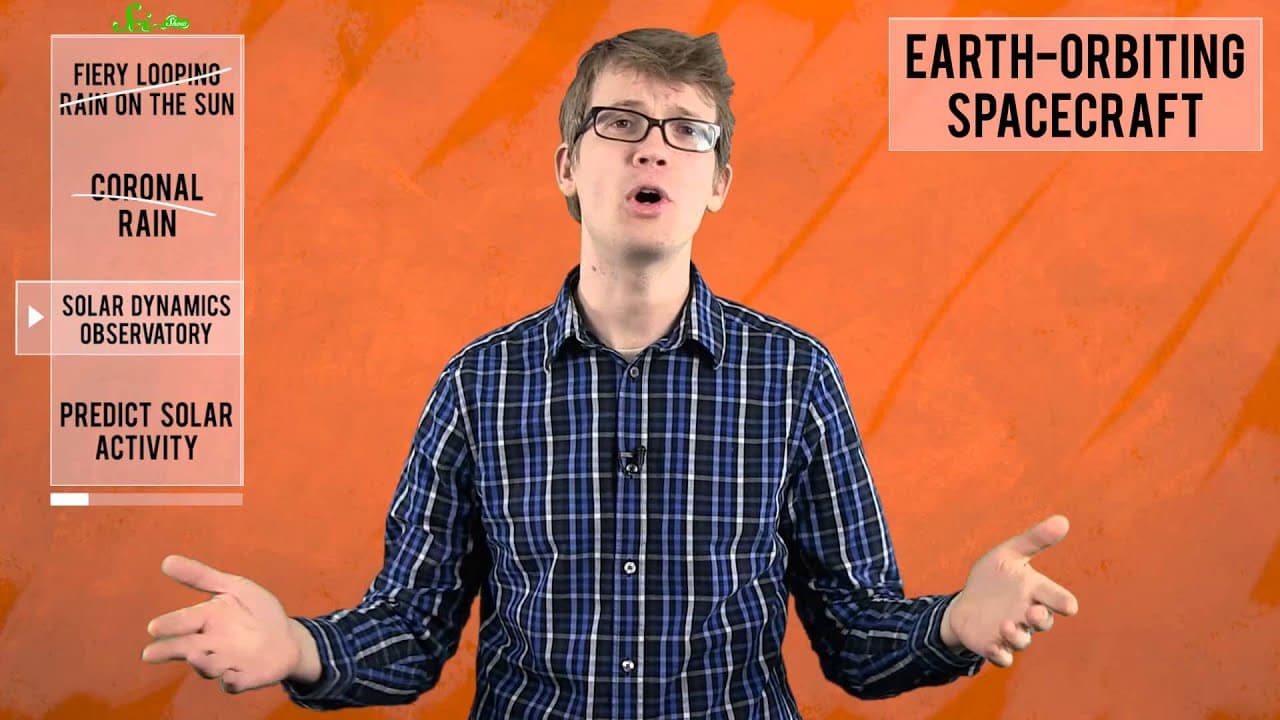
NASA has released a breathtaking video showcasing normal solar activity on the Sun, including solar flares, coronal mass ejections, and coronal drain, captured by their Solar Dynamics Observatory.
Transcript
welcome back to scishow news from wherever else you been on the Internet well you weren't looking at the 20 best animal Beat poets according to BuzzFeed I hope that you saw NASA's jaw-droppingly beautiful and kinda terrifying video fiery looping rain on the Sun because there's nothing more relaxing and confidence-inspiring than watching a video in ... Read More
Key Insights
- 💆 The video captured by NASA's Solar Dynamics Observatory shows normal solar activity, including solar flares and coronal mass ejections.
- ❓ The observatory's advanced technology provides unprecedented resolution and data on the Sun's activities.
- 🧑⚕️ Understanding solar activity is crucial as it can affect various aspects of life on Earth, from communication systems to astronaut health.
- 👻 The Solar Dynamics Observatory allows scientists to monitor and predict solar activity with greater accuracy.
- 🤗 The observatory's data is open to the public, allowing anyone to explore and monitor the Sun's behavior.
- 💄 The Sun's behavior has been difficult to predict, making the Solar Dynamics Observatory a valuable tool for studying and understanding its variability.
- ⌛ The observatory's five-year projected lifespan will provide 50 times more data than any previous NASA mission.
Install to Summarize YouTube Videos and Get Transcripts
Explore YouTube Video Summarizer or Get YouTube Transcript Extractor
Questions & Answers
Q: What does the video captured by NASA's Solar Dynamics Observatory show?
The video captured solar flares, coronal mass ejections, and coronal drain, showcasing the Sun's normal activity.
Q: How does the Solar Dynamics Observatory help scientists understand the Sun?
The observatory provides in-depth insights into the Sun's surface and interior, aiding in the understanding and prediction of solar activity.
Q: Why haven't we seen these solar activities before?
The technology in NASA's Solar Dynamics Observatory, which has been orbiting the Earth for three years, allows us to see the Sun's activities in detail for the first time.
Q: What are the potential impacts of solar activity on Earth?
Solar activity can disrupt transit systems, affect communication devices like cell phones, cause sunburns, and impact astronauts. However, it also produces beautiful Aurora displays.
Summary & Key Takeaways
-
NASA's Solar Dynamics Observatory recorded a four-minute video of the Sun's normal activity, demonstrating solar flares and coronal mass ejections.
-
The video also highlights coronal drain, where plasma released during a coronal mass ejection trickles back to the surface along solar arc caves.
-
The Solar Dynamics Observatory provides scientists with more understanding of the Sun's behavior and allows for better predictions of solar activity.
Read in Other Languages (beta)
Share This Summary 📚
Summarize YouTube Videos and Get Video Transcripts with 1-Click
Try YouTube Summary with ChatGPT & Claude or YouTube Transcript Generator
Explore More Summaries from SciShow 📚


Summarize YouTube Videos and Get Video Transcripts with 1-Click
Try YouTube Summary with ChatGPT & Claude or YouTube Transcript Generator